Clinical Knowledge › Internal medicine › Infectious diseases › Tuberculosis and mycobacterial infections
Tuberculosis and HIV co-infection
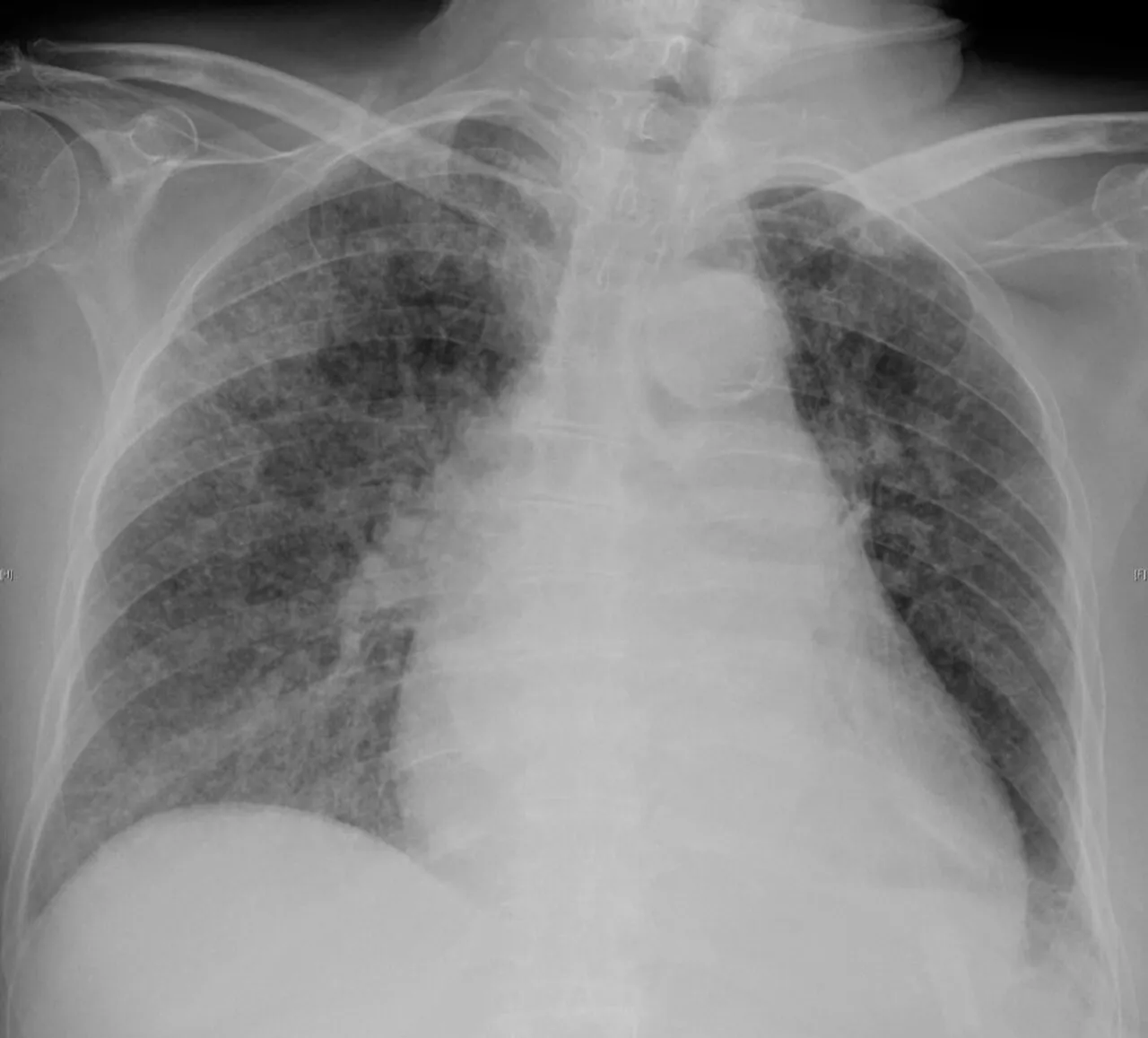
Tuberculosis and HIV form a lethal syndemic. HIV depletes CD4 T cells and impairs granuloma formation, increasing the risk of progression from TB infection to disease about 15- to 20-fold, while TB accelerates HIV replication. TB is the leading cause of death in people with HIV, causing roughly a quarter to a third of AIDS-related deaths, mostly in sub-Saharan Africa. Presentation depends on the CD4 count: with preserved immunity TB looks typical, but at low counts it is often atypical, smear-negative, extrapulmonary or disseminated, with lower-zone infiltrates, lymphadenopathy, miliary shadowing or a normal chest X-ray. Every person with HIV should be screened for TB at each visit, and every person with TB should be offered HIV testing. Diagnosis relies on Xpert MTB/RIF Ultra on sputum and other samples plus urine LF-LAM in advanced HIV. Treatment uses the standard rifampicin-based regimen, with ART started within 2 weeks (delayed 4–8 weeks in TB meningitis), cotrimoxazole prophylaxis and careful management of rifampicin interactions, such as twice-daily dolutegravir. TB preventive treatment for all people with HIV without active TB greatly reduces incidence and mortality.
Patient case, mechanism, investigations, management, flashcards and exam-style questions.Open the lesson →
Key facts
- HIV raises the risk of active TB about 15–20-fold; TB causes roughly a quarter to a third of AIDS-related deaths
- Low CD4 counts give atypical TB: lower-zone or miliary shadowing, hilar nodes, effusions, normal X-ray, extrapulmonary and disseminated disease
- Screen every person with HIV at every visit (symptoms, CRP or chest X-ray) and offer HIV testing to every person with TB
- Xpert MTB/RIF Ultra is the initial test; urine LF-LAM helps in advanced HIV and seriously ill inpatients and reduced mortality in a trial
- Start TB treatment first, then ART within 2 weeks; in TB meningitis delay ART about 4–8 weeks
- Rifampicin induces CYP3A4 and UGT1A1: give dolutegravir 50 mg twice daily; avoid rifampicin with protease inhibitors (use rifabutin)
- Give cotrimoxazole prophylaxis to people with HIV-associated TB
- TB preventive treatment (isoniazid, 3HP or 1HP) is recommended for all people with HIV once active TB is excluded
Differential diagnosis
| Condition | Clues | Key test |
|---|---|---|
| Pneumocystis pneumonia | Subacute dyspnoea, dry cough, hypoxia on exertion, CD4 below 200 | Induced sputum PCR or immunofluorescence; bilateral ground-glass on CT |
| Bacterial pneumonia | Acute onset, lobar consolidation, high fever | Blood and sputum cultures; responds to antibiotics |
| Disseminated Mycobacterium avium complex | CD4 below 50, fever, diarrhoea, anaemia, hepatosplenomegaly | Mycobacterial blood culture; Xpert negative |
| Cryptococcal disease | Headache, fever, pulmonary nodules | Serum CrAg |
| Kaposi sarcoma or lymphoma | Mediastinal nodes, effusions, skin or mucosal lesions | Biopsy; bronchoscopy |
| Histoplasmosis or talaromycosis | Endemic area, skin papules, pancytopenia | Antigen tests, blood culture, skin biopsy |
Exam pearls
Guideline
WHO consolidated guidelines on tuberculosis: Module 4 treatment and care (2025), Module 3 rapid diagnostics (2024), Module 1 TB preventive treatment (2024) and Module 2 screening (2021), with WHO consolidated HIV guidelines (2021)
References
- World Health Organization. WHO consolidated guidelines on tuberculosis. Module 4: treatment and care. WHO, Geneva 2025.
- World Health Organization. WHO consolidated guidelines on tuberculosis. Module 3: diagnosis – rapid diagnostics for tuberculosis detection. WHO, Geneva 2024.
- World Health Organization. WHO consolidated guidelines on tuberculosis. Module 1: prevention – tuberculosis preventive treatment. WHO, Geneva 2024.
- World Health Organization. WHO consolidated guidelines on tuberculosis. Module 2: screening – systematic screening for tuberculosis disease. WHO, Geneva 2021.
- World Health Organization. Consolidated guidelines on HIV prevention, testing, treatment, service delivery and monitoring: recommendations for a public health approach. WHO, Geneva 2021.
- Abdool Karim SS, Naidoo K, Grobler A, et al.. Integration of antiretroviral therapy with tuberculosis treatment. N Engl J Med 2011.
Related topics
By Dr Khalid Seidi (B.Sc., M.D.) · MedEd World Clinical Knowledge library. Original teaching content checked against current guidelines (November 2026); confirm the latest local guidance before clinical use. Not a substitute for clinical judgement.