Clinical Knowledge › Dermatology › Clinical problems
Facial rash: approach to the patient
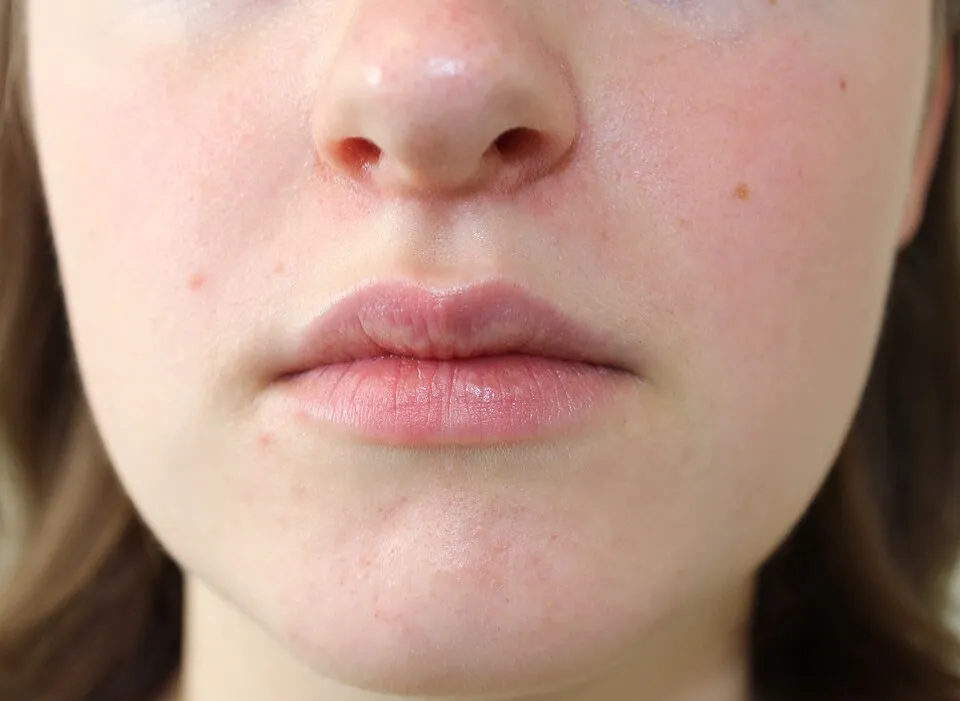
Facial rashes are common, visible and often distressing. A useful approach maps the rash to facial zones and morphology. Central convex face (cheeks, nose, chin, forehead) with flushing, persistent erythema, telangiectasia and papulopustules without comedones suggests rosacea; comedones point to acne. Greasy scale in the nasolabial folds, eyebrows and scalp suggests seborrhoeic dermatitis, whereas small papules and pustules around the mouth sparing a rim at the lip margin suggest perioral dermatitis, often after topical steroids. A fixed erythematous rash over the cheeks and nasal bridge that spares the nasolabial folds, worse after sun, suggests the malar rash of lupus; scarring scaly plaques suggest discoid lupus; violaceous eyelids (heliotrope) suggest dermatomyositis. Eyelid eczema usually reflects contact allergy or atopy. Infections include impetigo (honey crusts), erysipelas (raised, sharply demarcated, painful), herpes zoster (dermatomal vesicles - nasal tip involvement warns of eye disease) and slapped-cheek parvovirus in children. Investigations are targeted: swabs, viral PCR, scrapings, ANA and anti-Ro, CK and myositis antibodies, patch testing and biopsy. Many facial dermatoses worsen with potent topical steroids, which should be avoided.
Patient case, mechanism, investigations, management, flashcards and exam-style questions.Open the lesson →
Key facts
- Rosacea: central facial persistent erythema, flushing, telangiectasia, papules and pustules, no comedones; ocular rosacea in up to half
- Acne: comedones (open and closed) are the defining lesion; distribution face, chest and back
- Seborrhoeic dermatitis: greasy yellow scale in nasolabial folds, eyebrows, glabella, scalp and behind ears; Malassezia
- Perioral dermatitis: monomorphic small papules and pustules around mouth (and nose, eyes) with a spared rim next to the vermilion; topical steroid use is a common trigger
- SLE malar rash: fixed erythema over cheeks and nasal bridge sparing the nasolabial folds; photosensitive; check ANA and dsDNA
- Dermatomyositis: heliotrope eyelids, facial erythema involving the nasolabial folds, Gottron papules; adults need cancer screening
- Herpes zoster ophthalmicus: vesicles on the tip of the nose (Hutchinson sign) predict eye involvement - same-day ophthalmology
- Avoid potent topical steroids on the face: they cause atrophy, telangiectasia, steroid rosacea and perioral dermatitis
Differential diagnosis
| Condition | Clues | Key test |
|---|---|---|
| Rosacea | Adult, flushing, central erythema, telangiectasia, papulopustules, no comedones | Clinical |
| Acne vulgaris | Adolescent, comedones, papules, pustules, nodules; chest and back | Clinical; androgen tests if hyperandrogenism |
| Seborrhoeic dermatitis | Greasy scale in nasolabial folds, eyebrows, scalp | Clinical; HIV test if severe |
| Perioral dermatitis | Monomorphic papulopustules around mouth, spared vermilion rim; steroid use | Clinical |
| Malar rash of SLE | Fixed photosensitive erythema sparing nasolabial folds; arthralgia, ulcers | ANA, dsDNA, complement, FBC, urine |
| Discoid lupus | Scaly plaques with follicular plugging, scarring, dyspigmentation | Biopsy with DIF; ANA |
| Dermatomyositis | Heliotrope eyelids, nasolabial involvement, Gottron papules, weakness | CK, myositis antibodies, biopsy; cancer screen |
| Allergic contact dermatitis (eyelids/face) | Itchy eczema at sites of cosmetics, hair dye, nail varnish (eyelids) | Patch testing |
Exam pearls
Guideline
Global ROSacea COnsensus (ROSCO) recommendations (2019, published 2020); NICE CKS Rosacea and Seborrhoeic dermatitis (current 2026); AAD acne guideline (2024); European S2k cutaneous lupus erythematosus guideline (2021)
References
- Schaller M, Almeida LMC, Bewley A, et al.. Recommendations for rosacea diagnosis, classification and management: update from the global ROSacea COnsensus 2019 panel. Br J Dermatol 2020.
- National Institute for Health and Care Excellence. Clinical Knowledge Summaries: Rosacea (accessed November 2026). NICE CKS 2026.
- National Institute for Health and Care Excellence. Clinical Knowledge Summaries: Seborrhoeic dermatitis (accessed November 2026). NICE CKS 2026.
- Worm M, Zidane M, Eisert L, et al.. S2k guideline: Diagnosis and management of cutaneous lupus erythematosus - Part 1: Classification, diagnosis, prevention, activity scores. J Dtsch Dermatol Ges 2021.
- Reynolds RV, Yeung H, Cheng CE, et al.. Guidelines of care for the management of acne vulgaris. J Am Acad Dermatol 2024.
- Searle T, Ali FR, Al-Niaimi F. Perioral dermatitis: diagnosis, proposed etiologies, and management. J Cosmet Dermatol 2021.
Related topics
By Dr Khalid Seidi (B.Sc., M.D.) · MedEd World Clinical Knowledge library. Original teaching content checked against current guidelines (November 2026); confirm the latest local guidance before clinical use. Not a substitute for clinical judgement.