Clinical Knowledge › Dermatology › Clinical problems
Scaly rash: approach to the patient
Scale is visible accumulation of stratum corneum and signals disordered keratinisation or inflammation of the epidermis. A scaly (papulosquamous) rash has a limited, testable differential, and the key is to describe scale precisely: silvery and adherent on well-demarcated plaques (psoriasis), a fine collarette inside the edge of oval patches (pityriasis rosea), an advancing scaly edge with central clearing (tinea corporis), greasy yellow scale in seborrhoeic areas (seborrhoeic dermatitis), fine branny scale with hypo- or hyperpigmentation (pityriasis versicolor), coin-shaped crusted plaques (discoid eczema), violaceous flat-topped papules with Wickham striae (lichen planus) and copper-coloured scaly papules including the palms and soles (secondary syphilis). Persistent fixed patches in an older adult that fail steroids raise mycosis fungoides. Bedside tests decide most cases: skin scrapings for KOH microscopy and culture before any steroid, Wood's lamp, syphilis serology for any atypical pityriasis rosea or palmar involvement, and biopsy when diagnosis is uncertain. Treatment follows the diagnosis: emollients and keratolytics, topical steroids and vitamin D analogues for psoriasis, topical or oral antifungals for tinea, and benzathine penicillin for syphilis.
Patient case, mechanism, investigations, management, flashcards and exam-style questions.Open the lesson →
Key facts
- Papulosquamous = papules and plaques with scale; main causes psoriasis, tinea, pityriasis rosea, seborrhoeic dermatitis, discoid eczema, lichen planus, pityriasis versicolor and secondary syphilis
- Scrape before you steroid: KOH microscopy of scale from the active edge confirms dermatophyte hyphae within minutes
- Psoriasis: well-demarcated salmon-pink plaques with silvery scale on extensor surfaces, scalp and natal cleft; Auspitz sign and Koebner phenomenon; nail pitting
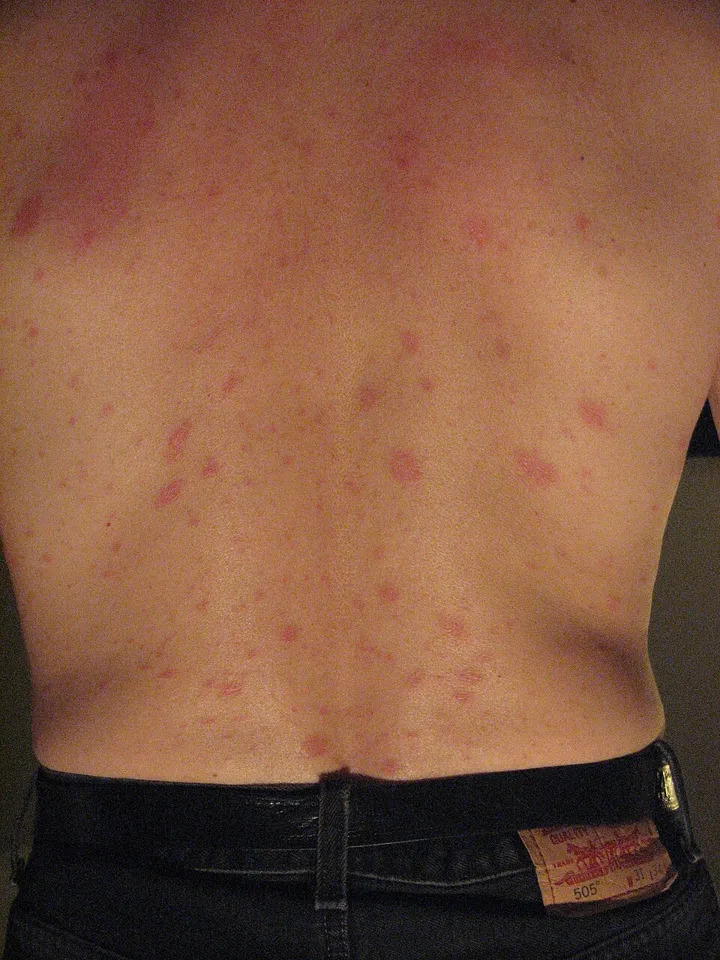
- Pityriasis rosea: herald patch then oval patches with collarette scale along skin cleavage lines ('Christmas tree' on the back); resolves in 6-8 weeks
- Tinea incognito: dermatophyte infection modified by topical steroids - less scale, more pustules, spreading
- Secondary syphilis mimics pityriasis rosea but involves palms and soles, with lymphadenopathy, mucosal lesions and patchy alopecia
- Guttate psoriasis: drop-like scaly papules 1-3 weeks after streptococcal sore throat, in young people
- Mycosis fungoides: persistent, variably scaly patches on buttocks and trunk ('bathing-trunk' distribution) in older adults - multiple biopsies
Differential diagnosis
| Condition | Clues | Key test |
|---|---|---|
| Chronic plaque psoriasis | Well-demarcated plaques, silvery scale, extensors, scalp, nails | Clinical; biopsy if atypical (parakeratosis, Munro microabscesses) |
| Tinea corporis | Annular plaque with scaly active edge and central clearing; often asymmetric; pets or contacts | KOH microscopy and culture of scrapings |
| Pityriasis rosea | Herald patch, oval collarette-scaled patches on trunk, young adults | Clinical; syphilis serology if atypical or palms/soles |
| Seborrhoeic dermatitis | Greasy yellow scale on scalp, eyebrows, nasolabial folds, chest | Clinical; consider HIV if severe |
| Discoid (nummular) eczema | Coin-shaped, itchy, crusted or exudative plaques on limbs | Clinical; swab if crusted; scrapings to exclude tinea |
| Lichen planus | Purple, polygonal, flat-topped itchy papules; Wickham striae; wrists, oral lace | Biopsy: lichenoid interface infiltrate |
| Secondary syphilis | Generalised scaly copper-coloured papules including palms and soles; nodes; mucous patches | Treponemal and non-treponemal serology |
| Mycosis fungoides | Fixed, irregular, mildly scaly patches on sun-protected sites; older adult; steroid-resistant | Multiple skin biopsies with immunohistochemistry and TCR clonality |
Exam pearls
Guideline
NICE CG153 Psoriasis: assessment and management (2012, updated 2017); AAD-NPF psoriasis topical therapy guideline (2021); NICE CKS Fungal skin infection (current 2026); CDC STI treatment guidelines (2021) for syphilis
References
- National Institute for Health and Care Excellence. Psoriasis: assessment and management (CG153). NICE 2012.
- Elmets CA, Korman NJ, Prater EF, et al.. Joint AAD-NPF guidelines of care for the management and treatment of psoriasis with topical therapy and alternative medicine modalities for psoriasis severity measures. J Am Acad Dermatol 2021.
- National Institute for Health and Care Excellence. Clinical Knowledge Summaries: Fungal skin infection (body and groin, foot, scalp), Fungal nail infection, Pityriasis versicolor (accessed November 2026). NICE CKS 2026.
- Workowski KA, Bachmann LH, Chan PA, et al.. Sexually Transmitted Infections Treatment Guidelines, 2021. MMWR Recomm Rep 2021.
- Leung AKC, Lam JM, Leong KF, Hon KL. Pityriasis rosea: an updated review. Curr Pediatr Rev 2021.
- Labedz N, Navarrete-Dechent C, Kubisiak-Rzepczyk H, et al.. Pityriasis versicolor - a narrative review on the diagnosis and management. Life (Basel) 2023.
Related topics
By Dr Khalid Seidi (B.Sc., M.D.) · MedEd World Clinical Knowledge library. Original teaching content checked against current guidelines (November 2026); confirm the latest local guidance before clinical use. Not a substitute for clinical judgement.