Clinical Knowledge › Neurology › Infections of the nervous system
HIV-associated neurological disease
HIV affects the nervous system at every stage of infection. Primary HIV infection can cause aseptic meningitis, encephalitis or Guillain–Barré syndrome. With progressive immunosuppression, CD4 count predicts the opportunistic disorders: cerebral toxoplasmosis, primary CNS lymphoma, cryptococcal meningitis, progressive multifocal leukoencephalopathy and CMV encephalitis or polyradiculitis occur mainly below 100–200 cells/μL, whereas TB meningitis, VZV and neurosyphilis occur at any CD4 count. HIV itself causes HIV-associated neurocognitive disorder (a subcortical cognitive–motor syndrome), vacuolar myelopathy, distal symmetric sensory polyneuropathy and myopathy. Antiretroviral therapy has made HIV-associated dementia uncommon, but milder cognitive impairment, CSF viral escape and immune reconstitution inflammatory syndrome (IRIS) remain important. The neurological approach combines localisation, CD4 count and viral load, MRI pattern, CSF analysis with cryptococcal antigen and PCR panels, and timely ART with prophylaxis against opportunistic infections.
Patient case, mechanism, investigations, management, flashcards and exam-style questions.Open the lesson →
Key facts
- Every person with an unexplained neurological syndrome should be offered an HIV test
- CD4 under 200: PML, toxoplasmosis (under 100), cryptococcal meningitis (under 100), CMV and primary CNS lymphoma (under 50)
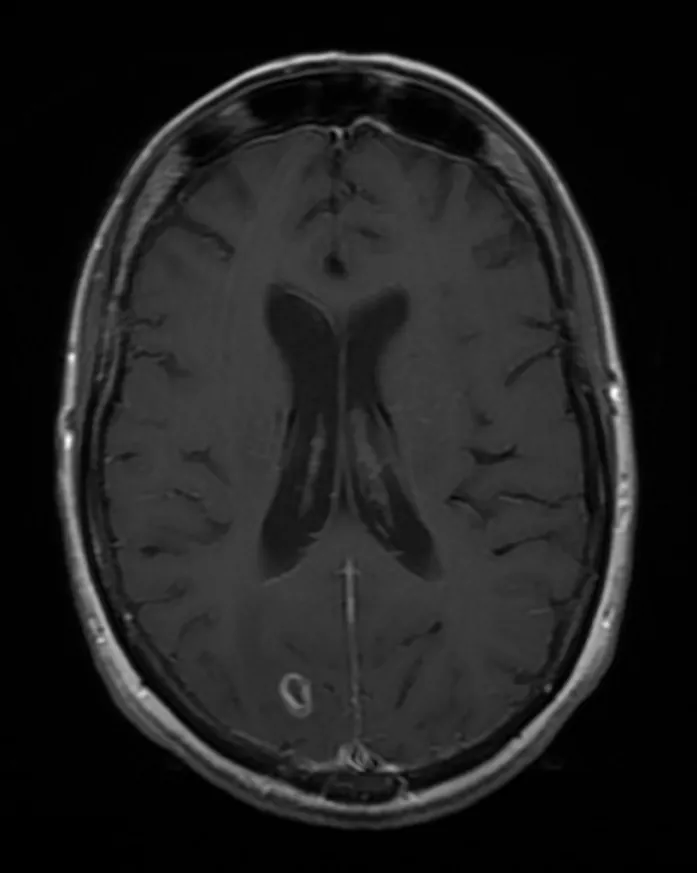
- Ring-enhancing lesions with CD4 under 100 and positive toxoplasma IgG: treat empirically for toxoplasmosis and re-image at 10–14 days
- PML: non-enhancing asymmetric subcortical white matter lesions without mass effect; CSF JC virus PCR
- Cryptococcal meningitis: very high opening pressure; therapeutic LPs reduce mortality; defer ART for 4–6 weeks
- HIV-associated neurocognitive disorder is subcortical: psychomotor slowing, apathy, poor attention, with later motor signs
- Distal symmetric sensory polyneuropathy is the commonest neurological complication; older drugs (stavudine, didanosine) caused toxic neuropathy
- IRIS causes paradoxical worsening after ART starts, especially with cryptococcal, TB and PML
Differential diagnosis
| Condition | Clues | Key test |
|---|---|---|
| Cerebral toxoplasmosis | Multiple ring-enhancing lesions at grey–white junction and basal ganglia, CD4 under 100 | Toxoplasma IgG; response to empirical therapy |
| Primary CNS lymphoma | Single periventricular enhancing lesion, CD4 under 50 | CSF EBV PCR, cytology; thallium SPECT or PET; biopsy |
| Progressive multifocal leukoencephalopathy | Subacute focal deficits, non-enhancing white matter lesions | CSF JC virus PCR |
| Cryptococcal meningitis | Headache, raised pressure, minimal meningism | CSF or serum cryptococcal antigen |
| Tuberculous meningitis or tuberculoma | Subacute meningitis, basal enhancement, any CD4 | CSF Xpert Ultra, culture |
| Neurosyphilis | Any CD4, cranial neuropathies, stroke, dementia | CSF VDRL, serum treponemal tests |
| CMV encephalitis or polyradiculitis | CD4 under 50, ventriculitis or cauda equina syndrome | CSF CMV PCR |
Exam pearls
Guideline
NIH/CDC/HIVMA-IDSA Guidelines for prevention and treatment of opportunistic infections in adults and adolescents with HIV (continuously updated, 2024), Frascati HAND criteria (2007) and International HIV-Cognition Working Group recommendations (2023)
References
- NIH, CDC, HIV Medicine Association of the IDSA. Guidelines for the prevention and treatment of opportunistic infections in adults and adolescents with HIV. Clinicalinfo.HIV.gov 2024.
- Antinori A, Arendt G, Becker JT, et al.. Updated research nosology for HIV-associated neurocognitive disorders. Neurology 2007.
- Nightingale S, Ances B, Cinque P, et al.. Cognitive impairment in people living with HIV: consensus recommendations for a new approach. Nat Rev Neurol 2023.
- Bowen LN, Smith B, Reich D, et al.. HIV-associated opportunistic CNS infections: pathophysiology, diagnosis and treatment. Nat Rev Neurol 2016.
- Penman ID, Ralston SH, Strachan MWJ, Hobson RP, eds.. Davidson's Principles and Practice of Medicine. 2022.
- Loscalzo J, Fauci AS, Kasper DL, et al., eds.. Harrison's Principles of Internal Medicine. 2022.
Related topics
By Dr Khalid Seidi (B.Sc., M.D.) · MedEd World Clinical Knowledge library. Original teaching content checked against current guidelines (November 2026); confirm the latest local guidance before clinical use. Not a substitute for clinical judgement.