Clinical Knowledge › Urology › Scrotal and penile conditions
Hydrocele
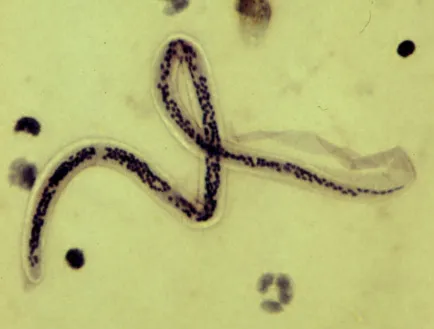
A hydrocele is an abnormal collection of serous fluid between the parietal and visceral layers of the tunica vaginalis. In infants it is usually communicating, through a patent processus vaginalis, and most close spontaneously by 1–2 years. Adult hydroceles are mostly non-communicating: idiopathic, or secondary to excess secretion or poor lymphatic absorption from epididymo-orchitis, torsion, trauma, a testicular tumour, varicocele surgery or, in the tropics, lymphatic filariasis (Wuchereria bancrofti), the commonest cause worldwide. Classically it is a painless, fluctuant swelling that transilluminates, that you can get above, and in which the testis cannot be felt. Because a tumour can hide inside, every new adult hydrocele, especially in men aged 15–45, needs scrotal ultrasound. Small asymptomatic hydroceles are observed. Symptomatic ones are treated by hydrocelectomy (Lord plication or Jaboulay eversion) through a scrotal incision, or by aspiration and sclerotherapy in men unfit for surgery once malignancy is excluded. Haematoma and recurrence are the main complications.
Patient case, mechanism, investigations, management, flashcards and exam-style questions.Open the lesson →
Key facts
- Fluid between the parietal and visceral layers of the tunica vaginalis surrounding the anterior and lateral testis
- Communicating hydrocele (patent processus vaginalis) in infants: varies in size during the day; most resolve by 12–24 months
- Adult non-communicating hydrocele: idiopathic or secondary to infection, torsion, trauma, tumour, varicocelectomy or filariasis
- Examination: painless, fluctuant, transilluminates, can get above it, testis not separately palpable
- Scrotal ultrasound is mandatory for a new adult hydrocele because the testis cannot be examined and up to about 10% of testicular tumours present with a reactive hydrocele
- Lymphatic filariasis (Wuchereria bancrofti) is the commonest cause worldwide; hydrocele surgery is part of WHO morbidity management
- Symptomatic adult hydrocele: hydrocelectomy via scrotal approach (Lord plication for thin-walled small/moderate sacs; Jaboulay eversion or excision for large or thick-walled)
- Aspiration alone recurs almost always; aspiration with sclerotherapy suits unfit patients but recurs more often than surgery
Differential diagnosis
| Condition | Clues | Key test |
|---|---|---|
| Epididymal cyst (spermatocele) | Separate from and above/behind the testis; testis palpable | Ultrasound: cyst arising from epididymal head |
| Indirect inguinoscrotal hernia | Cannot get above it; cough impulse; may reduce; bowel sounds | Clinical; ultrasound if unclear |
| Testicular tumour with reactive hydrocele | Hard testis, heaviness, age 15–45; testis may be impalpable | Ultrasound; AFP, beta-hCG, LDH |
| Varicocele | Bag of worms above the testis, increases on standing and Valsalva; does not transilluminate | Doppler ultrasound with reflux |
| Haematocele | After trauma or surgery; does not transilluminate | Ultrasound: complex echogenic fluid |
| Epididymo-orchitis with reactive hydrocele | Painful, tender, fever, urinary symptoms | Urinalysis, NAAT, Doppler hyperaemia |
| Hydrocele of the cord | Smooth cystic swelling along the cord, separate from testis, moves with traction on testis | Ultrasound |
Exam pearls
Guideline
EAU/ESPU Guidelines on Paediatric Urology (2025 edition, hydrocele section); EAU Guidelines on Testicular Cancer (2025 edition, scrotal ultrasound); WHO guideline on alternative mass drug administration regimens to eliminate lymphatic filariasis (2017)
References
- European Association of Urology / European Society for Paediatric Urology. EAU/ESPU Guidelines on Paediatric Urology (section on hydrocele). EAU Guidelines Office, Arnhem 2025.
- European Association of Urology. EAU Guidelines on Testicular Cancer. EAU Guidelines Office, Arnhem 2025.
- World Health Organization. Guideline: alternative mass drug administration regimens to eliminate lymphatic filariasis. WHO, Geneva 2017.
- Shakiba B, Heidari K, Afshar K, Faegh A, Salehi-Pourmehr H. Aspiration and sclerotherapy versus hydrocelectomy for treating hydroceles: a systematic review and meta-analyses. Surg Endosc 2023.
- Korkes F, Teles SB, Nascimento MP, de Almeida SS, Codeço AM. Comparison of outcomes and costs of surgery versus sclerotherapy to treat hydrocele. Einstein (Sao Paulo) 2021.
- Persad E, O'Loughlin CA, Kaur S, et al.. Surgical or radiological treatment for varicoceles in subfertile men. Cochrane Database Syst Rev 2021.
Related topics
By Dr Khalid Seidi (B.Sc., M.D.) · MedEd World Clinical Knowledge library. Original teaching content checked against current guidelines (November 2026); confirm the latest local guidance before clinical use. Not a substitute for clinical judgement.