Clinical Knowledge › Anaesthesiology › Perioperative complications and emergencies
Malignant hyperthermia
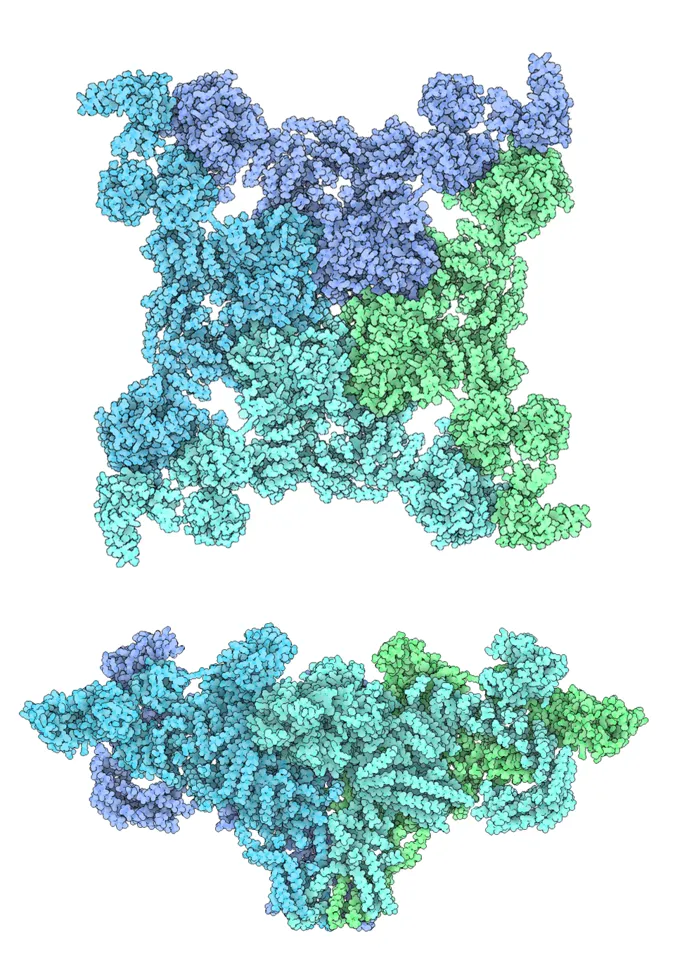
Malignant hyperthermia (MH) is an inherited pharmacogenetic disorder of skeletal muscle in which volatile anaesthetics or suxamethonium trigger uncontrolled calcium release from the sarcoplasmic reticulum through an abnormal ryanodine receptor (RYR1) or associated proteins (CACNA1S, STAC3). Sustained muscle contraction and hypermetabolism produce a rising end-tidal CO2 despite increased ventilation, unexplained tachycardia, rigidity or masseter spasm, mixed acidosis, hyperkalaemia, rhabdomyolysis and, often late, hyperthermia. Treatment is a time-critical drill: stop triggers, hyperventilate with 100% oxygen using activated charcoal filters, maintain anaesthesia intravenously, give dantrolene 2.5 mg/kg and repeat until control, cool actively and treat hyperkalaemia, acidosis and arrhythmias. Survivors need intensive care monitoring for recrudescence and renal injury, then referral to an MH unit for genetic testing or in vitro contracture testing, with family screening and trigger-free anaesthesia in future.
Patient case, mechanism, investigations, management, flashcards and exam-style questions.Open the lesson →
Key facts
- Autosomal dominant; most families carry an RYR1 variant on chromosome 19q13.1; CACNA1S and STAC3 account for a small number
- Triggers: all potent volatile agents (sevoflurane, desflurane, isoflurane) and suxamethonium; nitrous oxide, propofol, opioids, non-depolarising NMBs, ketamine and local anaesthetics are safe
- Reactions occur in about 1 in 10 000 to 1 in 250 000 anaesthetics, more often in children and young men; a previous uneventful anaesthetic does not exclude susceptibility
- Earliest and most sensitive sign: rising end-tidal CO2 despite increased minute ventilation, with unexplained tachycardia
- Hyperthermia is often a late sign; temperature can rise by 1–2 °C every 5 minutes once established
- Dantrolene 2.5 mg/kg IV, then further 1 mg/kg doses until ETCO2 and temperature settle; reconsider the diagnosis if more than 10 mg/kg seems needed (teaching dose; check local protocol)
- Masseter muscle rigidity after suxamethonium may be the first sign; it requires stopping triggers and close observation for MH
- Diagnosis is confirmed by a diagnostic RYR1/CACNA1S variant or by the in vitro contracture test on a thigh muscle biopsy at an MH unit
Differential diagnosis
| Condition | Clues | Key test |
|---|---|---|
| Hypoventilation or rebreathing (exhausted soda lime, faulty valve) | Raised ETCO2 with inspired CO2 above zero; normal temperature and no rigidity | Inspired CO2 on capnograph; check circuit and absorbent |
| Laparoscopic CO2 absorption | Rising ETCO2 after insufflation; resolves with ventilation and release of pneumoperitoneum | Temporal relation to insufflation |
| Sepsis | Fever, tachycardia and hypotension, often with a source; no rising ETCO2 at fixed ventilation | Lactate, cultures, white cell count |
| Thyroid storm | Known or suspected hyperthyroidism, goitre, atrial fibrillation; no rigidity | Free T4, T3, TSH |
| Phaeochromocytoma crisis | Severe paroxysmal hypertension and tachycardia during tumour handling | Plasma metanephrines |
| Neuroleptic malignant syndrome | Antipsychotic exposure, onset over days, lead-pipe rigidity outside theatre | Drug history; CK |
| Serotonin syndrome | Serotonergic drugs (for example SSRIs with methylene blue or tramadol), clonus and hyperreflexia | Hunter criteria; drug history |
| Iatrogenic overheating or light anaesthesia | Rising temperature with forced-air warming; tachycardia that settles with deeper anaesthesia or analgesia | Remove warming; depth monitoring |
Exam pearls
Guideline
EMHG Recognition and management of an MH crisis (2024 update) with Association of Anaesthetists Malignant Hyperthermia guideline (2020) and EMHG guidance on dantrolene availability (2020) and perioperative care of susceptible patients (2021)
References
- Glahn KPE, Girard T, Hellblom A, et al.. Recognition and management of a malignant hyperthermia crisis: updated 2024 guideline from the European Malignant Hyperthermia Group. Br J Anaesth 2025.
- Hopkins PM, Girard T, Dalay S, et al.. Malignant hyperthermia 2020: Guideline from the Association of Anaesthetists. Anaesthesia 2021.
- Glahn KPE, Bendixen D, Girard T, et al.. Availability of dantrolene for the management of malignant hyperthermia crises: European Malignant Hyperthermia Group guidelines. Br J Anaesth 2020.
- Hopkins PM, Rüffert H, Snoeck MM, et al.. European Malignant Hyperthermia Group guidelines for investigation of malignant hyperthermia susceptibility. Br J Anaesth 2015.
- Rosenberg H, Pollock N, Schiemann A, Bulger T, Stowell K.. Malignant hyperthermia: a review. Orphanet J Rare Dis 2015.
- Rüffert H, Bastian B, Bendixen D, et al.. Consensus guidelines on perioperative management of malignant hyperthermia suspected or susceptible patients from the European Malignant Hyperthermia Group. Br J Anaesth 2021.
Related topics
By Dr Khalid Seidi (B.Sc., M.D.) · MedEd World Clinical Knowledge library. Original teaching content checked against current guidelines (November 2026); confirm the latest local guidance before clinical use. Not a substitute for clinical judgement.