Clinical Knowledge › Paediatrics › Musculoskeletal, rheumatology and dermatology
Molluscum contagiosum
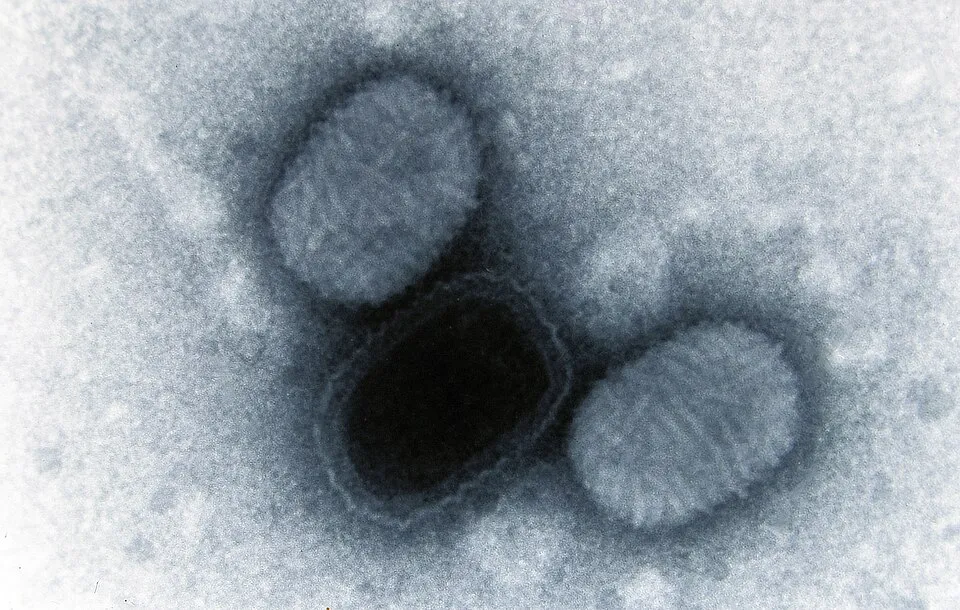
Molluscum contagiosum is a common, benign skin infection caused by a poxvirus (molluscum contagiosum virus), seen mainly in children aged 1–10 years. It spreads by skin-to-skin contact, shared towels and baths, and by scratching (autoinoculation); children with atopic eczema get more lesions. Lesions are pearly, dome-shaped, umbilicated papules 1–5 mm across, clustered on the trunk, axillae, flexures and thighs. Surrounding eczema ('molluscum dermatitis') is common, and redness and swelling of individual papules often signal the immune response that precedes clearance (the 'beginning of the end' sign) rather than bacterial infection. The diagnosis is clinical. Without treatment, lesions clear in most children within about 12–18 months, though some persist longer, and leave no scar. Reassurance, eczema care and avoiding scratching and shared towels are the mainstay; children need not be kept from school or swimming. Curettage, cryotherapy, cantharidin or berdazimer are reserved for troublesome lesions. Extensive, giant or facial lesions in older children or adults suggest immunosuppression, including HIV, and genital lesions need careful, proportionate safeguarding thought.
Patient case, mechanism, investigations, management, flashcards and exam-style questions.Open the lesson →
Key facts
- Caused by molluscum contagiosum virus, a double-stranded DNA poxvirus that replicates in the cytoplasm of keratinocytes
- Peak age 1–10 years; spread by direct contact, fomites (towels, bath sponges) and autoinoculation; incubation about 2–7 weeks
- Lesions: pearly, flesh-coloured, dome-shaped papules 1–5 mm with central umbilication; clusters or lines from scratching
- Molluscum dermatitis (eczema around lesions) is common, particularly in children with atopic eczema
- Inflamed lesions ('beginning of the end' sign) usually herald resolution, not bacterial infection
- Natural history: most clear in about 12–18 months (UK cohort mean about 13 months); no scarring if not picked
- No exclusion from school, nursery or swimming; avoid sharing towels and scratching
- Extensive or giant lesions in older children or adults → consider HIV or other immunodeficiency; eyelid lesions can cause chronic conjunctivitis
Differential diagnosis
| Condition | Clues | Key test |
|---|---|---|
| Viral warts | Rough, hyperkeratotic papules with black dots (thrombosed capillaries), hands and feet; no umbilication | Clinical |
| Milia | Tiny white keratin cysts on face of newborns, no umbilication | Clinical |
| Chickenpox or herpes simplex | Vesicles on red base, crusting within days, fever (varicella) or grouped painful vesicles (HSV) | Clinical; PCR of vesicle fluid |
| Folliculitis or bacterial infection | Pustules centred on hair follicles, tender | Clinical; swab if spreading |
| Juvenile xanthogranuloma | Yellow-orange firm papule, usually solitary, infant | Clinical; biopsy if uncertain |
| Cryptococcosis or histoplasmosis (immunosuppressed) | Umbilicated papules in advanced HIV with systemic illness | Biopsy and culture; CD4 count |
| Basal cell carcinoma (adults) | Pearly papule with telangiectasia, slow growth, sun-exposed site | Biopsy |
Exam pearls
Guideline
NICE Clinical Knowledge Summary on molluscum contagiosum (online, accessed 2026), Cochrane review of interventions (2017), and FDA approvals of cantharidin 0.7% (2023) and berdazimer 10.3% gel (2024)
References
- National Institute for Health and Care Excellence. Clinical Knowledge Summaries: Molluscum contagiosum. NICE CKS (online) 2026.
- Olsen JR, Gallacher J, Finlay AY, et al.. Time to resolution and effect on quality of life of molluscum contagiosum in children in the UK: a prospective community cohort study. Lancet Infect Dis 2015.
- van der Wouden JC, van der Sande R, Kruithof EJ, et al.. Interventions for cutaneous molluscum contagiosum. Cochrane Database Syst Rev 2017.
- Eichenfield LF, McFalda W, Brabec B, et al.. Safety and Efficacy of VP-102, a Proprietary, Drug-Device Combination Product Containing Cantharidin, 0.7% (w/v), in Children and Adults With Molluscum Contagiosum: Two Phase 3 Randomized Clinical Trials. JAMA Dermatol 2020.
- Browning JC, Enloe C, Cartwright M, et al.. Efficacy and Safety of Topical Nitric Oxide-Releasing Berdazimer Gel in Patients With Molluscum Contagiosum: A Phase 3 Randomized Clinical Trial. JAMA Dermatol 2022.
- Eichenfield LF, Siegfried E, Kwong P, et al.. Pooled Results of Two Randomized Phase III Trials Evaluating VP-102, a Drug-Device Combination Product Containing Cantharidin 0.7% (w/v) for the Treatment of Molluscum Contagiosum. Am J Clin Dermatol 2021.
Related topics
By Dr Khalid Seidi (B.Sc., M.D.) · MedEd World Clinical Knowledge library. Original teaching content checked against current guidelines (November 2026); confirm the latest local guidance before clinical use. Not a substitute for clinical judgement.