Clinical Knowledge › Paediatrics › Musculoskeletal, rheumatology and dermatology
Septic arthritis and osteomyelitis in children
Acute haematogenous osteomyelitis and septic (acute bacterial) arthritis are bacterial infections of bone and joint that mostly affect under-5s. Bacteria seed the slow-flowing metaphyseal vessels of long bones and can spread into adjacent joints, especially in infants. Staphylococcus aureus is the leading cause at all ages, Kingella kingae is common at 6 months to 4 years, and neonates also get group B streptococcus and Gram-negative bacilli. Children present with fever, pain, limp or refusal to use a limb; neonates may only show pseudoparalysis. Kocher criteria help separate septic arthritis from transient synovitis. Investigate with blood tests, cultures, ultrasound, joint aspiration and MRI. Septic arthritis is an emergency needing urgent joint drainage. Empirical antibiotics cover S. aureus (and Kingella in young children), with early switch to high-dose oral therapy once the child improves and CRP falls: about 10–14 days for uncomplicated septic arthritis and 3–4 weeks for osteomyelitis. Complications include growth disturbance, avascular necrosis and chronic osteomyelitis.
Patient case, mechanism, investigations, management, flashcards and exam-style questions.Open the lesson →
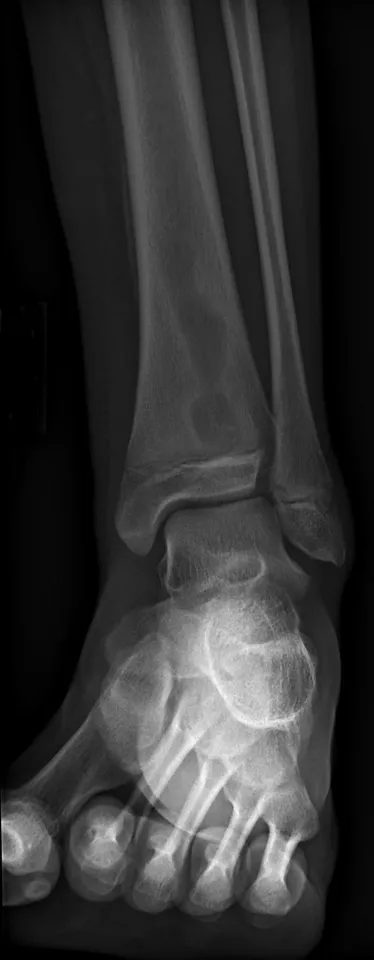
Key facts
- Most cases occur under 5 years; boys more than girls; long bones of the lower limb (femur, tibia) and the hip and knee are commonest sites
- Staphylococcus aureus causes most infections; Kingella kingae is a leading cause at 6 months to 4 years; MRSA and PVL-producing strains vary by region
- Metaphyseal seeding: in infants under about 18 months transphyseal vessels let infection reach the epiphysis and joint
- Kocher criteria for the irritable hip: non-weight-bearing, temperature over 38.5 °C, ESR over 40 mm/h, WCC over 12 x 10^9/L (CRP over 20 mg/L added later)
- Ultrasound detects hip effusion; aspiration fluid for Gram stain, culture and Kingella PCR; MRI is the imaging of choice for osteomyelitis
- Septic arthritis is a surgical emergency: urgent drainage (arthrotomy, arthroscopic washout or needle lavage) plus antibiotics
- Early IV-to-oral switch (often after 2–4 days) with high-dose oral agents is as effective as prolonged IV therapy in uncomplicated cases
- Total duration: about 10–14 days for uncomplicated septic arthritis, about 3–4 weeks for uncomplicated osteomyelitis (PIDS/IDSA 2021 and 2023)
Differential diagnosis
| Condition | Clues | Key test |
|---|---|---|
| Transient synovitis of the hip | Well child, low or no fever, can often weight-bear, normal or mildly raised markers | Kocher criteria; ultrasound; observation |
| Perthes disease | Afebrile, insidious limp age 4–8, normal markers | Pelvic radiographs |
| Acute lymphoblastic leukaemia | Bone pain, night pain, pallor, bruising, cytopenias | FBC and blood film; bone marrow if suspicious |
| Ewing sarcoma or osteosarcoma | Fever and raised ESR can occur in Ewing sarcoma; mass, night pain | X-ray (permeative or periosteal reaction), MRI, biopsy |
| Fracture, including non-accidental injury | History of trauma or inconsistent history, bruising, multiple fractures | Radiographs, skeletal survey and safeguarding assessment if indicated |
| Juvenile idiopathic arthritis or reactive arthritis | Subacute, afebrile or low-grade fever, recent infection, other joints | Inflammatory markers, synovial fluid culture negative |
| Cellulitis or pyomyositis | Superficial erythema; deep muscle pain (pyomyositis) in warm climates | Ultrasound or MRI |
| Sickle cell vaso-occlusive crisis | Known sickle cell disease, bone pain; infection may coexist | MRI, blood culture; cover Salmonella if infection suspected |
Exam pearls
Guideline
PIDS/IDSA clinical practice guideline on acute haematogenous osteomyelitis in children (2021) and PIDS/IDSA guideline on acute bacterial arthritis in children (2023, published 2024); NICE NG143 fever in under 5s (2019, updated 2021)
References
- Woods CR, Bradley JS, Chatterjee A, et al.. Clinical practice guideline by the PIDS and IDSA: 2021 guideline on diagnosis and management of acute hematogenous osteomyelitis in pediatrics. J Pediatric Infect Dis Soc 2021.
- Woods CR, Bradley JS, Chatterjee A, Kronman MP, et al.. Clinical practice guideline by the PIDS and IDSA: 2023 guideline on diagnosis and management of acute bacterial arthritis in pediatrics. J Pediatric Infect Dis Soc 2024.
- Peltola H, Pääkkönen M, Kallio P, Kallio MJ.. Prospective, randomized trial of 10 days versus 30 days of antimicrobial treatment, including a short-term course of parenteral therapy, for childhood septic arthritis. Clin Infect Dis 2009.
- Peltola H, Pääkkönen M, Kallio P, Kallio MJ.. Short- versus long-term antimicrobial treatment for acute hematogenous osteomyelitis of childhood: prospective, randomized trial on 131 culture-positive cases. Pediatr Infect Dis J 2010.
- Kocher MS, Zurakowski D, Kasser JR.. Differentiating between septic arthritis and transient synovitis of the hip in children: an evidence-based clinical prediction algorithm. J Bone Joint Surg Am 1999.
- Caird MS, Flynn JM, Leung YL, Millman JE, D'Italia JG, Dormans JP.. Factors distinguishing septic arthritis from transient synovitis of the hip in children: a prospective study. J Bone Joint Surg Am 2006.
Related topics
By Dr Khalid Seidi (B.Sc., M.D.) · MedEd World Clinical Knowledge library. Original teaching content checked against current guidelines (November 2026); confirm the latest local guidance before clinical use. Not a substitute for clinical judgement.