Clinical Knowledge › Neurology › Demyelinating and neuroinflammatory disorders
Multiple sclerosis
Multiple sclerosis (MS) is a chronic immune-mediated inflammatory, demyelinating and neurodegenerative disease of the central nervous system. It usually begins at 20–40 years, affects women about three times as often as men, and is linked to Epstein–Barr virus, low vitamin D, smoking and HLA-DRB1*15:01. Most patients start with relapsing–remitting disease: attacks of optic neuritis, partial myelitis or brainstem syndromes (internuclear ophthalmoplegia) evolving over days and recovering over weeks; about 10–15% have primary progressive MS. Diagnosis uses the 2024 McDonald criteria: dissemination in space (now including the optic nerve as a fifth site) and, in most cases, dissemination in time on MRI, CSF-specific oligoclonal bands or kappa free light chains. Relapses are treated with high-dose corticosteroids. Early disease-modifying therapy, increasingly high-efficacy agents such as anti-CD20 antibodies, reduces relapses and disability. Symptomatic care and rehabilitation address spasticity, bladder, fatigue and mood.
Patient case, mechanism, investigations, management, flashcards and exam-style questions.Open the lesson →
Key facts
- MS typically presents at 20–40 years with a female-to-male ratio of about 3:1; prevalence rises with latitude
- Clinically isolated syndromes: optic neuritis, partial transverse myelitis and brainstem/cerebellar syndromes such as internuclear ophthalmoplegia
- 2024 McDonald criteria: dissemination in space in at least 2 of 5 regions (periventricular, cortical/juxtacortical, infratentorial, spinal cord, optic nerve)
- CSF-specific oligoclonal bands (or raised kappa free light chain index) can substitute for dissemination in time
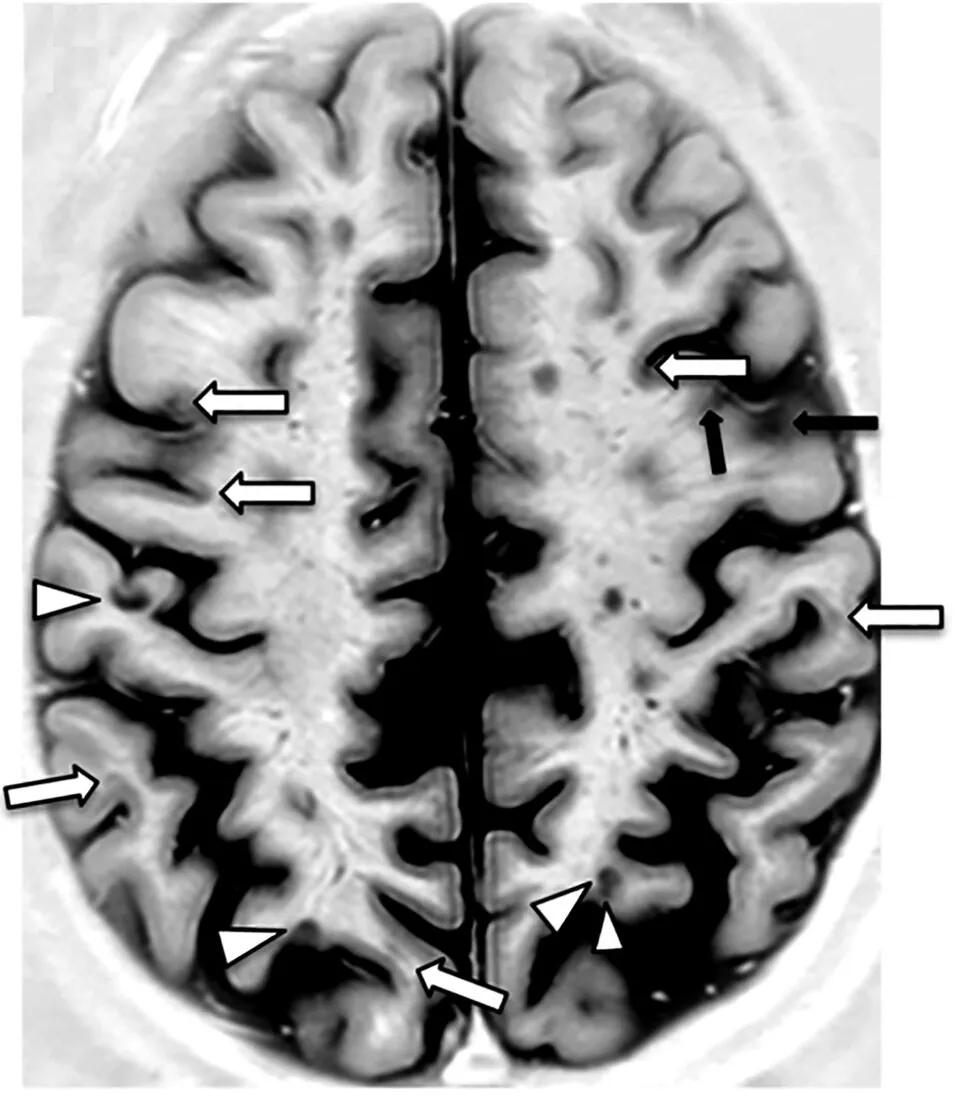
- Typical MRI: ovoid periventricular lesions perpendicular to the ventricles (Dawson fingers), juxtacortical, infratentorial and short-segment cord lesions
- Acute relapse: methylprednisolone 500 mg orally daily for 5 days or 1 g IV daily for 3–5 days (teaching dose; check local protocol)
- Uhthoff phenomenon (worsening with heat) and Lhermitte sign (electric shock down the spine on neck flexion) are classic
- High-efficacy DMTs (ocrelizumab, ofatumumab, natalizumab, cladribine, alemtuzumab) carry risks such as PML with natalizumab (JC virus status)
Differential diagnosis
| Condition | Clues | Key test |
|---|---|---|
| Neuromyelitis optica spectrum disorder | Severe bilateral optic neuritis, longitudinally extensive myelitis, area postrema syndrome | Serum AQP4-IgG (cell-based assay) |
| MOG antibody-associated disease | ADEM, bilateral optic neuritis with disc swelling, conus myelitis | Serum MOG-IgG (cell-based assay) |
| Small vessel ischaemic disease | Older age, vascular risk factors, lesions spare U-fibres and corpus callosum | MRI pattern; no oligoclonal bands |
| Neurosarcoidosis | Leptomeningeal enhancement, systemic sarcoid, hypothalamic involvement | Chest CT, biopsy, CSF |
| Vitamin B12 deficiency myelopathy | Dorsal column signs, macrocytosis, neuropathy | Serum B12, methylmalonic acid |
| Systemic lupus erythematosus or Sjögren syndrome | Rash, arthritis, sicca, multisystem disease | ANA, anti-dsDNA, anti-Ro/La |
| Migraine with white matter lesions | Small non-specific lesions, typical headache history | No central vein sign; no oligoclonal bands |
Exam pearls
Guideline
2024 McDonald diagnostic criteria (published 2025), ECTRIMS/EAN guideline on pharmacological treatment of MS (2018) and NICE NG220 Multiple sclerosis in adults (2022)
References
- Montalban X, Lebrun-Frénay C, Oh J, et al.. Diagnosis of multiple sclerosis: 2024 revisions of the McDonald criteria. Lancet Neurol 2025.
- Thompson AJ, Banwell BL, Barkhof F, et al.. Diagnosis of multiple sclerosis: 2017 revisions of the McDonald criteria. Lancet Neurol 2018.
- Montalban X, Gold R, Thompson AJ, et al.. ECTRIMS/EAN Guideline on the pharmacological treatment of people with multiple sclerosis. Mult Scler 2018.
- National Institute for Health and Care Excellence. Multiple sclerosis in adults: management (NG220). NICE 2022.
- Thompson AJ, Baranzini SE, Geurts J, et al.. Multiple sclerosis. Lancet 2018.
- Saidha S, Green AJ, Leocani L, et al.. The use of optical coherence tomography and visual evoked potentials in the 2024 McDonald diagnostic criteria for multiple sclerosis. Lancet Neurol 2025.
Related topics
By Dr Khalid Seidi (B.Sc., M.D.) · MedEd World Clinical Knowledge library. Original teaching content checked against current guidelines (November 2026); confirm the latest local guidance before clinical use. Not a substitute for clinical judgement.