Clinical Knowledge › Neurology › Motor neurone, neuromuscular junction and muscle disorders
Myotonic dystrophy
Myotonic dystrophy is the commonest inherited muscular dystrophy of adults, a multisystem autosomal dominant disorder caused by unstable nucleotide repeat expansions. Type 1 (DM1) results from a CTG expansion in the DMPK gene on chromosome 19 and shows anticipation, with a severe congenital form usually inherited from the mother; type 2 (DM2) results from a CCTG expansion in CNBP and is milder and proximal. Toxic RNA from the expanded repeat sequesters splicing regulators (MBNL1), causing mis-splicing of the chloride channel, insulin receptor and cardiac proteins. DM1 causes myotonia (delayed relaxation after grip or percussion), distal and facial weakness with ptosis, temporal and masseter wasting, frontal balding, early cataracts, cardiac conduction disease and arrhythmias (a major cause of sudden death), respiratory weakness, dysphagia, insulin resistance, hypogonadism, hypersomnolence and cognitive and personality change. Diagnosis is by genetic testing of repeat size; EMG shows myotonic discharges. There is no cure; care focuses on annual ECG and cardiac surveillance with pacing or defibrillator when indicated, cataract surgery, respiratory and anaesthetic precautions, mexiletine for troublesome myotonia, management of daytime sleepiness and genetic counselling.
Patient case, mechanism, investigations, management, flashcards and exam-style questions.Open the lesson →
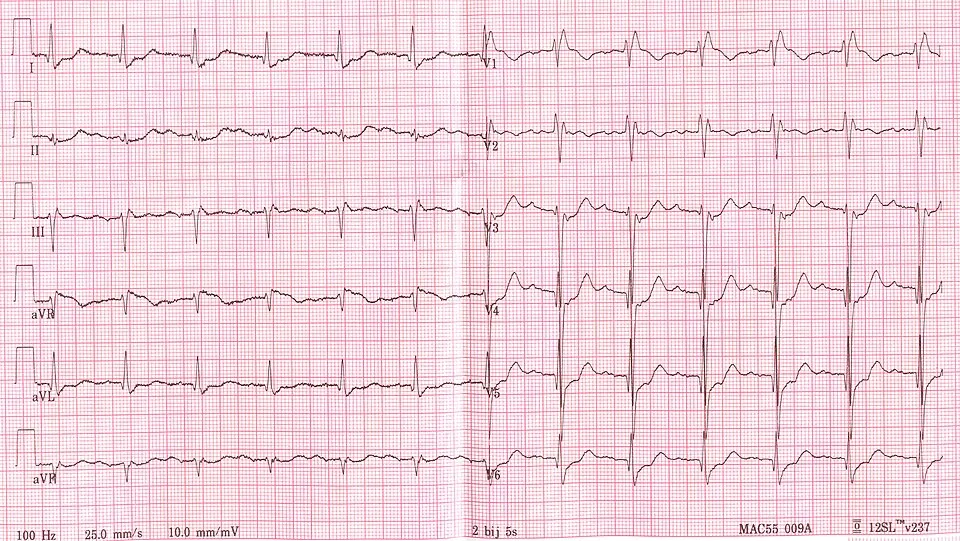
Key facts
- DM1: CTG repeat expansion in DMPK (chromosome 19q13); DM2: CCTG expansion in CNBP (chromosome 3q)
- Autosomal dominant with anticipation in DM1; congenital DM1 almost always maternally inherited
- Mechanism: toxic RNA gain of function sequesters MBNL1, causing mis-splicing (CLCN1 → myotonia, insulin receptor → insulin resistance)
- DM1 weakness is distal, facial and neck flexor; DM2 is proximal
- Signs: grip and percussion myotonia, ptosis, hatchet face, temporal wasting, frontal balding
- Cataracts (iridescent posterior subcapsular), cardiac conduction block and arrhythmias, insulin resistance, hypogonadism, hypersomnolence
- EMG: myotonic discharges ('dive-bomber' sound); diagnosis confirmed by genetic testing
- Annual ECG (± Holter); pacemaker or ICD for conduction disease; high anaesthetic risk (avoid suxamethonium, caution with sedatives)
Differential diagnosis
| Condition | Clues | Key test |
|---|---|---|
| Myotonia congenita | Myotonia with muscle hypertrophy, no weakness or multisystem disease | CLCN1 genetic testing |
| Paramyotonia congenita | Myotonia worse with cold and repeated exercise | SCN4A testing |
| Facioscapulohumeral dystrophy | Facial and scapular weakness without myotonia | D4Z4 contraction testing |
| Inclusion body myositis | Older adult, finger flexor and quadriceps weakness, no myotonia | Muscle biopsy |
| Oculopharyngeal muscular dystrophy | Ptosis and dysphagia in later life, no myotonia | PABPN1 testing |
| Myasthenia gravis | Fatigable ptosis and weakness, no myotonia | AChR antibodies |
| Mitochondrial myopathy (CPEO) | Ptosis and ophthalmoplegia, no myotonia | Muscle biopsy, mtDNA |
Exam pearls
Guideline
Consensus-based care recommendations for adults with myotonic dystrophy type 1 (2018) and for DM2 (2019), with ESC 2021 pacing and 2022 ventricular arrhythmia guidelines for neuromuscular disease
References
- Ashizawa T, Gagnon C, Groh WJ, et al.. Consensus-based care recommendations for adults with myotonic dystrophy type 1. Neurol Clin Pract 2018.
- Schoser B, Montagnese F, Bassez G, et al.. Consensus-based care recommendations for adults with myotonic dystrophy type 2. Neurol Clin Pract 2019.
- Glikson M, Nielsen JC, Kronborg MB, et al.. 2021 ESC Guidelines on cardiac pacing and cardiac resynchronization therapy. Eur Heart J 2021.
- Thornton CA. Myotonic dystrophy. Neurol Clin 2014.
- Ropper AH, Samuels MA, Klein JP, Prasad S.. Adams and Victor's Principles of Neurology. 2023.
- Papadakis MA, Rabow MW, McQuaid KR, eds.. CURRENT Medical Diagnosis & Treatment 2026. 2026.
Related topics
By Dr Khalid Seidi (B.Sc., M.D.) · MedEd World Clinical Knowledge library. Original teaching content checked against current guidelines (November 2026); confirm the latest local guidance before clinical use. Not a substitute for clinical judgement.