Clinical Knowledge › Neurology › Motor neurone, neuromuscular junction and muscle disorders
Periodic paralysis
Periodic paralyses are rare disorders of skeletal muscle excitability that cause episodes of flaccid weakness lasting minutes to days, with normal strength between attacks early in the disease. Primary forms are channelopathies: hypokalaemic periodic paralysis (CACNA1S or SCN4A mutations), hyperkalaemic periodic paralysis (SCN4A) and Andersen–Tawil syndrome (KCNJ2), which adds ventricular arrhythmias and dysmorphic features. Secondary forms are commoner, especially thyrotoxic periodic paralysis in young Asian and Latin American men, and hypokalaemia from renal or gastrointestinal losses. Hypokalaemic attacks follow rest after exercise or carbohydrate-rich meals and last hours to days; hyperkalaemic attacks are shorter and follow fasting, cold or potassium-rich food. Weakness spares bulbar and respiratory muscles in most cases; reflexes are reduced during attacks, and sensation is normal. Diagnosis relies on potassium measured during an attack, ECG, thyroid function, urinary potassium, the long exercise test and genetic testing. Treatment includes careful potassium replacement or reduction, beta-blockers for thyrotoxic paralysis, trigger avoidance and carbonic anhydrase inhibitors such as dichlorphenamide or acetazolamide for prevention.
Patient case, mechanism, investigations, management, flashcards and exam-style questions.Open the lesson →
Key facts
- Episodic flaccid weakness with normal sensation; reflexes reduced during attacks; often normal between attacks
- Hypokalaemic PP: CACNA1S (about 60%) or SCN4A (about 20%); autosomal dominant; onset usually in teens
- Triggers (hypokalaemic): carbohydrate-rich meals, rest after exercise, stress, glucocorticoids, insulin; attacks often on waking, last hours to days
- Hyperkalaemic PP: SCN4A; brief attacks (minutes to hours) after fasting, rest after exercise, cold or potassium-rich food; may have myotonia
- Thyrotoxic PP: young Asian men; hypokalaemia from intracellular shift; treat with small potassium doses and non-selective beta-blocker, then the thyrotoxicosis
- Andersen–Tawil syndrome (KCNJ2): periodic paralysis, ventricular arrhythmias with prominent U waves, dysmorphic features
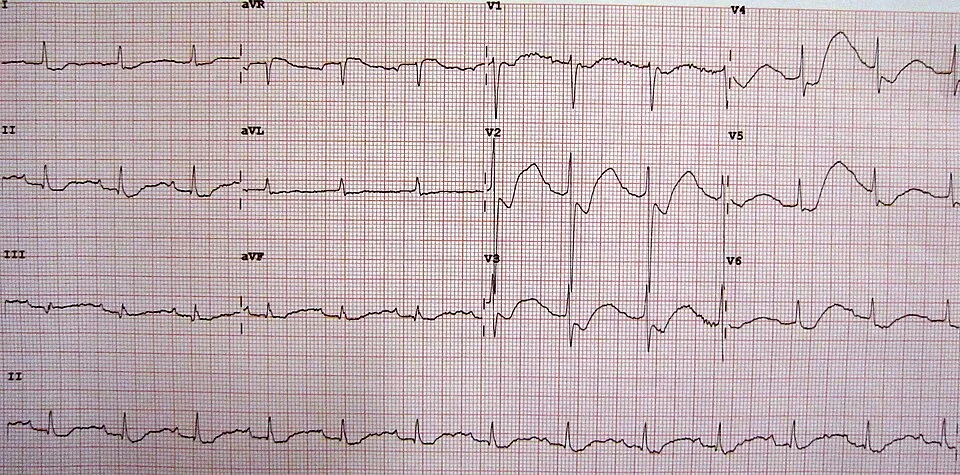
- Measure potassium, ECG, TSH and free T4 during the attack; urinary potassium distinguishes renal loss from shift
- Prevention: dichlorphenamide or acetazolamide (carbonic anhydrase inhibitors), potassium-sparing diuretics (hypokalaemic), thiazides (hyperkalaemic)
Differential diagnosis
| Condition | Clues | Key test |
|---|---|---|
| Hypokalaemia from renal or GI losses | Diuretics, vomiting, diarrhoea, hyperaldosteronism, renal tubular acidosis; total body potassium depleted | Urinary potassium, acid–base status, renin and aldosterone |
| Guillain–Barré syndrome | Progressive ascending weakness over days, sensory symptoms, no recovery within hours | Normal potassium; NCS; CSF |
| Myasthenic crisis | Fatigable ptosis, bulbar and respiratory weakness | AChR antibodies; normal potassium |
| Cataplexy | Brief loss of tone triggered by emotion, consciousness preserved | Sleep studies; narcolepsy features |
| Functional neurological disorder | Inconsistent weakness, normal reflexes and potassium | Positive clinical signs; normal tests |
| Spinal cord compression or transverse myelitis | Sensory level, sphincter disturbance | MRI spine |
| Rhabdomyolysis | Pain, tenderness, dark urine, very high CK | CK, urine myoglobin |
Exam pearls
Guideline
International expert review and recommendations on diagnosis and treatment of periodic paralysis (Statland et al., 2018), dichlorphenamide randomised trials (HYP-HOP 2016) and FDA approval of dichlorphenamide for primary periodic paralysis (2015)
References
- Statland JM, Fontaine B, Hanna MG, et al.. Review of the diagnosis and treatment of periodic paralysis. Muscle Nerve 2018.
- Sansone VA, Burge J, McDermott MP, et al.. Randomized, placebo-controlled trials of dichlorphenamide in periodic paralysis. Neurology 2016.
- Lin SH, Huang CL. Mechanism of thyrotoxic periodic paralysis. J Am Soc Nephrol 2012.
- Cannon SC. Channelopathies of skeletal muscle excitability. Compr Physiol 2015.
- Ropper AH, Samuels MA, Klein JP, Prasad S.. Adams and Victor's Principles of Neurology. 2023.
- Papadakis MA, Rabow MW, McQuaid KR, eds.. CURRENT Medical Diagnosis & Treatment 2026. 2026.
Related topics
By Dr Khalid Seidi (B.Sc., M.D.) · MedEd World Clinical Knowledge library. Original teaching content checked against current guidelines (November 2026); confirm the latest local guidance before clinical use. Not a substitute for clinical judgement.