Clinical Knowledge › Ear, nose and throat › Clinical problems
Nasal obstruction: approach to the patient
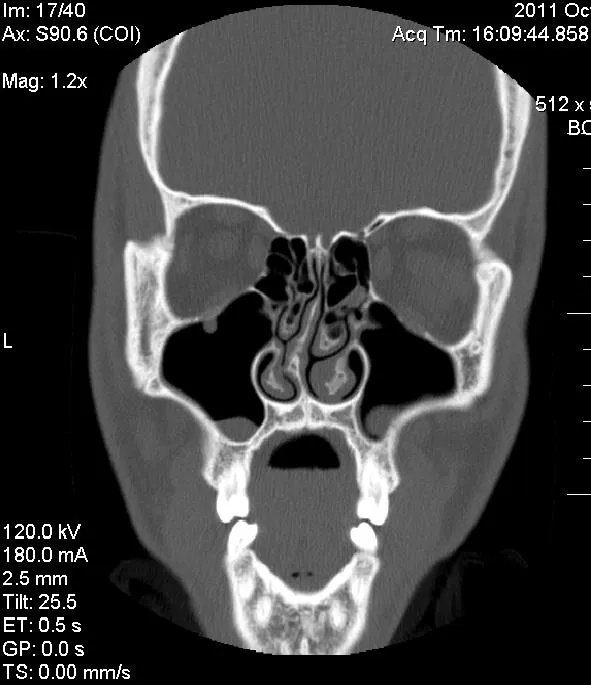
Nasal obstruction (blockage or congestion) is a very common nasal complaint. The causes are mucosal, structural or neoplastic. Mucosal causes, such as allergic and non-allergic rhinitis, rhinitis medicamentosa from overuse of decongestant sprays, chronic rhinosinusitis and pregnancy, usually cause bilateral, fluctuating blockage with rhinorrhoea or sneezing. Structural causes, such as septal deviation, turbinate hypertrophy, nasal valve collapse and, in children, adenoid hypertrophy, choanal atresia or a foreign body, cause fixed and often unilateral blockage. Tumours, including inverted papilloma, sinonasal carcinoma and nasopharyngeal carcinoma, present with progressive unilateral blockage, blood-stained discharge, facial pain or swelling, cranial nerve signs or a unilateral middle ear effusion. Assessment uses anterior rhinoscopy, the Cottle manoeuvre and nasendoscopy. Most patients improve with saline irrigation and an intranasal corticosteroid used with correct technique; septoplasty, turbinate reduction or sinus surgery helps selected patients. Unilateral symptoms are red flags.
Patient case, mechanism, investigations, management, flashcards and exam-style questions.Open the lesson →
Key facts
- Bilateral fluctuating obstruction with sneezing or rhinorrhoea suggests mucosal disease; fixed unilateral obstruction suggests structural disease or tumour
- Unilateral obstruction with blood-stained discharge, facial pain or swelling, cheek numbness, diplopia, proptosis or loose teeth needs urgent ENT assessment for malignancy
- Unilateral middle ear effusion in an adult needs nasendoscopy to exclude nasopharyngeal carcinoma
- Topical decongestants used for more than 5–7 days cause rebound congestion (rhinitis medicamentosa)
- Chronic rhinosinusitis (EPOS 2020): ≥2 symptoms for ≥12 weeks, one being blockage or discharge, plus endoscopic or CT evidence
- Intranasal corticosteroids are first-line for allergic rhinitis and CRS; technique matters (head forward, aim away from the septum)
- Septal haematoma after nasal trauma must be drained the same day to prevent abscess and saddle-nose deformity
- In the NAIROS trial, septoplasty gave better nasal symptom scores than medical treatment in adults with septal deviation
Differential diagnosis
| Condition | Clues | Key test |
|---|---|---|
| Allergic rhinitis | Sneezing, itch, watery rhinorrhoea, seasonal or perennial triggers, pale boggy turbinates | Skin prick test or specific IgE |
| Rhinitis medicamentosa | Regular decongestant spray use, rebound blockage | History; red swollen mucosa |
| Chronic rhinosinusitis with nasal polyps | Bilateral blockage, loss of smell, asthma, aspirin sensitivity | Nasendoscopy; CT sinuses |
| Deviated nasal septum | Fixed unilateral (or alternating) obstruction, previous trauma | Anterior rhinoscopy; nasendoscopy |
| Nasal valve collapse | Inspiratory collapse of the lateral nasal wall | Positive Cottle manoeuvre |
| Adenoid hypertrophy (child) | Mouth-breathing, snoring, hyponasal speech, glue ear | Nasendoscopy or lateral neck X-ray |
| Sinonasal tumour | Unilateral blockage, blood-stained discharge, facial numbness, wood-dust exposure | Nasendoscopy and biopsy; CT and MRI |
| Nasopharyngeal carcinoma | Southern Chinese or North African origin, unilateral OME, neck node, epistaxis | Nasendoscopy, biopsy, EBV DNA |
Exam pearls
Guideline
EPOS 2020 (European Position Paper on Rhinosinusitis and Nasal Polyps) with EUFOREA/EPOS 2023 biologic criteria, AAO-HNSF Adult Sinusitis guideline update (2025) and ARIA 2019 allergic rhinitis guidance
References
- Fokkens WJ, Lund VJ, Hopkins C, Hellings PW, et al.. European Position Paper on Rhinosinusitis and Nasal Polyps 2020. Rhinology 2020.
- Payne SC, McKenna M, Buckley J, Colandrea M, et al.. Clinical Practice Guideline: Adult Sinusitis Update. Otolaryngol Head Neck Surg 2025.
- Bousquet J, Schünemann HJ, Togias A, Bachert C, et al.. Next-generation Allergic Rhinitis and Its Impact on Asthma (ARIA) guidelines for allergic rhinitis based on GRADE and real-world evidence. J Allergy Clin Immunol 2020.
- Carrie S, Fouweather T, Homer T, O'Hara J, et al.. Effectiveness of septoplasty compared to medical management in adults with obstruction associated with a deviated nasal septum: the NAIROS RCT. Health Technol Assess 2024.
- Stewart MG, Witsell DL, Smith TL, Weaver EM, et al.. Development and validation of the Nasal Obstruction Symptom Evaluation (NOSE) scale. Otolaryngol Head Neck Surg 2004.
- Expert Panel on Neurological Imaging: Hagiwara M, Policeni B, Juliano AF, et al.. ACR Appropriateness Criteria Sinonasal Disease: 2021 Update. J Am Coll Radiol 2022.
Related topics
By Dr Khalid Seidi (B.Sc., M.D.) · MedEd World Clinical Knowledge library. Original teaching content checked against current guidelines (November 2026); confirm the latest local guidance before clinical use. Not a substitute for clinical judgement.