Clinical Knowledge › Ear, nose and throat › Clinical problems
Tinnitus: approach to the patient
Tinnitus is the perception of sound without an external source. About 10–15% of adults experience it and a small minority find it severely distressing, with insomnia, low mood or suicidal thoughts. Most tinnitus is subjective, non-pulsatile and bilateral, and accompanies sensorineural hearing loss from age or noise; reduced cochlear input raises central auditory gain and the limbic system attaches distress. Assessment sorts patients into three groups. Pulsatile tinnitus suggests a vascular cause (idiopathic intracranial hypertension, dural arteriovenous fistula, carotid disease, glomus tumour, high-output states) and needs imaging. Unilateral or asymmetric non-pulsatile tinnitus, especially with asymmetric hearing loss, needs MRI of the internal auditory meatus to exclude vestibular schwannoma. Bilateral non-pulsatile tinnitus with symmetrical hearing needs audiometry but not routine imaging. Management is education, hearing aids when hearing is reduced, sound enrichment and cognitive behavioural therapy; drugs and supplements are not recommended for the tinnitus itself.
Patient case, mechanism, investigations, management, flashcards and exam-style questions.Open the lesson →
Key facts
- Subjective tinnitus is heard only by the patient; objective tinnitus (vascular, myoclonic) can sometimes be heard by the examiner
- Pulsatile tinnitus (in time with the heartbeat) points to a vascular cause and needs imaging
- Unilateral or asymmetric non-pulsatile tinnitus with asymmetric hearing loss: MRI internal auditory meatus to exclude vestibular schwannoma
- Bilateral non-pulsatile tinnitus with symmetric hearing: audiometry, no routine imaging
- Ask about distress, sleep, mood and self-harm: the 2026 AAO-HNSF update makes this a strong recommendation
- CBT has the best evidence for reducing tinnitus distress; hearing aids help when there is hearing loss
- Do not routinely use antidepressants, anticonvulsants, anxiolytics, intratympanic drugs, betahistine or supplements to treat tinnitus itself
- Classic pulsatile causes: idiopathic intracranial hypertension, dural AV fistula, carotid stenosis or dissection, glomus tympanicum (red mass behind the drum), anaemia and thyrotoxicosis
Differential diagnosis
| Condition | Clues | Key test |
|---|---|---|
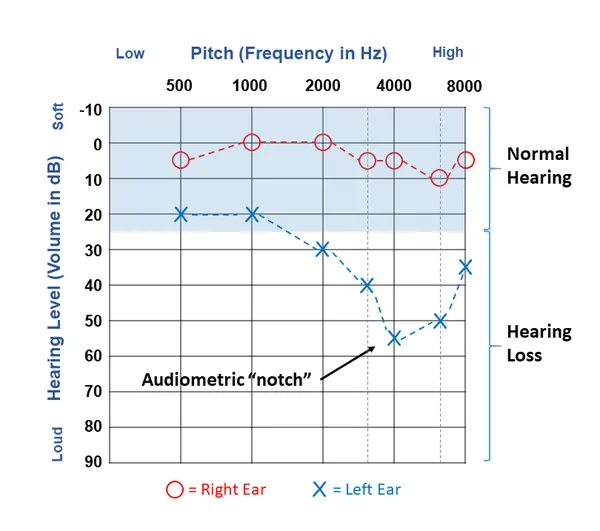
| Presbycusis or noise-induced loss | Bilateral high-pitched tinnitus, high-frequency SNHL | Audiometry |
| Vestibular schwannoma | Unilateral tinnitus with asymmetric SNHL | MRI internal auditory meatus |
| Ménière disease | Episodic vertigo, low-pitched roaring tinnitus, fluctuating low-frequency loss, aural fullness | Audiometry during episodes; clinical criteria |
| Idiopathic intracranial hypertension | Young woman, raised BMI, headache, whooshing pulsatile tinnitus, papilloedema | Fundoscopy, MRI/MRV, lumbar puncture pressure |
| Dural arteriovenous fistula | Pulsatile tinnitus with bruit, may follow trauma or venous thrombosis | CTA/MRA, catheter angiography |
| Glomus tympanicum or jugulare | Pulsatile tinnitus, red mass behind the drum that blanches with pressure | CT temporal bone and MRI |
| Palatal or middle ear myoclonus | Objective clicking tinnitus | Observation of palate; tympanometry with rhythmic changes |
| Drug-induced | High-dose aspirin, quinine, aminoglycosides, cisplatin, loop diuretics | Drug history; often bilateral |
Exam pearls
Guideline
AAO-HNSF Clinical Practice Guideline: Tinnitus Update (2026) and NICE NG155 Tinnitus: assessment and management (2020)
References
- Adams ME, Cramer JD, Tunkel DE, Lee VS, et al.. Clinical Practice Guideline: Tinnitus Update. Otolaryngol Head Neck Surg 2026.
- National Institute for Health and Care Excellence. Tinnitus: assessment and management (NG155). NICE, London 2020.
- Tunkel DE, Bauer CA, Sun GH, Rosenfeld RM, et al.. Clinical practice guideline: tinnitus. Otolaryngol Head Neck Surg 2014.
- National Institute for Health and Care Excellence. Hearing loss in adults: assessment and management (NG98). NICE, London 2018.
- Expert Panel on Neurologic Imaging: Sharma A, Kirsch CFE, Aulino JM, et al.. ACR Appropriateness Criteria Hearing Loss and/or Vertigo. J Am Coll Radiol 2018.
- World Health Organization. World report on hearing. WHO, Geneva 2021.
Related topics
By Dr Khalid Seidi (B.Sc., M.D.) · MedEd World Clinical Knowledge library. Original teaching content checked against current guidelines (November 2026); confirm the latest local guidance before clinical use. Not a substitute for clinical judgement.