Clinical Knowledge › Internal medicine › Rheumatology and immunology › Relevant pharmacology
Non-steroidal anti-inflammatory drugs (NSAIDs)
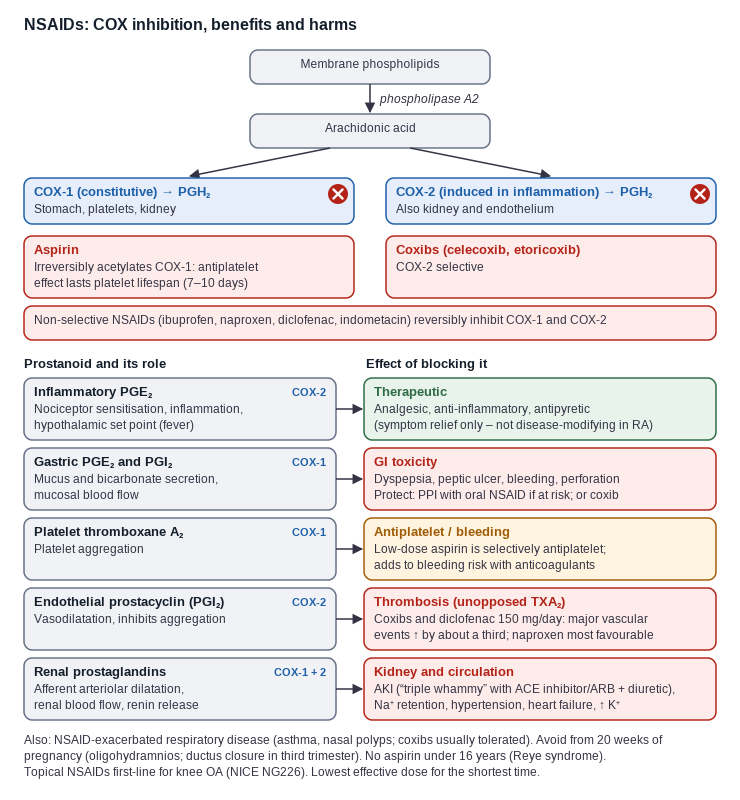
Non-steroidal anti-inflammatory drugs inhibit cyclo-oxygenase (COX) enzymes and so reduce prostaglandin and thromboxane synthesis, giving analgesic, anti-inflammatory and antipyretic effects. Non-selective NSAIDs (ibuprofen, naproxen, diclofenac, indometacin) inhibit both COX-1 and COX-2; coxibs (celecoxib, etoricoxib) are COX-2 selective, and aspirin irreversibly acetylates COX-1, giving a lasting antiplatelet effect. NSAIDs are first-line for symptoms of inflammatory arthritis, axial spondyloarthritis, gout flares, pericarditis, renal colic and dysmenorrhoea, and topical NSAIDs are first-line for knee and hand osteoarthritis, but they do not modify rheumatoid arthritis. Their harms are common and predictable: peptic ulceration and bleeding (reduced by PPIs or COX-2 selectivity), cardiovascular thrombotic events and heart failure (highest with coxibs and high-dose diclofenac), hypertension, acute kidney injury and hyperkalaemia (especially with ACE inhibitors and diuretics), and NSAID-exacerbated respiratory disease. They should be avoided from 20 weeks of pregnancy. Prescribe the lowest effective dose for the shortest time after assessing GI, cardiovascular and renal risk.
Patient case, mechanism, investigations, management, flashcards and exam-style questions.Open the lesson →
Key facts
- COX-1 is constitutive (gastric mucosal protection, platelet thromboxane A2, renal blood flow); COX-2 is induced in inflammation and also maintains renal function and endothelial prostacyclin
- Aspirin irreversibly acetylates COX-1, so its antiplatelet effect lasts the platelet lifespan (7–10 days); other NSAIDs inhibit COX reversibly
- GI bleeding risk factors: age over 65, previous ulcer or bleed, anticoagulants, antiplatelets, SSRIs, corticosteroids, high dose, H. pylori; co-prescribe a PPI with oral NSAIDs in OA and at-risk patients
- Coxibs and high-dose diclofenac (150 mg/day) increase major vascular events by about a third; naproxen has the most favourable cardiovascular profile; diclofenac is contraindicated in ischaemic heart, cerebrovascular and peripheral arterial disease and in heart failure
- 'Triple whammy': NSAID plus ACE inhibitor/ARB plus diuretic is a classic cause of acute kidney injury; NSAIDs also cause hyperkalaemia, sodium retention and interstitial nephritis
- Avoid NSAIDs from 20 weeks of pregnancy (fetal renal dysfunction, oligohydramnios) and especially in the third trimester (premature closure of the ductus arteriosus); low-dose aspirin for pre-eclampsia is the exception
- NSAID-exacerbated respiratory disease = asthma, chronic rhinosinusitis with nasal polyps and reactions to all COX-1 inhibitors; coxibs are usually tolerated
- Aspirin is avoided in children under 16 years (Reye syndrome) except for specific indications such as Kawasaki disease
Differential diagnosis
| Condition | Clues | Key test |
|---|---|---|
| Paracetamol | Analgesic and antipyretic with minimal anti-inflammatory effect; no GI or renal toxicity at normal doses | Hepatotoxic in overdose; check dose |
| Systemic glucocorticoids | Potent anti-inflammatory; used in PMR, GCA, flares | Metabolic and bone toxicity with long-term use |
| Colchicine | Alternative for gout flares and pericarditis when NSAIDs are contraindicated | Diarrhoea; dose-reduce in CKD; interactions with CYP3A4/P-gp inhibitors |
| Topical NSAIDs | Local OA of knee or hand with little systemic exposure | First-line in NICE NG226 |
| Opioids | Severe pain when NSAIDs contraindicated | Constipation, dependence, falls; poor benefit in chronic OA |
| Disease-modifying drugs (DMARDs) | Change course of RA or PsA; NSAIDs only relieve symptoms | Monitoring blood tests |
Exam pearls
Guideline
NICE NG226 Osteoarthritis in over 16s (2022), MHRA/EMA cardiovascular safety advice on NSAIDs and diclofenac (2013), FDA Drug Safety Communication on NSAIDs in pregnancy (2020) and KDIGO 2024 CKD guideline
References
- National Institute for Health and Care Excellence. Osteoarthritis in over 16s: diagnosis and management (NG226). NICE 2022.
- Coxib and traditional NSAID Trialists' (CNT) Collaboration; Bhala N, Emberson J, Merhi A, et al.. Vascular and upper gastrointestinal effects of non-steroidal anti-inflammatory drugs: meta-analyses of individual participant data from randomised trials. Lancet 2013.
- Nissen SE, Yeomans ND, Solomon DH, et al.. Cardiovascular safety of celecoxib, naproxen, or ibuprofen for arthritis. N Engl J Med 2016.
- US Food and Drug Administration. FDA recommends avoiding use of NSAIDs in pregnancy at 20 weeks or later because they can result in low amniotic fluid (Drug Safety Communication). FDA 2020.
- Medicines and Healthcare products Regulatory Agency. Diclofenac: new contraindications and warnings (Drug Safety Update). MHRA 2013.
- Lanza FL, Chan FKL, Quigley EMM, et al.. Guidelines for prevention of NSAID-related ulcer complications. Am J Gastroenterol 2009.
Related topics
By Dr Khalid Seidi (B.Sc., M.D.) · MedEd World Clinical Knowledge library. Original teaching content checked against current guidelines (November 2026); confirm the latest local guidance before clinical use. Not a substitute for clinical judgement.