Clinical Knowledge › Internal medicine › Basics of internal medicine › Perioperative medicine
Postoperative fever
Postoperative fever, usually defined as a temperature of 38 °C or more after surgery, is a frequent reason for a ward call. Most fevers in the first 48 hours are a non-infectious inflammatory response to tissue injury that settles without treatment, and reflex cultures, chest X-rays and antibiotics in this window are low-yield. The timing after surgery is the best guide to the cause: immediate fevers (hours) suggest the cytokine response, drugs, transfusion reactions or rarely malignant hyperthermia; acute fevers (days 1–7) suggest pneumonia, urinary or line infection, early necrotising wound infection, anastomotic leak or venous thromboembolism; subacute fevers (1–4 weeks) suggest surgical site infection, deep collections, Clostridioides difficile, drug fever or thrombosis. The approach is a sepsis screen with NEWS2, a focused history and a head-to-toe examination of the chest, wound, drains, lines, catheter, calves and abdomen, followed by targeted tests. Antibiotics are started promptly when sepsis is suspected, and source control is essential.
Patient case, mechanism, investigations, management, flashcards and exam-style questions.Open the lesson →
Key facts
- Postoperative fever is commonly defined as ≥38 °C; a single reading in the first 48 hours is usually the non-infectious inflammatory response to surgery
- Timing guides the cause: immediate (hours), acute (first week), subacute (1–4 weeks) and delayed (over 1 month)
- Atelectasis is commonly blamed for early fever, but systematic review evidence does not support it as a cause
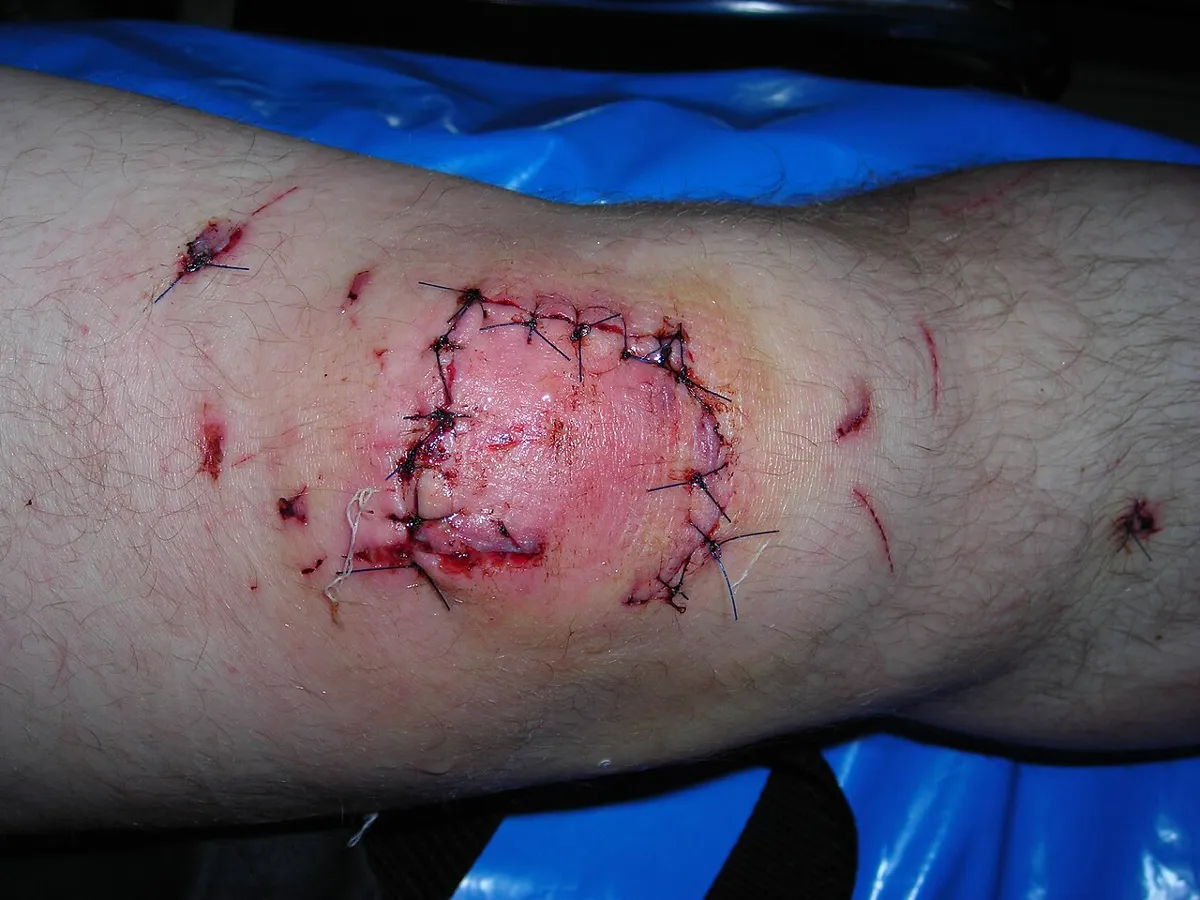
- Surgical site infection typically presents from about day 5; a painful, rapidly spreading wound infection within 48 hours suggests group A streptococcal or clostridial necrotising infection
- Anastomotic leak classically presents around days 5–7 with fever, tachycardia, ileus, rising CRP and abdominal pain
- Fever plus abnormal observations (NEWS2 ≥5 or any single parameter scoring 3) needs urgent sepsis assessment and senior review
- Malignant hyperthermia: intraoperative or immediate rising end-tidal CO2, rigidity and hyperthermia after volatile agents or suxamethonium; treat with dantrolene
- Remove unnecessary urinary catheters and lines: catheter-associated UTI and line infection are preventable sources
Differential diagnosis
| Condition | Clues | Key test |
|---|---|---|
| Physiological inflammatory response | Low-grade fever in first 48 h, well patient, normal examination | Clinical observation; resolves without treatment |
| Hospital-acquired pneumonia | New cough, purulent sputum, hypoxia, crackles after day 2 | Chest X-ray, sputum culture |
| Surgical site infection | Wound erythema, pain, discharge from about day 5 | Wound swab of pus, ultrasound or CT for deep collection |
| Anastomotic leak or intra-abdominal abscess | Fever, tachycardia, ileus, peritonism after bowel surgery, rising CRP | CT abdomen and pelvis with contrast |
| Venous thromboembolism | Calf swelling, pleuritic pain, tachycardia, hypoxia, day 5 onwards | Compression ultrasound, CTPA |
| Catheter-associated UTI or line infection | Urinary catheter in situ; erythema at cannula or central line site | Urine culture from catheter sample port; paired blood cultures |
| Clostridioides difficile infection | Diarrhoea ≥3 unformed stools in 24 h after antibiotics | Stool GDH/toxin testing |
| Drug fever | Fever with relative bradycardia, eosinophilia or rash in a well patient on beta-lactams or anticonvulsants | Diagnosis of exclusion; settles 48–72 h after stopping drug |
Exam pearls
Guideline
CDC Guideline for the Prevention of Surgical Site Infection (2017); WHO Global guidelines for the prevention of surgical site infection (2nd ed., 2018); NICE NG125 Surgical site infections (2019, updated 2020); Surviving Sepsis Campaign (2026 update) and NICE NG51 Suspected sepsis (updated 2024); IDSA/SHEA C. difficile focused update (2021)
References
- Narayan M, Medinilla SP.. Fever in the postoperative patient. Emerg Med Clin North Am 2013.
- Mavros MN, Velmahos GC, Falagas ME.. Atelectasis as a cause of postoperative fever: where is the clinical evidence?. Chest 2011.
- Berríos-Torres SI, Umscheid CA, Bratzler DW, et al.. Centers for Disease Control and Prevention guideline for the prevention of surgical site infection, 2017. JAMA Surg 2017.
- World Health Organization. Global guidelines for the prevention of surgical site infection, 2nd edition. WHO, Geneva 2018.
- National Institute for Health and Care Excellence (NICE). Surgical site infections: prevention and treatment (NG125). NICE guideline 2019.
- Prescott HC, Antonelli M, Alhazzani W, et al.. Surviving Sepsis Campaign: International Guidelines for Management of Sepsis and Septic Shock 2026. Crit Care Med 2026.
Related topics
By Dr Khalid Seidi (B.Sc., M.D.) · MedEd World Clinical Knowledge library. Original teaching content checked against current guidelines (November 2026); confirm the latest local guidance before clinical use. Not a substitute for clinical judgement.