Clinical Knowledge › Internal medicine › Basics of internal medicine › Perioperative medicine
Venous thromboembolism prophylaxis
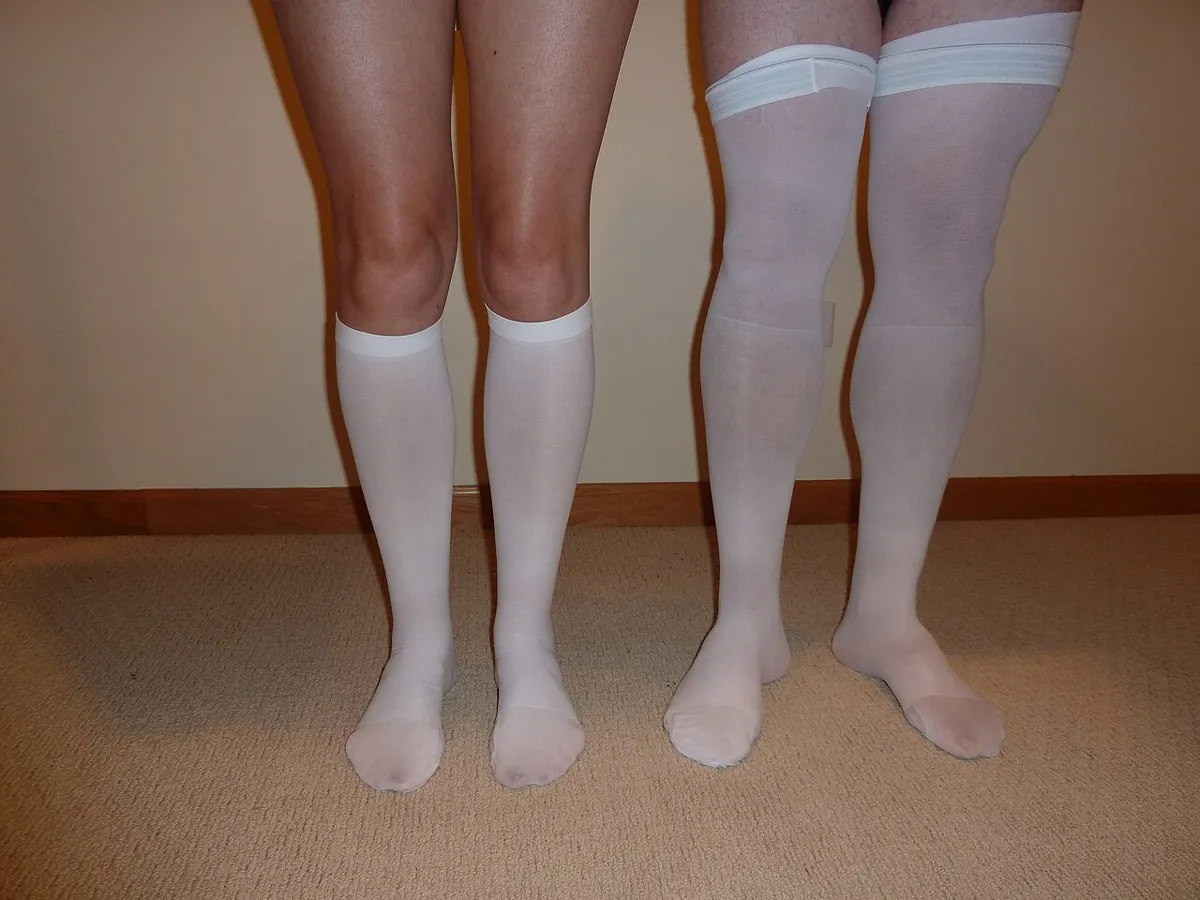
Hospital-associated venous thromboembolism (VTE) – DVT or PE during admission or within 90 days of discharge – accounts for over half of all VTE and is a leading preventable cause of death in hospital. Every adult admitted to hospital should have a documented VTE and bleeding risk assessment on admission, repeated when the clinical situation changes. Medical patients are assessed with tools such as the UK national risk assessment or the Padua and IMPROVE scores, and surgical patients by procedure type and patient factors or the Caprini score. If VTE risk outweighs bleeding risk, pharmacological prophylaxis is given, usually low-molecular-weight heparin (e.g. enoxaparin 40 mg SC daily, adjusted for renal function and weight), fondaparinux or unfractionated heparin; direct oral anticoagulants or aspirin are options after hip and knee arthroplasty. Mechanical prophylaxis – intermittent pneumatic compression or, in surgical patients, anti-embolism stockings – is used when anticoagulants are contraindicated or added in high-risk surgery. Extended prophylaxis for about 28 days is given after major abdominal or pelvic cancer surgery and hip replacement or fracture. Mobilisation, hydration and vigilance for bleeding and heparin-induced thrombocytopenia complete the bundle.
Patient case, mechanism, investigations, management, flashcards and exam-style questions.Open the lesson →
Key facts
- Over 50% of VTE is hospital-associated; around two-thirds of it is considered preventable
- Assess VTE and bleeding risk for every adult on admission and reassess within 24 h and whenever the clinical situation changes (NICE NG89)
- Start pharmacological prophylaxis as soon as possible, ideally within 14 h of admission, and continue for at least 7 days or until mobility returns in medical patients
- Standard teaching doses: enoxaparin 40 mg SC daily (20 mg if CrCl <30), dalteparin 5000 units daily, fondaparinux 2.5 mg daily, UFH 5000 units SC 8–12-hourly
- Padua score ≥4 = high risk in medical inpatients; Caprini ≥5 = highest risk in surgical patients
- Extended prophylaxis (about 28 days): hip replacement, hip fracture, major abdominal or pelvic cancer surgery; knee replacement about 14 days
- Anti-embolism stockings are contraindicated in peripheral arterial disease, severe neuropathy, fragile skin and leg deformity; they are not used in acute stroke (use IPC – CLOTS 3)
- Monitor platelets for HIT when UFH is used or after cardiac surgery; HIT typically appears 5–10 days after starting heparin
Differential diagnosis
| Condition | Clues | Key test |
|---|---|---|
| Deep vein thrombosis despite prophylaxis | Unilateral leg swelling, calf tenderness | Wells score, compression ultrasound |
| Pulmonary embolism | Pleuritic pain, tachycardia, hypoxaemia | CTPA |
| Heparin-induced thrombocytopenia | Platelet fall >50% at day 5–10, new thrombosis | 4Ts score, anti-PF4 antibody |
| Cellulitis | Erythema, warmth, fever | Clinical; ultrasound if doubt |
| Ruptured Baker cyst | Calf swelling with knee arthritis | Ultrasound |
| Superficial thrombophlebitis | Tender cord along superficial vein | Ultrasound to exclude DVT extension |
| Postoperative haematoma | Swelling at surgical site on anticoagulant | Examination, ultrasound, Hb |
Exam pearls
Guideline
NICE NG89 Venous thromboembolism in over 16s (2018, updated 2019); ASH 2018 guideline on prophylaxis in medical patients; ASH 2019 guideline on prophylaxis in surgical patients; ACCP antithrombotic guidelines (9th edition, 2012)
References
- National Institute for Health and Care Excellence (NICE). Venous thromboembolism in over 16s: reducing the risk of hospital-acquired deep vein thrombosis or pulmonary embolism (NG89). NICE guideline 2018.
- Schünemann HJ, Cushman M, Burnett AE, et al.. American Society of Hematology 2018 guidelines for management of venous thromboembolism: prophylaxis for hospitalized and nonhospitalized medical patients. Blood Adv 2018.
- Anderson DR, Morgano GP, Bennett C, et al.. American Society of Hematology 2019 guidelines for management of venous thromboembolism: prevention of venous thromboembolism in surgical hospitalized patients. Blood Adv 2019.
- Kahn SR, Lim W, Dunn AS, et al.. Prevention of VTE in nonsurgical patients: Antithrombotic Therapy and Prevention of Thrombosis, 9th ed: American College of Chest Physicians Evidence-Based Clinical Practice Guidelines. Chest 2012.
- Gould MK, Garcia DA, Wren SM, et al.. Prevention of VTE in nonorthopedic surgical patients: Antithrombotic Therapy and Prevention of Thrombosis, 9th ed: American College of Chest Physicians Evidence-Based Clinical Practice Guidelines. Chest 2012.
- Falck-Ytter Y, Francis CW, Johanson NA, et al.. Prevention of VTE in orthopedic surgery patients: Antithrombotic Therapy and Prevention of Thrombosis, 9th ed: American College of Chest Physicians Evidence-Based Clinical Practice Guidelines. Chest 2012.
Related topics
By Dr Khalid Seidi (B.Sc., M.D.) · MedEd World Clinical Knowledge library. Original teaching content checked against current guidelines (November 2026); confirm the latest local guidance before clinical use. Not a substitute for clinical judgement.