Clinical Knowledge › Surgery › Cardiothoracic surgery and neurosurgery
Subarachnoid haemorrhage
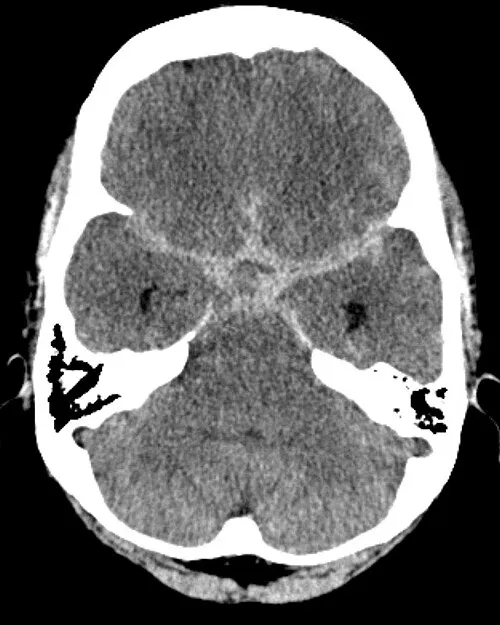
Subarachnoid haemorrhage (SAH) is bleeding into the space between the arachnoid and pia mater. Trauma is the commonest cause overall, but spontaneous SAH is due to a ruptured saccular (berry) aneurysm in about 85% of cases, usually at the circle of Willis. Risk factors include smoking, hypertension, family history and ADPKD. The classic presentation is a sudden thunderclap headache reaching maximum intensity within a minute, with vomiting, neck stiffness, photophobia, seizures or collapse. Non-contrast CT within 6 hours of onset is almost 100% sensitive; after 6 hours a lumbar puncture at least 12 hours from onset looks for xanthochromia, and CT angiography locates the aneurysm. Management in a neurosurgical centre includes airway and blood pressure control, reversal of anticoagulation, oral nimodipine 60 mg every 4 hours for 21 days, and securing the aneurysm early, preferably by endovascular coiling when feasible (ISAT), or by surgical clipping. Major complications are rebleeding, hydrocephalus, delayed cerebral ischaemia, hyponatraemia and seizures.
Patient case, mechanism, investigations, management, flashcards and exam-style questions.Open the lesson →
Key facts
- About 85% of spontaneous SAH is aneurysmal, 10% perimesencephalic non-aneurysmal (benign) and 5% other causes (AVM, dissection, RCVS)
- Thunderclap headache peaks within 1 minute and is often described as the worst ever; up to a third report a preceding sentinel headache
- Non-contrast CT within 6 hours of onset is close to 100% sensitive; sensitivity falls over the following days
- If CT is done more than 6 hours after onset and is normal, perform lumbar puncture at least 12 hours after onset for xanthochromia
- Nimodipine 60 mg orally every 4 hours for 21 days reduces poor outcome from delayed cerebral ischaemia (teaching dose; check local formulary)
- Secure the aneurysm as early as possible (ideally within 24 hours); ISAT showed better 1-year independent survival with coiling than clipping when both were suitable
- Rebleeding risk is highest in the first 24 hours; hydrocephalus occurs early, delayed cerebral ischaemia peaks at days 4–14
- Hyponatraemia (SIADH or cerebral salt wasting) is common: avoid fluid restriction and keep patients euvolaemic
Differential diagnosis
| Condition | Clues | Key test |
|---|---|---|
| Migraine | Gradual onset over minutes to hours, previous similar attacks, aura | Normal CT; diagnosis of exclusion for first thunderclap |
| Reversible cerebral vasoconstriction syndrome | Recurrent thunderclap headaches, postpartum or serotonergic drugs | CTA/MRA: segmental 'string of beads' vasoconstriction |
| Bacterial meningitis | Fever, neck stiffness, rash, more gradual onset | LP: neutrophils, low glucose; blood cultures |
| Cervical artery dissection | Neck pain, Horner syndrome, stroke symptoms | CTA of neck vessels |
| Pituitary apoplexy | Thunderclap headache, visual loss, ophthalmoplegia | MRI pituitary; cortisol |
| Cerebral venous sinus thrombosis | Headache, seizures, papilloedema, prothrombotic state | CT/MR venography |
| Primary intracerebral haemorrhage | Hypertension, focal deficit from onset | CT: parenchymal haematoma |
| Benign coital or exertional headache | Recurrent headache with sex or exertion | First episode must be investigated as SAH |
Exam pearls
Guideline
AHA/ASA 2023 Guideline for aneurysmal subarachnoid haemorrhage and NICE NG228 Subarachnoid haemorrhage caused by a ruptured aneurysm (2022)
References
- Hoh BL, Ko NU, Amin-Hanjani S, et al.. 2023 Guideline for the management of patients with aneurysmal subarachnoid hemorrhage: a guideline from the American Heart Association/American Stroke Association. Stroke 2023.
- National Institute for Health and Care Excellence. Subarachnoid haemorrhage caused by a ruptured aneurysm: diagnosis and management (NG228). NICE guideline 2022.
- Molyneux A, Kerr R, Stratton I, et al.. International Subarachnoid Aneurysm Trial (ISAT) of neurosurgical clipping versus endovascular coiling in 2143 patients with ruptured intracranial aneurysms: a randomised trial. Lancet 2002.
- Pickard JD, Murray GD, Illingworth R, et al.. Effect of oral nimodipine on cerebral infarction and outcome after subarachnoid haemorrhage: British aneurysm nimodipine trial. BMJ 1989.
- Perry JJ, Stiell IG, Sivilotti ML, et al.. Clinical decision rules to rule out subarachnoid hemorrhage for acute headache. JAMA 2013.
- Perry JJ, Stiell IG, Sivilotti ML, et al.. Sensitivity of computed tomography performed within six hours of onset of headache for diagnosis of subarachnoid haemorrhage: prospective cohort study. BMJ 2011.
Related topics
By Dr Khalid Seidi (B.Sc., M.D.) · MedEd World Clinical Knowledge library. Original teaching content checked against current guidelines (November 2026); confirm the latest local guidance before clinical use. Not a substitute for clinical judgement.