Clinical Knowledge › Internal medicine › Rheumatology and immunology › Connective tissue diseases
Systemic sclerosis (scleroderma)
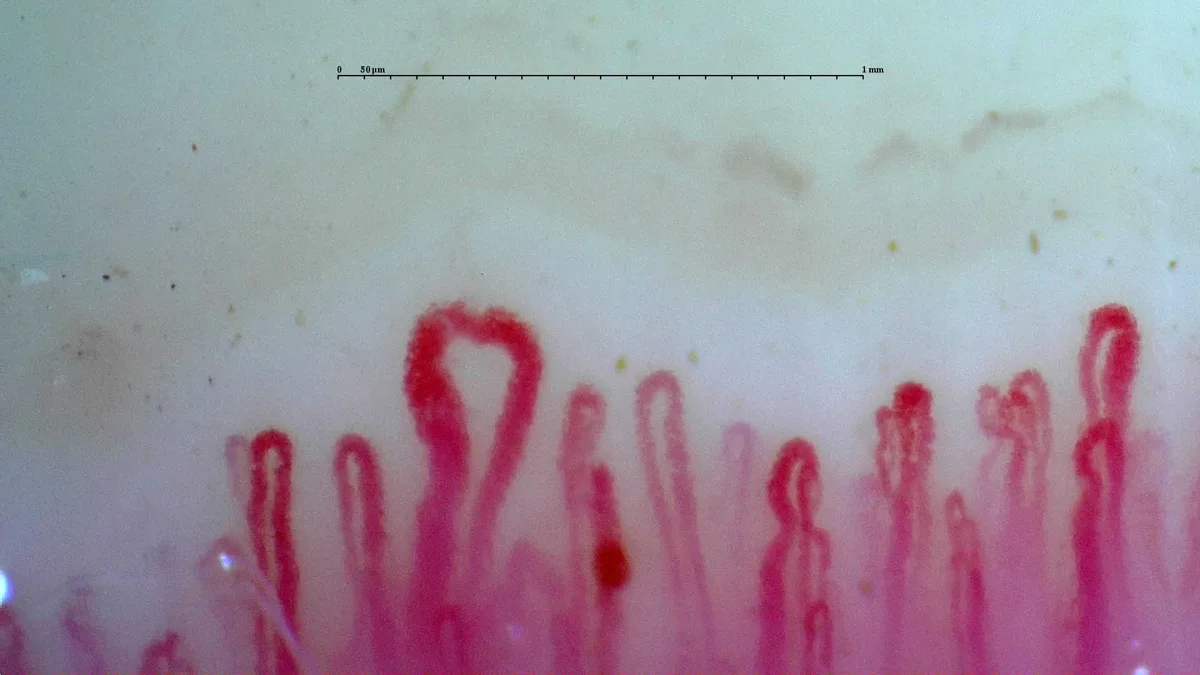
Systemic sclerosis (SSc) is a rare autoimmune connective tissue disease defined by the triad of small-vessel vasculopathy, immune activation and progressive fibrosis of the skin and internal organs. Raynaud phenomenon is almost universal and often precedes other features by years. Patients are divided into limited cutaneous SSc (skin thickening distal to the elbows and knees and on the face; anticentromere antibodies; late pulmonary arterial hypertension) and diffuse cutaneous SSc (proximal and truncal skin; anti-topoisomerase I (Scl-70) with interstitial lung disease, or anti-RNA polymerase III with rapid skin progression, scleroderma renal crisis and cancer). Other features include sclerodactyly, digital ulcers, telangiectasia, calcinosis, oesophageal dysmotility and reflux, small-bowel bacterial overgrowth and myocardial fibrosis. Diagnosis uses the 2013 ACR/EULAR classification, nailfold capillaroscopy and SSc-specific antibodies. There is no cure: management is organ-based and includes calcium-channel blockers and PDE5 inhibitors for Raynaud and ulcers, mycophenolate, nintedanib, tocilizumab or rituximab for ILD, PAH-specific therapy, and ACE inhibitors for renal crisis. Regular screening for ILD and PAH is essential, as these are the leading causes of death.
Patient case, mechanism, investigations, management, flashcards and exam-style questions.Open the lesson →
Key facts
- Triad: vasculopathy, autoimmunity and fibrosis; Raynaud phenomenon in over 95%, often the first feature
- Limited cutaneous SSc: skin distal to elbows and knees plus face; anticentromere; PAH typically late (CREST features)
- Diffuse cutaneous SSc: proximal limb and truncal skin; anti-Scl-70 (ILD) or anti-RNA polymerase III (renal crisis, cancer)
- 2013 ACR/EULAR classification: skin thickening of the fingers of both hands extending proximal to the MCP joints is sufficient; otherwise 9 or more points
- ILD (usually NSIP pattern) and PAH are the leading causes of death; screen with PFTs including DLCO, HRCT and annual echocardiography
- Scleroderma renal crisis: abrupt hypertension and AKI, often in early diffuse disease or after prednisolone over 15 mg/day; treat with an ACE inhibitor
- Raynaud and digital ulcers: dihydropyridine calcium-channel blocker, PDE5 inhibitor, IV iloprost; bosentan reduces new ulcers
- SSc-ILD: mycophenolate first line, with cyclophosphamide, rituximab, tocilizumab and nintedanib as options
Differential diagnosis
| Condition | Clues | Key test |
|---|---|---|
| Primary Raynaud phenomenon | Young woman, symmetrical, no ulcers, normal examination | Normal nailfold capillaroscopy, negative ANA |
| Morphoea (localised scleroderma) | Skin plaques without Raynaud or organ involvement, fingers spared | Clinical; skin biopsy; negative SSc-specific antibodies |
| Eosinophilic fasciitis | Rapid limb skin induration sparing hands and face, 'groove sign', after exertion | Eosinophilia; full-thickness skin-to-muscle biopsy or MRI |
| Scleromyxoedema | Waxy papules with induration, paraprotein | Serum protein electrophoresis; skin biopsy |
| Nephrogenic systemic fibrosis | Skin thickening after gadolinium in advanced CKD | History of gadolinium; skin biopsy |
| Mixed connective tissue disease | Raynaud, puffy hands, myositis, arthritis, overlap features | High-titre anti-U1 RNP |
| Diabetic cheiroarthropathy | Thick, waxy skin of hands with limited joint mobility, prayer sign | Long-standing diabetes; no Raynaud or antibodies |
| Dermatomyositis overlap | Proximal weakness, rash, ILD | CK, anti-PM/Scl or myositis antibodies |
Exam pearls
Guideline
EULAR recommendations for the treatment of systemic sclerosis: 2023 update, 2023 ACR/CHEST guideline for treatment of ILD in systemic autoimmune rheumatic diseases, 2013 ACR/EULAR SSc classification criteria and 2022 ESC/ERS pulmonary hypertension guideline
References
- Del Galdo F, Lescoat A, Conaghan PG, et al.. EULAR recommendations for the treatment of systemic sclerosis: 2023 update. Ann Rheum Dis 2025.
- van den Hoogen F, Khanna D, Fransen J, et al.. 2013 classification criteria for systemic sclerosis: an American College of Rheumatology/European League Against Rheumatism collaborative initiative. Arthritis Rheum 2013.
- Johnson SR, Bernstein EJ, Bolster MB, et al.. 2023 American College of Rheumatology (ACR)/American College of Chest Physicians (CHEST) guideline for the treatment of interstitial lung disease in people with systemic autoimmune rheumatic diseases. Arthritis Rheumatol 2024.
- Distler O, Highland KB, Gahlemann M, et al.. Nintedanib for systemic sclerosis-associated interstitial lung disease. N Engl J Med 2019.
- Humbert M, Kovacs G, Hoeper MM, et al.. 2022 ESC/ERS guidelines for the diagnosis and treatment of pulmonary hypertension. Eur Heart J 2022.
- Denton CP, Khanna D. Systemic sclerosis. Lancet 2017.
Related topics
By Dr Khalid Seidi (B.Sc., M.D.) · MedEd World Clinical Knowledge library. Original teaching content checked against current guidelines (November 2026); confirm the latest local guidance before clinical use. Not a substitute for clinical judgement.