Clinical Knowledge › Internal medicine › Gastroenterology and hepatology › Relevant pharmacology
Vasoactive drugs in variceal bleeding (terlipressin, octreotide)
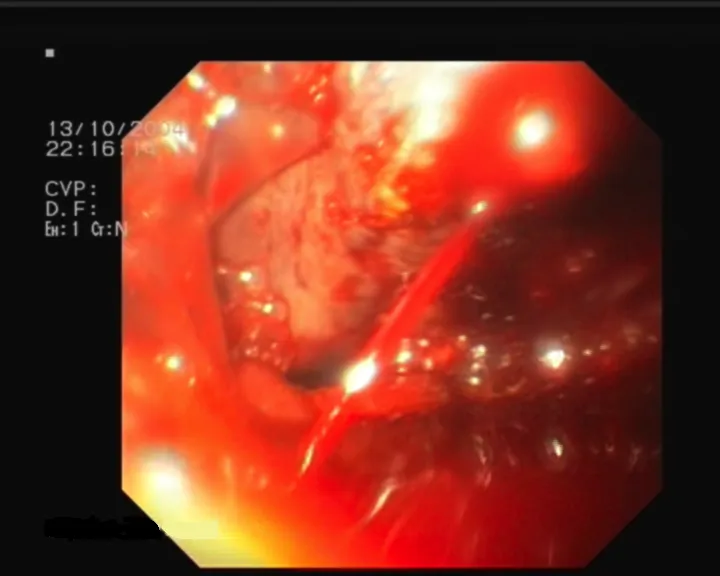
Vasoactive drugs lower portal pressure by constricting the splanchnic arterioles that feed the portal vein. In suspected acute variceal bleeding they should be started as soon as possible, before endoscopy, together with antibiotic prophylaxis, restrictive transfusion and band ligation within 12 hours. Terlipressin, a long-acting vasopressin analogue acting on V1 receptors, is the agent with the strongest mortality evidence and is used across Europe, Asia and elsewhere; octreotide and somatostatin, which inhibit release of vasodilatory gut hormones such as glucagon, are equally effective for controlling bleeding and are the usual choice in the USA. Treatment lasts 2–5 days; Baveno VIII (2026) allows a shorter course after successful endoscopic haemostasis if a non-selective beta-blocker is started. Terlipressin causes ischaemic complications, hyponatraemia, bradycardia and fluid overload and is avoided in ischaemic heart or vascular disease. Long-term, non-selective beta-blockers (carvedilol, propranolol, nadolol) prevent first and recurrent bleeding.
Patient case, mechanism, investigations, management, flashcards and exam-style questions.Open the lesson →
Key facts
- Start a vasoactive drug as soon as variceal bleeding is suspected, before endoscopy, and continue for 2–5 days
- Terlipressin: V1 agonist (prodrug of lysine vasopressin); teaching dose 2 mg IV every 4 hours, reduced to 1 mg every 4 hours once bleeding is controlled
- Octreotide: 50 micrograms IV bolus then 50 micrograms/hour infusion; somatostatin 250 micrograms bolus then 250 micrograms/hour (teaching doses; check local formulary)
- Terlipressin is the only vasoactive drug shown to reduce mortality against placebo; terlipressin, octreotide and somatostatin control bleeding similarly
- Terlipressin adverse effects: myocardial, mesenteric and digital ischaemia, hyponatraemia, bradycardia, hypertension, fluid overload and respiratory failure
- Vasoactive drugs are combined with ceftriaxone prophylaxis, restrictive transfusion (target haemoglobin 70–80 g/L) and band ligation within 12 hours
- Pre-emptive TIPS within 72 hours (ideally 24) for Child-Pugh C 10–13, or B over 7 with active bleeding at endoscopy
- Non-selective beta-blockers (carvedilol preferred for primary prevention) lower portal pressure long-term; terlipressin with albumin also treats hepatorenal syndrome
Differential diagnosis
| Condition | Clues | Key test |
|---|---|---|
| Terlipressin | V1 agonist; long half-life allows 4-hourly boluses or infusion; mortality benefit | Avoid in ischaemic heart, cerebrovascular or peripheral arterial disease |
| Octreotide | Somatostatin analogue; bolus then infusion; tachyphylaxis | Glucose monitoring |
| Somatostatin | Natural peptide; very short half-life; continuous infusion | Mainly Europe |
| Vasopressin | Potent V1 agonist; ischaemic adverse effects | Largely abandoned; if used, give with nitrates |
| Carvedilol | NSBB with alpha-1 blocking activity; larger fall in portal pressure | Primary prophylaxis and prevention of decompensation |
| Propranolol or nadolol | Classic NSBBs; titrate to resting heart rate 55–60/min | Secondary prophylaxis with band ligation |
| Proton pump inhibitor | Not a vasoactive drug; short course after band ligation reduces post-banding ulcer size | Stop when non-variceal source excluded and ulcer risk passed |
| Albumin with terlipressin | Hepatorenal syndrome-acute kidney injury, not bleeding | Creatinine response and volume status |
Exam pearls
Guideline
Baveno VIII consensus on portal hypertension (2026), Baveno VII (2022), AASLD practice guidance on portal hypertension and varices (2024), EASL decompensated cirrhosis CPG (2018), AGA clinical practice update on vasoactive drugs and albumin in cirrhosis (2024) and ICA-ADQI AKI in cirrhosis consensus (2024)
References
- Baveno VIII Faculty. Baveno VIII – Advancing consensus in portal hypertension. J Hepatol 2026.
- de Franchis R, Bosch J, Garcia-Tsao G, Reiberger T, Ripoll C; Baveno VII Faculty. Baveno VII - Renewing consensus in portal hypertension. J Hepatol 2022.
- Kaplan DE, Ripoll C, Thiele M, et al.. AASLD Practice Guidance on risk stratification and management of portal hypertension and varices in cirrhosis. Hepatology 2024.
- European Association for the Study of the Liver. EASL Clinical Practice Guidelines for the management of patients with decompensated cirrhosis. J Hepatol 2018.
- Rahimi RS, Brown KA, Flamm SL, Brown RS Jr.. AGA Clinical Practice Update on the use of vasoactive drugs and intravenous albumin in cirrhosis: expert review. Gastroenterology 2024.
- Nadim MK, Kellum JA, Forni L, et al.. Acute kidney injury in patients with cirrhosis: Acute Disease Quality Initiative (ADQI) and International Club of Ascites (ICA) joint multidisciplinary consensus meeting. J Hepatol 2024.
Related topics
By Dr Khalid Seidi (B.Sc., M.D.) · MedEd World Clinical Knowledge library. Original teaching content checked against current guidelines (November 2026); confirm the latest local guidance before clinical use. Not a substitute for clinical judgement.