Clinical Knowledge › Internal medicine › Gastroenterology and hepatology › Clinical problems
Acute abdominal pain: approach to the patient
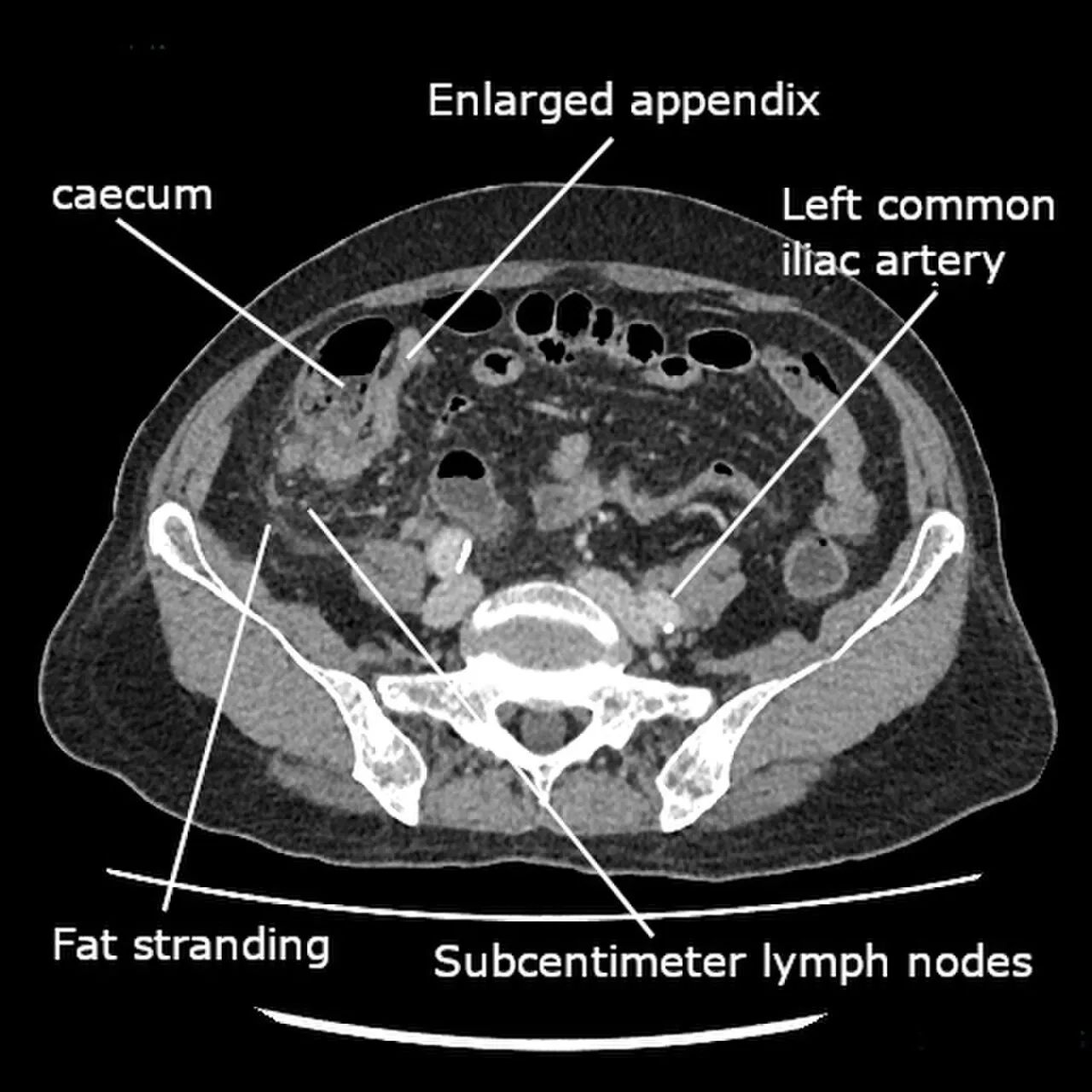
Acute abdominal pain – pain of less than about a week's duration – accounts for 5–10% of emergency department attendances. The commonest final diagnoses are non-specific abdominal pain, appendicitis, biliary disease, renal colic, bowel obstruction, diverticulitis and gynaecological causes, but the first job is to recognise the dangerous few: ruptured abdominal aortic aneurysm, mesenteric ischaemia, perforation, ectopic pregnancy, strangulated obstruction, severe pancreatitis and sepsis, as well as medical mimics such as myocardial infarction and diabetic ketoacidosis. Assessment combines resuscitation, a careful history of onset, site, migration and character, examination for peritonism, a pregnancy test in every woman of reproductive age, targeted bloods (including lipase and lactate) and imaging. Contrast CT is the most useful test in most adults with undifferentiated pain, while ultrasound is preferred in pregnancy, children and suspected biliary or gynaecological disease. Early analgesia with opioids is safe and does not hide the diagnosis.
Patient case, mechanism, investigations, management, flashcards and exam-style questions.Open the lesson →
Key facts
- Resuscitate first; assess airway, breathing, circulation and sepsis before pursuing the diagnosis
- Visceral pain is midline and vague (foregut epigastric, midgut periumbilical, hindgut suprapubic); parietal pain is localised and worse with movement
- Pregnancy test in every woman of reproductive age with abdominal pain: ruptured ectopic pregnancy kills
- Pain out of proportion to examination findings in an older patient with atrial fibrillation = acute mesenteric ischaemia until proven otherwise
- Lipase (or amylase) above 3 × upper limit with typical pain diagnoses acute pancreatitis
- CT with IV contrast is the best single test for undifferentiated acute abdominal pain in non-pregnant adults
- Opioid analgesia does not reduce diagnostic accuracy; give it early
- Older, immunosuppressed and diabetic patients may have catastrophic pathology with few signs
Differential diagnosis
| Condition | Clues | Key test |
|---|---|---|
| Acute appendicitis | Periumbilical pain migrating to the right iliac fossa, anorexia, low-grade fever | Clinical score (Alvarado, AIR); ultrasound or CT |
| Acute cholecystitis or biliary colic | Right upper quadrant pain after fatty meals, Murphy sign | Ultrasound |
| Acute pancreatitis | Severe epigastric pain radiating to the back, vomiting, alcohol or gallstones | Lipase ≥3 × ULN |
| Small bowel obstruction | Colicky pain, vomiting, distension, absolute constipation, previous surgery | CT with contrast |
| Perforated peptic ulcer | Sudden severe epigastric pain, rigid abdomen, NSAID use | Erect chest X-ray (free air); CT |
| Ruptured abdominal aortic aneurysm | Older male smoker, back or flank pain, collapse, pulsatile mass | Bedside ultrasound; CT angiography if stable |
| Acute mesenteric ischaemia | Pain out of proportion to signs, atrial fibrillation, raised lactate | CT angiography |
| Ruptured ectopic pregnancy | Missed period, pelvic pain, shoulder-tip pain, collapse | Urine or serum hCG; transvaginal ultrasound |
Exam pearls
Guideline
WSES Jerusalem guidelines on acute appendicitis (2020 update), ACR Appropriateness Criteria for acute nonlocalized abdominal pain (2018) and right lower quadrant pain (2022), ACG acute pancreatitis guideline (2024), ESVS abdominal aortic aneurysm guideline (2024) and Surviving Sepsis Campaign (2021)
References
- Di Saverio S, Podda M, De Simone B, et al.. Diagnosis and treatment of acute appendicitis: 2020 update of the WSES Jerusalem guidelines. World J Emerg Surg 2020.
- Expert Panel on Gastrointestinal Imaging.. ACR Appropriateness Criteria: Acute Nonlocalized Abdominal Pain. J Am Coll Radiol 2018.
- Expert Panel on Gastrointestinal Imaging.. ACR Appropriateness Criteria: Right Lower Quadrant Pain: 2022 Update. J Am Coll Radiol 2022.
- Tenner S, Vege SS, Sheth SG, et al.. American College of Gastroenterology Guidelines: Management of Acute Pancreatitis. Am J Gastroenterol 2024.
- Evans L, Rhodes A, Alhazzani W, et al.. Surviving sepsis campaign: international guidelines for management of sepsis and septic shock 2021. Intensive Care Med 2021.
- Wanhainen A, Van Herzeele I, Bastos Goncalves F, et al.. European Society for Vascular Surgery (ESVS) 2024 Clinical Practice Guidelines on the Management of Abdominal Aorto-Iliac Artery Aneurysms. Eur J Vasc Endovasc Surg 2024.
Related topics
By Dr Khalid Seidi (B.Sc., M.D.) · MedEd World Clinical Knowledge library. Original teaching content checked against current guidelines (November 2026); confirm the latest local guidance before clinical use. Not a substitute for clinical judgement.