Clinical Knowledge › Internal medicine › Gastroenterology and hepatology › Clinical problems
Upper gastrointestinal bleeding
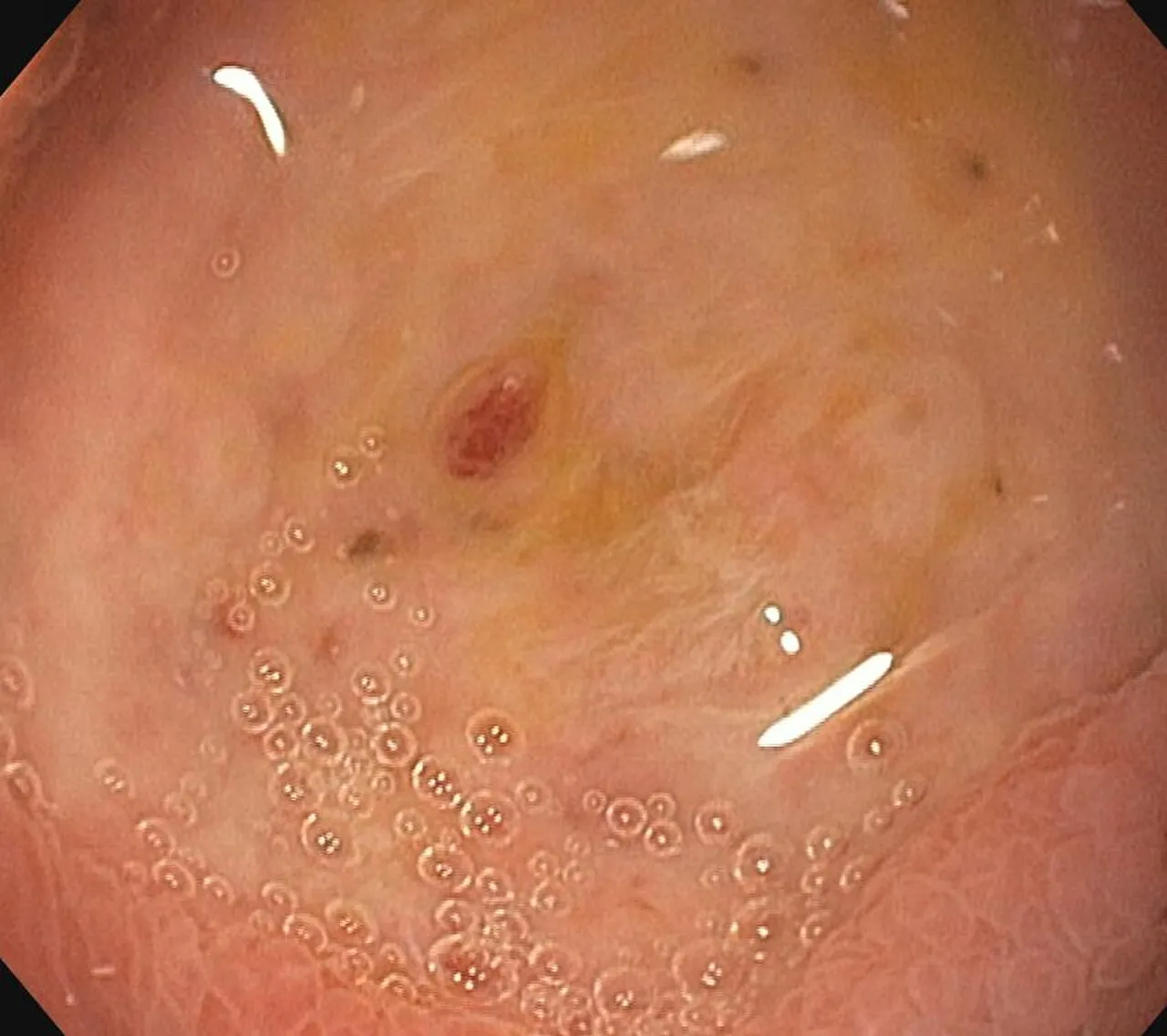
Upper gastrointestinal bleeding (UGIB) is bleeding from a source proximal to the ligament of Treitz, usually presenting with haematemesis, coffee-ground vomit or melaena. It is a common emergency with an incidence of roughly 50–150 per 100 000 adults a year and an in-hospital mortality of about 2–10%, highest in older patients with comorbidity and in those who bleed while already in hospital. Peptic ulcer is the commonest cause worldwide, followed by oesophagitis and, in patients with cirrhosis, gastro-oesophageal varices. Management starts with resuscitation and risk stratification using the Glasgow-Blatchford score, a restrictive transfusion strategy and endoscopy within 24 hours. Ulcers with active bleeding or a visible vessel need endoscopic haemostasis followed by high-dose proton pump inhibitor; suspected variceal bleeding also needs a vasoactive drug, antibiotic prophylaxis and band ligation, with pre-emptive TIPS in high-risk patients. Tranexamic acid is not recommended.
Patient case, mechanism, investigations, management, flashcards and exam-style questions.Open the lesson →
Key facts
- UGIB arises proximal to the ligament of Treitz; melaena needs about 50–100 mL of blood in the upper gut
- Peptic ulcer is the commonest cause; varices cause a larger share where viral hepatitis, alcohol and schistosomiasis are common
- Glasgow-Blatchford score 0–1: low risk, suitable for outpatient management without urgent endoscopy
- Restrictive transfusion: threshold about 70 g/L (target 70–90 g/L); higher threshold (about 80 g/L) in cardiovascular disease
- Endoscopy within 24 hours of presentation after resuscitation; very early endoscopy (under 6 hours) gives no survival benefit
- Forrest Ia, Ib and IIa ulcers need endoscopic therapy (never adrenaline alone), then high-dose PPI for 72 hours
- Suspected variceal bleed: terlipressin or octreotide, ceftriaxone, band ligation within 12 hours; pre-emptive TIPS for Child-Pugh C 10–13 or B >7 with active bleeding
- Tranexamic acid does not reduce death in GI bleeding and increases venous thromboembolism (HALT-IT)
Differential diagnosis
| Condition | Clues | Key test |
|---|---|---|
| Peptic ulcer bleeding | NSAID or aspirin use, epigastric pain, H. pylori | Endoscopy: ulcer graded by Forrest classification |
| Variceal bleeding | Stigmata of chronic liver disease, alcohol or viral hepatitis, splenomegaly, low platelets | Endoscopy; liver tests, INR, ultrasound |
| Mallory–Weiss tear | Haematemesis after repeated retching or vomiting, often after alcohol | Endoscopy: linear tear at the gastro-oesophageal junction |
| Upper GI cancer | Weight loss, dysphagia, early satiety, iron deficiency | Endoscopy with biopsy; CT staging |
| Brisk lower GI or small bowel bleed | Haematochezia with shock may still be upper GI; normal urea | Upper endoscopy first if unstable, then CT angiography or colonoscopy |
| Swallowed blood (epistaxis, haemoptysis) | Nosebleed or cough before 'haematemesis' | ENT and chest examination; endoscopy normal |
| Aortoenteric fistula | Previous aortic graft; herald bleed | CT angiography |
| Pseudo-melaena (iron, bismuth) | Black but formed, non-tarry, non-offensive stool, stable patient | Drug history; normal haemoglobin and urea |
Exam pearls
Guideline
ESGE nonvariceal upper GI haemorrhage guideline (2021 update), ACG upper GI and ulcer bleeding guideline (2021), International Consensus Group (2019), Baveno VII (2022) and AASLD portal hypertension guidance (2024)
References
- Gralnek IM, Stanley AJ, Morris AJ, et al.. Endoscopic diagnosis and management of nonvariceal upper gastrointestinal hemorrhage (NVUGIH): European Society of Gastrointestinal Endoscopy (ESGE) Guideline – Update 2021. Endoscopy 2021.
- Laine L, Barkun AN, Saltzman JR, Martel M, Leontiadis GI.. ACG Clinical Guideline: Upper Gastrointestinal and Ulcer Bleeding. Am J Gastroenterol 2021.
- Barkun AN, Almadi M, Kuipers EJ, et al.. Management of Nonvariceal Upper Gastrointestinal Bleeding: Guideline Recommendations From the International Consensus Group. Ann Intern Med 2019.
- de Franchis R, Bosch J, Garcia-Tsao G, Reiberger T, Ripoll C; Baveno VII Faculty.. Baveno VII – Renewing consensus in portal hypertension. J Hepatol 2022.
- Kaplan DE, Ripoll C, Thiele M, et al.. AASLD Practice Guidance on risk stratification and management of portal hypertension and varices in cirrhosis. Hepatology 2024.
- Blatchford O, Murray WR, Blatchford M.. A risk score to predict need for treatment for upper-gastrointestinal haemorrhage. Lancet 2000.
Related topics
By Dr Khalid Seidi (B.Sc., M.D.) · MedEd World Clinical Knowledge library. Original teaching content checked against current guidelines (November 2026); confirm the latest local guidance before clinical use. Not a substitute for clinical judgement.