Clinical Knowledge › Ear, nose and throat › Larynx and trachea
Acute laryngitis
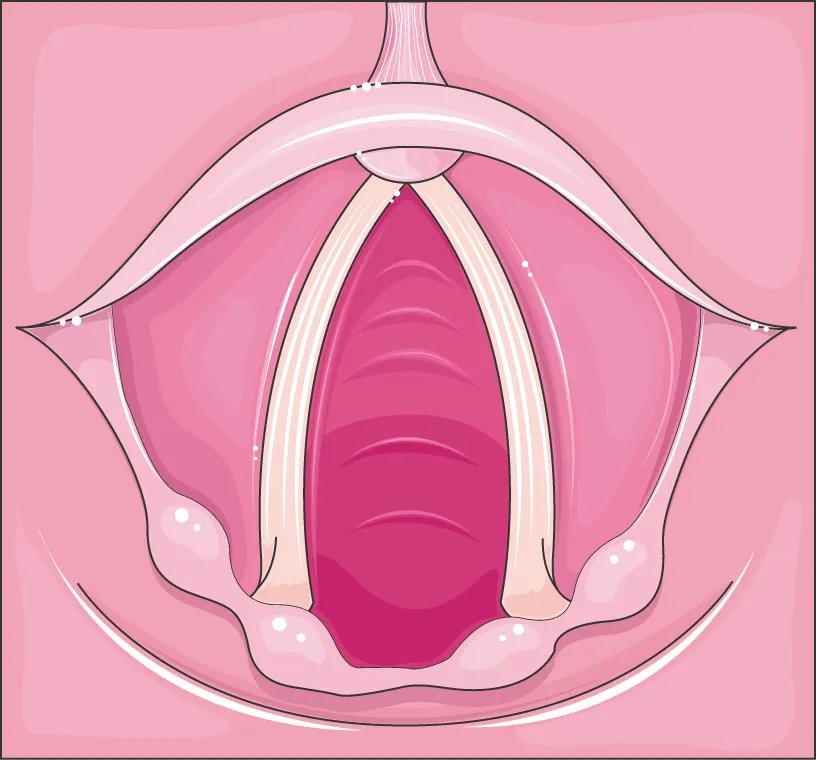
Acute laryngitis is inflammation of the larynx lasting less than 3 weeks. It is usually caused by a viral upper respiratory tract infection (rhinovirus, parainfluenza, influenza, SARS-CoV-2) or by voice misuse such as shouting or singing while unwell. Less common causes are irritant exposure (smoke, fumes), bacterial infection, Candida (inhaled corticosteroids, immunosuppression) and, rarely in unvaccinated people, diphtheria. Oedematous vocal folds vibrate poorly, giving hoarseness or loss of voice, with sore throat, dry cough and throat clearing. It is a clinical diagnosis and resolves in 1–2 weeks with voice rest, hydration, humidified air, analgesia and avoidance of smoke. Antibiotics are not recommended because they do not improve objective voice outcomes. Laryngoscopy is needed if hoarseness lasts beyond 3–4 weeks or if red flags appear: smoking, stridor, dysphagia, neck lump, haemoptysis, weight loss, recent neck or chest surgery, or a professional voice user. In adults aged 45 or over with persistent unexplained hoarseness, refer urgently to exclude laryngeal cancer.
Patient case, mechanism, investigations, management, flashcards and exam-style questions.Open the lesson →
Key facts
- Acute laryngitis: laryngeal inflammation for less than 3 weeks; chronic laryngitis lasts longer and has different causes (reflux, smoking, voice misuse, inhaled steroids)
- Commonest cause: viral upper respiratory tract infection; also phonotrauma (shouting, singing while ill)
- Symptoms: hoarseness or aphonia, sore throat, dry cough, throat clearing, mild fever
- Self-limiting: usually resolves within 1–2 weeks with supportive care
- Antibiotics do not improve objective voice outcomes (Cochrane 2015) and are not recommended routinely
- Laryngoscopy if hoarseness persists beyond about 4 weeks (AAO-HNS 2018) or sooner with red flags; do not image before laryngoscopy
- NICE NG12: adults 45 or over with persistent unexplained hoarseness should be referred on a suspected-cancer pathway
- Severe sore throat, odynophagia and drooling with a near-normal voice suggests supraglottitis, an airway emergency
Differential diagnosis
| Condition | Clues | Key test |
|---|---|---|
| Supraglottitis (epiglottitis) | Severe sore throat, odynophagia, drooling, muffled voice, toxic, stridor | Flexible nasendoscopy in a controlled setting |
| Croup (laryngotracheobronchitis) | Child 6 months–3 years, barking cough, inspiratory stridor | Clinical; Westley score |
| Vocal fold haemorrhage | Sudden voice loss after shouting or singing, anticoagulants | Laryngoscopy (stroboscopy) |
| Laryngeal carcinoma | Smoker, persistent progressive hoarseness, otalgia, stridor, neck lump | Laryngoscopy and biopsy |
| Vocal fold paralysis | Breathy voice, weak cough, after thyroid, cardiac or chest surgery or lung cancer | Laryngoscopy; CT skull base to mediastinum |
| Laryngopharyngeal reflux disease or chronic laryngitis | Months of throat clearing, globus, heartburn | Laryngoscopy; reflux monitoring if needed |
| Candida laryngitis | Inhaled corticosteroid use, oral thrush, immunosuppression | Laryngoscopy shows white plaques; response to antifungal |
| Diphtheria | Unvaccinated, grey adherent pseudomembrane, bull neck | Throat swab culture and toxin test; urgent public health notification |
Exam pearls
Guideline
AAO-HNS Clinical Practice Guideline: Hoarseness (Dysphonia) update (2018); NICE NG12 Suspected cancer: recognition and referral (2015, updated); Cochrane review of antibiotics for acute laryngitis (2015)
References
- Stachler RJ, Francis DO, Schwartz SR, et al.. Clinical practice guideline: hoarseness (dysphonia) (update). Otolaryngol Head Neck Surg 2018.
- Reveiz L, Cardona AF. Antibiotics for acute laryngitis in adults. Cochrane Database Syst Rev 2015.
- Dworkin JP. Laryngitis: types, causes, and treatments. Otolaryngol Clin North Am 2008.
- National Institute for Health and Care Excellence. Suspected cancer: recognition and referral (NG12) – head and neck cancers section. NICE, London 2015.
- Yadlapati R, Weissbrod P, Walsh E, et al.. The San Diego Consensus for laryngopharyngeal symptoms and laryngopharyngeal reflux disease. Am J Gastroenterol 2026.
- Papadakis MA, Rabow MW, McQuaid KR, eds.. CURRENT Medical Diagnosis & Treatment 2026 (chapter: Ear, nose, and throat disorders). McGraw Hill 2026.
Related topics
By Dr Khalid Seidi (B.Sc., M.D.) · MedEd World Clinical Knowledge library. Original teaching content checked against current guidelines (November 2026); confirm the latest local guidance before clinical use. Not a substitute for clinical judgement.