Clinical Knowledge › Ear, nose and throat › Larynx and trachea
Acute upper airway obstruction
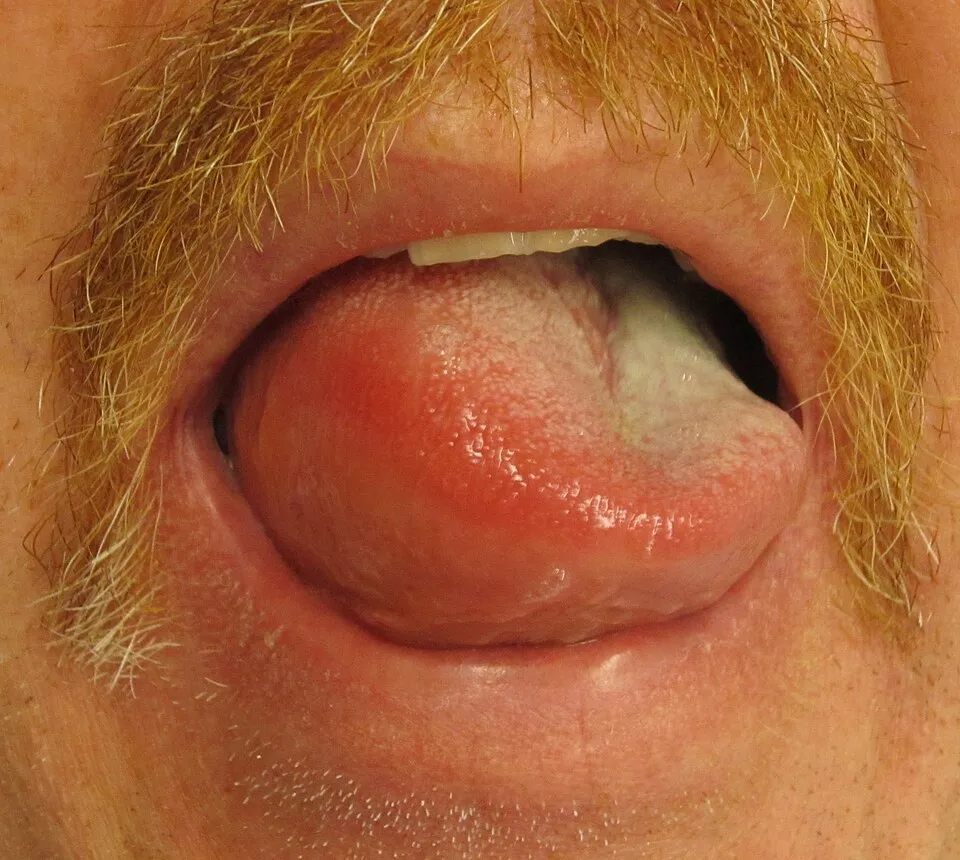
Acute upper airway obstruction is a sudden, life-threatening narrowing of the airway between the lips and the carina. Common causes in adults are an inhaled food bolus or foreign body, angioedema (anaphylaxis, ACE inhibitors, hereditary C1-inhibitor deficiency) and deep neck infection (supraglottitis, Ludwig angina, quinsy). Others include tumours, trauma, burns and neck haematoma after thyroid surgery. In children, croup, foreign bodies, epiglottitis and bacterial tracheitis predominate. Warning signs are stridor, a muffled 'hot potato' voice, drooling, trismus, a tripod posture, agitation and rising work of breathing. Cyanosis, silence and drowsiness are late signs; saturation may stay normal until collapse. Management is a team emergency. Keep the patient upright and calm, give oxygen, call senior anaesthetic and ENT help early, and treat the cause (IM adrenaline in anaphylaxis, nebulised adrenaline and steroids). Then secure the airway in theatre by awake intubation, induction with a double set-up, or awake tracheostomy. Every clinician should know front-of-neck rescue.
Patient case, mechanism, investigations, management, flashcards and exam-style questions.Open the lesson →
Key facts
- Upper airway: from the lips and nares to the carina; stridor is the cardinal sign of partial obstruction
- Inspiratory stridor: supraglottic or glottic; biphasic: subglottic or tracheal; expiratory wheeze: intrathoracic airways
- Late signs: cyanosis, exhaustion, falling conscious level, silent chest; SpO2 can be normal until near-arrest
- Choking adult or child over 1 year: encourage coughing, then up to 5 back blows and up to 5 abdominal thrusts, alternating; CPR if unresponsive (ERC 2025)
- Anaphylaxis: IM adrenaline 0.5 mg (0.5 mL of 1 mg/mL) in adults, repeat after 5 minutes if needed (teaching dose; check local formulary)
- ACE-inhibitor and hereditary angioedema are bradykinin-mediated: adrenaline, steroids and antihistamines work poorly; airway protection comes first
- Neck haematoma after thyroid surgery: open the wound at the bedside (skin and muscle sutures) to decompress the airway
- Can't intubate, can't oxygenate: declare it and perform front-of-neck access with scalpel-bougie-tube cricothyroidotomy (DAS 2025)
Differential diagnosis
| Condition | Clues | Key test |
|---|---|---|
| Supraglottitis (epiglottitis) | Rapid sore throat, odynophagia, drooling, muffled voice, fever | Gentle nasendoscopy only where airway team ready; lateral neck X-ray not essential |
| Angioedema | Lip and tongue swelling without urticaria (ACE inhibitor or hereditary) or with urticaria and hypotension (anaphylaxis) | Clinical; tryptase in anaphylaxis; C4 and C1-INH for hereditary |
| Foreign body or food bolus | Sudden choking while eating; children playing | Clinical; laryngoscopy or bronchoscopy |
| Deep neck abscess or Ludwig angina | Trismus, floor-of-mouth swelling, neck swelling, dental source | CT neck with contrast once airway safe |
| Laryngeal cancer | Progressive hoarseness, smoker, weight loss, then stridor | Laryngoscopy, biopsy, CT |
| Bilateral vocal fold paralysis | Stridor after thyroid surgery with good voice | Laryngoscopy |
| Croup | Child 6 months to 6 years, barking cough, coryza | Clinical |
| Laryngospasm or vocal cord dysfunction | Sudden inspiratory noise, often after extubation or with triggers | Clinical; laryngoscopy during episode |
Exam pearls
Guideline
Difficult Airway Society 2025 guidelines for unanticipated difficult tracheal intubation in adults; DAS awake tracheal intubation guideline (2020); ASA difficult airway guideline (2022); ERC Guidelines 2025 (choking)
References
- Ahmad I, El-Boghdadly K, Iliff H, et al.. Difficult Airway Society 2025 guidelines for management of unanticipated difficult tracheal intubation in adults. Br J Anaesth 2026.
- Ahmad I, El-Boghdadly K, Bhagrath R, et al.. Difficult Airway Society guidelines for awake tracheal intubation (ATI) in adults. Anaesthesia 2020.
- Apfelbaum JL, Hagberg CA, Connis RT, et al.. 2022 American Society of Anesthesiologists practice guidelines for management of the difficult airway. Anesthesiology 2022.
- Smyth MA, et al.. European Resuscitation Council Guidelines 2025: adult basic life support. Resuscitation 2025.
- McGrath BA, Bates L, Atkinson D, Moore JA.. Multidisciplinary guidelines for the management of tracheostomy and laryngectomy airway emergencies. Anaesthesia 2012.
- Kozin ED, Lustig LR. In: Papadakis MA, Rabow MW, McQuaid KR, eds.. CURRENT Medical Diagnosis & Treatment 2026, chapter 8: Otolaryngology disorders. McGraw Hill 2026.
Related topics
By Dr Khalid Seidi (B.Sc., M.D.) · MedEd World Clinical Knowledge library. Original teaching content checked against current guidelines (November 2026); confirm the latest local guidance before clinical use. Not a substitute for clinical judgement.