Clinical Knowledge › Internal medicine › Haematology and oncology › Transfusion and cellular therapy
Acute transfusion reactions
Acute transfusion reactions are adverse events occurring during or within 24 hours of a transfusion. They range from common, mild febrile non-haemolytic and urticarial reactions to life-threatening acute haemolysis from ABO incompatibility, anaphylaxis, bacterial contamination, transfusion-associated circulatory overload (TACO) and transfusion-related acute lung injury (TRALI). Because early symptoms overlap – fever, rigors, breathlessness, hypotension, rash – every suspected reaction is handled the same way at first: stop the transfusion, keep the line open with saline, assess ABCDE, check the patient's identity against the unit, and call for help. Severity and the leading pattern then guide treatment and investigation: intramuscular adrenaline for anaphylaxis, fluids and urine output support for haemolysis, diuretics for TACO, ventilatory support (not diuretics) for TRALI, and cultures with broad-spectrum antibiotics for suspected bacterial contamination. Serious reactions are investigated and reported to haemovigilance (for example SHOT).
Patient case, mechanism, investigations, management, flashcards and exam-style questions.Open the lesson →
Key facts
- Acute reactions occur within 24 hours; delayed reactions (delayed haemolysis, post-transfusion purpura, TA-GvHD) occur days to weeks later
- First steps for any suspected reaction: stop the transfusion, keep IV access, ABCDE assessment, check patient ID against the component label, call a doctor
- Febrile non-haemolytic reactions are commonest; leucodepletion has reduced them; isolated mild fever can be treated with paracetamol and the transfusion cautiously continued
- ABO-incompatible transfusion: fever, rigors, loin or back pain, hypotension, haemoglobinuria, DIC and AKI within minutes – almost always due to identification error
- Anaphylaxis: hypotension, bronchospasm or angioedema; give adrenaline 0.5 mg IM (500 micrograms, 1 mg/mL) and repeat after 5 minutes if needed
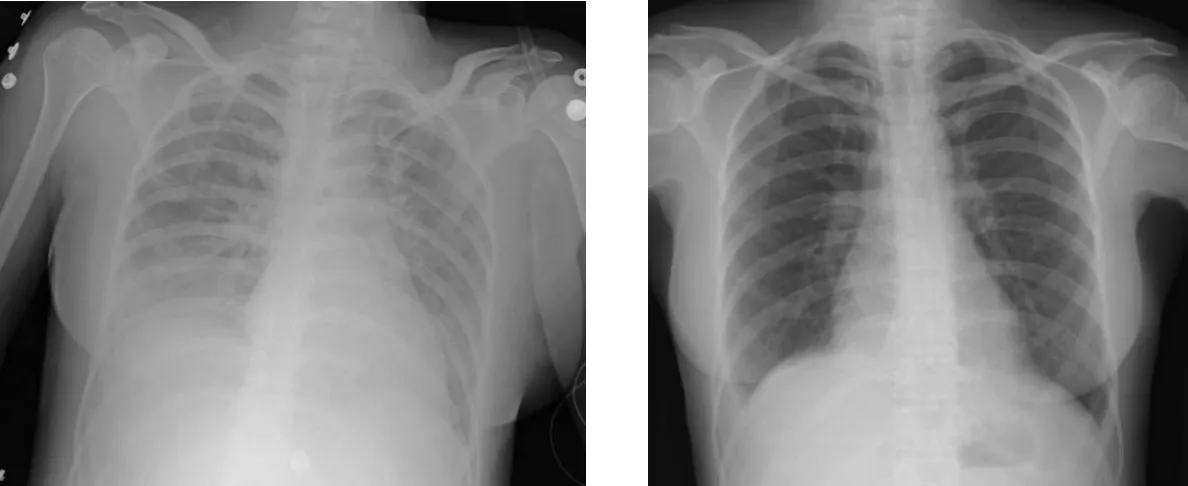
- TACO: hypertension, raised JVP, crackles, positive fluid balance and raised BNP within 12 hours; leading cause of transfusion-related deaths in UK haemovigilance
- TRALI: hypoxaemia and bilateral infiltrates within 6 hours, often with fever and hypotension; caused mainly by donor anti-HLA or anti-HNA antibodies
- Bacterial contamination (mostly platelets): high fever, rigors and hypotension; culture patient and pack, start broad-spectrum antibiotics, inform the blood service
Differential diagnosis
| Condition | Clues | Key test |
|---|---|---|
| Febrile non-haemolytic reaction | Fever below 39 °C or rise of 1–2 °C, otherwise well | Diagnosis of exclusion; DAT negative, no haemolysis |
| Acute haemolytic reaction (ABO) | Fever, rigors, loin pain, hypotension, red urine within minutes | ID check, DAT, haemolysis screen, repeat group |
| Anaphylaxis | Hypotension, stridor or wheeze, angioedema | Mast cell tryptase, IgA level |
| TACO | Hypertension, raised JVP, crackles, positive fluid balance | Chest X-ray, NT-proBNP, response to diuretic |
| TRALI | Hypoxaemia, bilateral infiltrates, often hypotension and fever, normal JVP | Chest X-ray, normal BNP, donor HLA/HNA antibodies |
| Bacterial contamination | Fever 39 °C or more, rigors, shock, often with platelets | Blood cultures from patient and pack |
| Underlying illness (sepsis, pulmonary embolism, myocardial infarction) | Symptoms coincide with transfusion by chance | Clinical context, cultures, CTPA, troponin |
Exam pearls
Guideline
BSH Guideline on the investigation and management of acute transfusion reactions (2023), ISBT TACO definition (2018), consensus redefinition of TRALI (2019) and SHOT haemovigilance reports
References
- Soutar R, McSporran W, Tomlinson T, et al.. Guideline on the investigation and management of acute transfusion reactions. Br J Haematol 2023.
- Wiersum-Osselton JC, Whitaker B, Grey S, et al.. Revised international surveillance case definition of transfusion-associated circulatory overload: a classification agreement validation study. Lancet Haematol 2019.
- Vlaar APJ, Toy P, Fung M, et al.. A consensus redefinition of transfusion-related acute lung injury. Transfusion 2019.
- Serious Hazards of Transfusion (SHOT). Annual SHOT Report 2023. SHOT, Manchester 2024.
- Delaney M, Wendel S, Bercovitz RS, et al.. Transfusion reactions: prevention, diagnosis, and treatment. Lancet 2016.
- Semple JW, Rebetz J, Kapur R.. Transfusion-associated circulatory overload and transfusion-related acute lung injury. Blood 2019.
Related topics
By Dr Khalid Seidi (B.Sc., M.D.) · MedEd World Clinical Knowledge library. Original teaching content checked against current guidelines (November 2026); confirm the latest local guidance before clinical use. Not a substitute for clinical judgement.