Clinical Knowledge › Internal medicine › Haematology and oncology › Transfusion and cellular therapy
Graft-versus-host disease
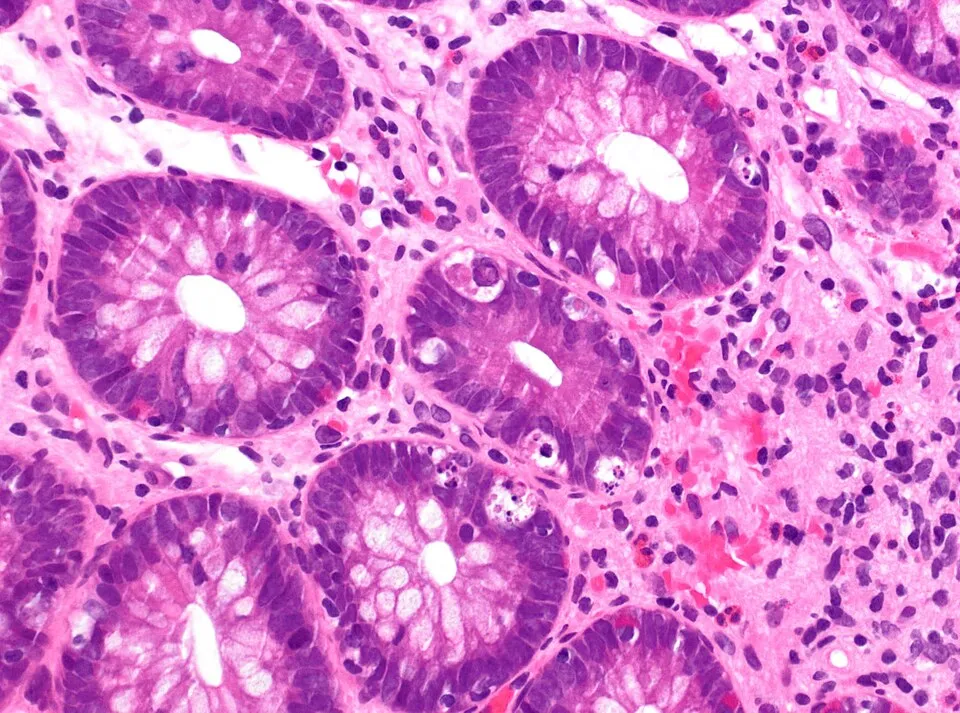
Graft-versus-host disease (GVHD) occurs when immunocompetent donor T cells attack recipient tissues, mainly after allogeneic haematopoietic stem cell transplantation (HSCT) and rarely after transfusion of non-irradiated blood. Acute GVHD usually appears within 100 days with a rash on the palms, soles and ears, cholestatic jaundice and high-volume diarrhoea; it is staged by skin area, bilirubin and stool volume (MAGIC) and graded I–IV. Chronic GVHD resembles autoimmune disease, with lichen planus-like and sclerotic skin, dry eyes and mouth, oesophageal strictures, fasciitis and bronchiolitis obliterans, and is scored with the NIH 2014 criteria. Prophylaxis combines a calcineurin inhibitor with methotrexate, mycophenolate, anti-thymocyte globulin or post-transplant cyclophosphamide. Corticosteroids are first-line treatment; ruxolitinib is standard for steroid-refractory disease, with belumosudil, axatilimab and photopheresis for chronic GVHD. GVHD is a leading cause of non-relapse mortality, yet its graft-versus-leukaemia effect lowers relapse.
Patient case, mechanism, investigations, management, flashcards and exam-style questions.Open the lesson →
Key facts
- Billingham requirements: an immunocompetent graft, recipient antigens absent in the donor, and a recipient unable to reject the graft
- Acute GVHD targets skin, liver and gut; chronic GVHD can affect almost any organ and resembles scleroderma, lichen planus and Sjögren syndrome
- Acute versus chronic is defined by clinical features (NIH), not only by the day-100 cut-off; overlap syndromes have features of both
- Strongest risk factors: HLA mismatch, unrelated donor, female donor to male recipient, peripheral blood stem cell graft, older age and myeloablative conditioning
- Grade II–IV acute GVHD is treated with methylprednisolone or prednisolone 1–2 mg/kg/day; about half of patients are steroid-refractory or dependent
- Ruxolitinib (JAK1/2 inhibitor) is the standard second-line therapy for both acute (REACH2) and chronic (REACH3) steroid-refractory GVHD
- Bronchiolitis obliterans syndrome is the lung manifestation of chronic GVHD: obstructive spirometry with air trapping and no infection
- Transfusion-associated GVHD is almost always fatal (marrow aplasia) and is prevented by irradiating cellular blood components for at-risk recipients
Differential diagnosis
| Condition | Clues | Key test |
|---|---|---|
| Drug eruption (for example co-trimoxazole, beta-lactams) | Rash after new drug; no diarrhoea or bilirubin rise | Drug history; skin biopsy (eosinophils favour drug) |
| Engraftment syndrome | Fever, rash, capillary leak and hypoxia at neutrophil recovery | Timing at engraftment; rapid steroid response |
| Infective diarrhoea (CMV, C. difficile, norovirus, adenovirus) | Diarrhoea with fever, often lower volume | Stool PCR and toxin; CMV PCR; endoscopic biopsy |
| Sinusoidal obstruction syndrome (veno-occlusive disease) | Jaundice, painful hepatomegaly, weight gain and ascites in first 3 weeks | Doppler ultrasound (reversed portal flow); EBMT criteria |
| Drug-induced liver injury (azoles, ciclosporin) | Cholestasis temporally linked to a drug | Drug levels; improvement on withdrawal; liver biopsy if unclear |
| Viral hepatitis reactivation (hepatitis B, E) | Hepatitic rather than cholestatic pattern | HBV DNA, HEV PCR |
| Infective pneumonia or idiopathic pneumonia syndrome | Fever, infiltrates, restrictive or mixed pattern | CT, bronchoalveolar lavage |
| Primary Sjögren syndrome or systemic sclerosis | Sicca or sclerosis without transplant history | Anti-Ro/La, anti-Scl-70; history of HSCT |
Exam pearls
Guideline
EBMT updated consensus recommendations on prophylaxis and management of GVHD (2024), with NIH Consensus Development Project criteria for chronic GVHD (2014) and MAGIC acute GVHD staging (2016)
References
- Penack O, Marchetti M, Aljurf M, et al.. Prophylaxis and management of graft-versus-host disease after stem-cell transplantation for haematological malignancies: updated consensus recommendations of the European Society for Blood and Marrow Transplantation. Lancet Haematol 2024.
- Jagasia MH, Greinix HT, Arora M, et al.. National Institutes of Health Consensus Development Project on criteria for clinical trials in chronic graft-versus-host disease: I. The 2014 Diagnosis and Staging Working Group report. Biol Blood Marrow Transplant 2015.
- Harris AC, Young R, Devine S, et al.. International, multicenter standardization of acute graft-versus-host disease clinical data collection: a report from the Mount Sinai Acute GVHD International Consortium. Biol Blood Marrow Transplant 2016.
- Zeiser R, von Bubnoff N, Butler J, et al.. Ruxolitinib for glucocorticoid-refractory acute graft-versus-host disease. N Engl J Med 2020.
- Zeiser R, Polverelli N, Ram R, et al.. Ruxolitinib for glucocorticoid-refractory chronic graft-versus-host disease. N Engl J Med 2021.
- Bolaños-Meade J, Hamadani M, Wu J, et al.. Post-transplantation cyclophosphamide-based graft-versus-host disease prophylaxis. N Engl J Med 2023.
Related topics
By Dr Khalid Seidi (B.Sc., M.D.) · MedEd World Clinical Knowledge library. Original teaching content checked against current guidelines (November 2026); confirm the latest local guidance before clinical use. Not a substitute for clinical judgement.