Clinical Knowledge › Anaesthesiology › Special patient groups
Anaesthesia for emergency laparotomy
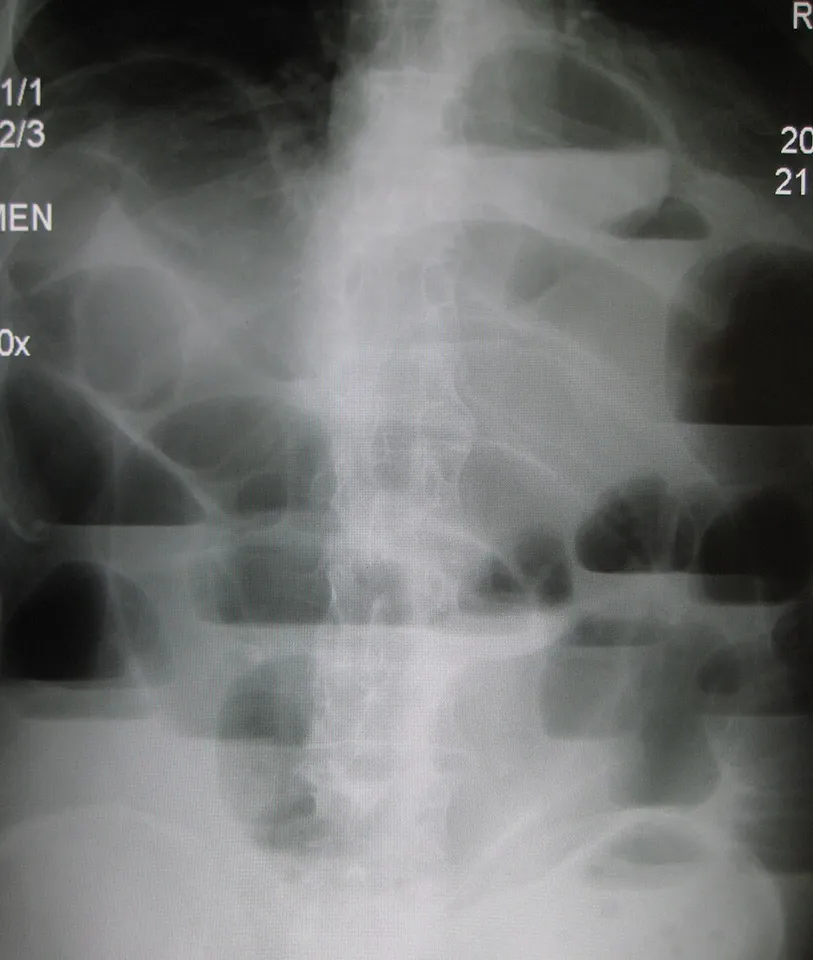
Emergency laparotomy for perforation, obstruction, ischaemia, bleeding or anastomotic leak is one of the highest-risk operations in general surgery: 30-day mortality is roughly ten times that of elective major bowel surgery and rises steeply with age, frailty, sepsis and shock. Patients are often septic, hypovolaemic and acidotic, with a full stomach and little reserve. Good outcomes come from a pathway rather than a single drug: prompt diagnosis with CT, documented risk assessment (NELA score), antibiotics within an hour of suspected sepsis, timely theatre according to urgency, consultant surgeon and anaesthetist present for high-risk cases, geriatric input for frail older people and planned critical care after surgery. Anaesthesia is a rapid sequence induction with nasogastric decompression, a cardiovascularly stable induction with reduced doses and vasopressors ready, invasive monitoring, goal-directed fluids, normothermia, lung-protective ventilation and multimodal analgesia. In the unstable patient a damage control approach limits surgery to control of contamination and bleeding.
Patient case, mechanism, investigations, management, flashcards and exam-style questions.Open the lesson →
Key facts
- In the UK National Emergency Laparotomy Audit, 30-day mortality has fallen since the audit began in 2013 but remains close to 1 in 10, and is higher in patients over 80 or with frailty
- Every patient should have a documented preoperative risk estimate (for example NELA score); predicted mortality of 5% or more defines high risk
- NELA standards: consultant surgeon and anaesthetist present in theatre and planned critical care admission for high-risk patients
- Give antibiotics within 1 hour when sepsis is suspected, and achieve source control as soon as practically possible
- Bowel obstruction means a full stomach: aspirate the nasogastric tube before induction and use rapid sequence induction
- Septic, hypovolaemic patients need reduced induction doses, an arterial line before induction where possible and a vasopressor ready; ketamine is often chosen for stability
- Avoid nitrous oxide (bowel distension), hypothermia and fluid excess; use goal-directed fluids and balanced crystalloids
- Frail patients aged 65 or more should have frailty assessed and geriatrician input; P-POSSUM and NELA overpredict mortality in laparoscopic cases
Differential diagnosis
| Condition | Clues | Key test |
|---|---|---|
| Perforated viscus | Sudden severe pain, peritonism, free gas | Erect chest X-ray, CT abdomen |
| Small or large bowel obstruction | Colicky pain, vomiting, distension, absolute constipation | CT abdomen and pelvis |
| Acute mesenteric ischaemia | Pain out of proportion to signs, AF, raised lactate | CT angiography |
| Acute pancreatitis | Epigastric pain to back, raised amylase or lipase; surgery usually not indicated | Lipase, CT if uncertain |
| Ruptured abdominal aortic aneurysm | Shock, back pain, pulsatile mass | Bedside ultrasound, CT angiography; vascular surgery |
| Inferior myocardial infarction or DKA | Upper abdominal pain without surgical cause | ECG, troponin, glucose and ketones |
| Anastomotic leak after previous surgery | Deterioration days after bowel surgery, sepsis | CT with contrast |
Exam pearls
Guideline
ERAS Society guidelines for emergency laparotomy Part 1 (2021), Part 2 and Part 3 (2023); NELA standards and tenth patient report (2025); Surviving Sepsis Campaign (2021)
References
- Peden CJ, Aggarwal G, Aitken RJ, et al.. Guidelines for Perioperative Care for Emergency Laparotomy Enhanced Recovery After Surgery (ERAS) Society Recommendations: Part 1-Preoperative: Diagnosis, Rapid Assessment and Optimization. World J Surg 2021.
- Scott MJ, Aggarwal G, Aitken RJ, et al.. Consensus Guidelines for Perioperative Care for Emergency Laparotomy Enhanced Recovery After Surgery (ERAS^®^) Society Recommendations Part 2-Emergency Laparotomy: Intra- and Postoperative Care. World J Surg 2023.
- Peden CJ, Aggarwal G, Aitken RJ, et al.. Enhanced Recovery After Surgery (ERAS®) Society Consensus Guidelines for Emergency Laparotomy Part 3: Organizational Aspects and General Considerations for Management of the Emergency Laparotomy Patient. World J Surg 2023.
- National Emergency Laparotomy Audit (NELA) Project Team, Royal College of Anaesthetists. Tenth Patient Report of the National Emergency Laparotomy Audit. Healthcare Quality Improvement Partnership, London 2025.
- Eugene N, Kuryba A, Martin P, et al.. Development and validation of a prognostic model for death 30 days after adult emergency laparotomy. Anaesthesia 2023.
- Eugene N, Oliver CM, Bassett MG, et al.. Development and internal validation of a novel risk adjustment model for adult patients undergoing emergency laparotomy surgery: the National Emergency Laparotomy Audit risk model. Br J Anaesth 2018.
Related topics
By Dr Khalid Seidi (B.Sc., M.D.) · MedEd World Clinical Knowledge library. Original teaching content checked against current guidelines (November 2026); confirm the latest local guidance before clinical use. Not a substitute for clinical judgement.