Clinical Knowledge › Anaesthesiology › Special patient groups
Anaesthesia in patients with respiratory disease
Chronic lung disease increases the risk of bronchospasm, hypoxaemia, hypercapnia and postoperative pulmonary complications such as atelectasis, pneumonia and respiratory failure. Preoperative care aims to bring asthma and COPD to their best: confirm control, continue inhaled therapy up to and after surgery, treat infection or exacerbation and postpone elective surgery until recovery, give a short oral corticosteroid course when control is poor, stop smoking and offer prehabilitation. The ARISCAT score estimates the risk of pulmonary complications. In theatre, regional or local techniques and supraglottic airways avoid airway irritation where suitable; bronchodilating agents (propofol, ketamine, sevoflurane) and deep anaesthesia before instrumentation help, while histamine-releasing drugs and unopposed neostigmine are avoided. In obstructive disease the ventilator needs a long expiratory time to prevent air trapping. Lung-protective ventilation, complete neuromuscular recovery, opioid-sparing analgesia, physiotherapy and early mobilisation reduce postoperative complications.
Patient case, mechanism, investigations, management, flashcards and exam-style questions.Open the lesson →
Key facts
- Postoperative pulmonary complications (atelectasis, pneumonia, bronchospasm, respiratory failure) are as common as cardiac complications and strongly linked to death and length of stay
- ARISCAT predictors: age, low preoperative SpO2, respiratory infection in the last month, anaemia (Hb 100 g/L or less), upper abdominal or thoracic incision, surgery over 2 hours, emergency surgery
- GINA advises good asthma control before surgery, continuing maintenance therapy, a short oral corticosteroid course if control is poor, and steroid cover if on long-term high-dose ICS or oral steroids
- Propofol, ketamine and sevoflurane are bronchodilating; desflurane irritates the airway; morphine, atracurium and mivacurium release histamine
- In obstructive lung disease use low respiratory rate, I:E ratio 1:3 or longer and accept mild hypercapnia to avoid dynamic hyperinflation (auto-PEEP)
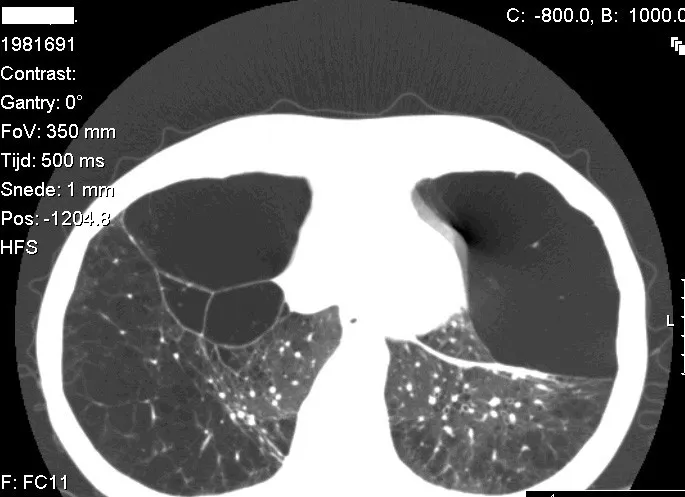
- Avoid nitrous oxide with bullae or pneumothorax because it expands closed air spaces
- Interscalene brachial plexus block almost always paralyses the ipsilateral hemidiaphragm; avoid it in severe respiratory disease
- Residual neuromuscular block increases pulmonary complications (POPULAR); confirm TOF ratio 0.9 or more with quantitative monitoring (ESAIC 2023)
Differential diagnosis
| Condition | Clues | Key test |
|---|---|---|
| Bronchospasm (asthma or COPD) | Wheeze, rising airway pressure, upsloping capnograph | Auscultation, capnography waveform |
| Anaphylaxis | Bronchospasm with hypotension, rash or angio-oedema after a drug | Clinical, mast cell tryptase |
| Endobronchial intubation or kinked tube | Unilateral breath sounds, high pressure | Check tube length, pass suction catheter, fibreoptic |
| Pneumothorax | Unilateral absent breath sounds, high pressure, hypotension | Lung ultrasound, chest X-ray |
| Aspiration | Gastric content in airway, hypoxaemia, wheeze | Suction, chest X-ray |
| Dynamic hyperinflation | Hypotension with rising end-expiratory pressure in COPD | Disconnect ventilator briefly; measure intrinsic PEEP |
| Pulmonary oedema | Pink frothy secretions, crackles, after fluid | Lung ultrasound B-lines, chest X-ray |
Exam pearls
Guideline
GINA 2026 (perioperative asthma advice); GOLD 2026 report (surgery in COPD); ESAIC guidelines on neuromuscular blockade (2023) and preoperative assessment (2025); ACP perioperative pulmonary risk guideline (2006); NICE NG45 (2016)
References
- Global Initiative for Asthma (GINA). Global Strategy for Asthma Management and Prevention (2026 update). 2026.
- Global Initiative for Chronic Obstructive Lung Disease (GOLD). Global Strategy for the Diagnosis, Management, and Prevention of Chronic Obstructive Pulmonary Disease: 2026 Report. 2026.
- Canet J, Gallart L, Gomar C, et al.. Prediction of postoperative pulmonary complications in a population-based surgical cohort. Anesthesiology 2010.
- Kirmeier E, Eriksson LI, Lewald H, et al.. Post-anaesthesia pulmonary complications after use of muscle relaxants (POPULAR): a multicentre, prospective observational study. Lancet Respir Med 2019.
- Fuchs-Buder T, Romero CS, Lewald H, et al.. Peri-operative management of neuromuscular blockade: A guideline from the European Society of Anaesthesiology and Intensive Care. Eur J Anaesthesiol 2023.
- Lamperti M, Romero CS, Guarracino F, et al.. Preoperative assessment of adults undergoing elective noncardiac surgery: updated guidelines from the European Society of Anaesthesiology and Intensive Care. Eur J Anaesthesiol 2025.
Related topics
By Dr Khalid Seidi (B.Sc., M.D.) · MedEd World Clinical Knowledge library. Original teaching content checked against current guidelines (November 2026); confirm the latest local guidance before clinical use. Not a substitute for clinical judgement.