Clinical Knowledge › Anaesthesiology › Special patient groups
Obstetric anaesthesia and labour analgesia
Obstetric anaesthesia covers labour analgesia and anaesthesia for caesarean birth and other procedures in pregnancy, with two patients and altered physiology. Aortocaval compression, reduced functional residual capacity with high oxygen consumption, airway oedema, increased aspiration risk and hypercoagulability shape every decision. Low-dose epidural analgesia (dilute local anaesthetic with an opioid) is the most effective labour analgesia, and an epidural in place can be extended for urgent caesarean birth. Most caesarean births are performed under spinal anaesthesia with hyperbaric bupivacaine and intrathecal opioid, a block to T4, left uterine displacement and a prophylactic phenylephrine infusion to prevent hypotension. General anaesthesia is reserved for contraindications or extreme urgency; it carries risks of failed intubation, aspiration and accidental awareness and follows the OAA/DAS obstetric airway guideline. Thrombocytopenia, anticoagulants, pre-eclampsia, haemorrhage and post-dural puncture headache are core problems for which the anaesthetist must plan.
Patient case, mechanism, investigations, management, flashcards and exam-style questions.Open the lesson →
Key facts
- Physiology: aortocaval compression from about 20 weeks, FRC reduced by about 20% with higher oxygen consumption (rapid desaturation), airway oedema, lower MAC and local anaesthetic requirements
- Labour epidural: low-dose regimens such as bupivacaine 0.0625–0.1% with fentanyl 2 microgram/mL, often by programmed intermittent bolus with patient-controlled top-ups (teaching doses; check local protocol)
- Neuraxial analgesia does not increase caesarean birth rate; low-dose regimens limit motor block and instrumental birth
- Caesarean spinal: hyperbaric bupivacaine 0.5% about 2.2–2.5 mL with intrathecal diamorphine 300–400 microgram (or morphine 100–150 microgram); block to T4 to cold and touch (teaching doses)
- Prophylactic phenylephrine infusion started with the spinal, titrated to keep systolic pressure at or above about 90% of baseline and above 80%
- Neuraxial block is generally acceptable with platelets 70 × 10⁹/L or more in gestational thrombocytopenia, ITP or hypertensive disease without other risk factors (SOAP 2021)
- General anaesthesia: rapid sequence induction, high-flow nasal oxygen, videolaryngoscope, no more than two intubation attempts (third only by an experienced colleague), then supraglottic airway and wake-or-proceed decision
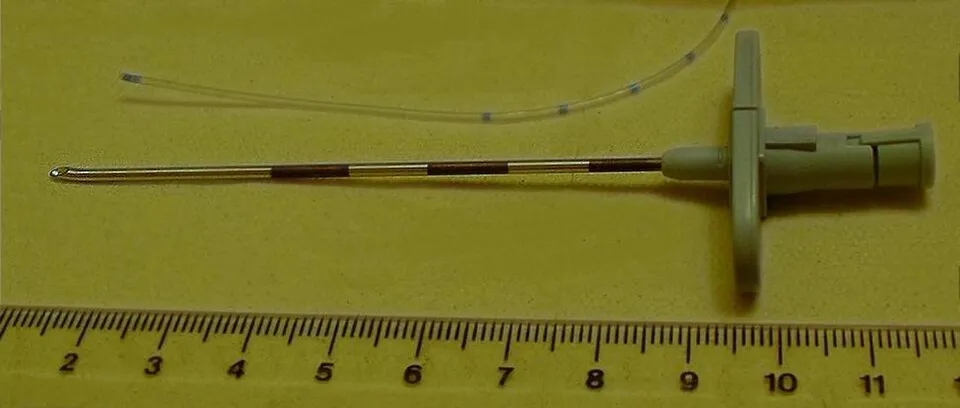
- Accidental dural puncture with a 16–18 G Tuohy needle causes headache in more than half; epidural blood patch is the definitive treatment
Differential diagnosis
| Condition | Clues | Key test |
|---|---|---|
| Supine hypotensive syndrome (aortocaval compression) | Hypotension, nausea and fetal bradycardia when supine, relieved by left tilt | Clinical; response to uterine displacement |
| High or total spinal block | Arm weakness, dyspnoea, hypotension, bradycardia, loss of consciousness after neuraxial dose | Clinical; sensory level above T1 |
| Local anaesthetic systemic toxicity | Perioral tingling, tinnitus, seizures, arrhythmias after epidural top-up | Clinical; aspirate catheter |
| Post-dural puncture headache | Postural frontal–occipital headache within 72 hours of neuraxial block | Clinical; exclude red flags |
| Postpartum pre-eclampsia, eclampsia or PRES | Headache with hypertension, visual disturbance, seizures | BP, urine protein, platelets, LFTs; MRI if atypical |
| Cerebral venous sinus thrombosis | Persistent non-postural headache, seizures, focal signs postpartum | MR or CT venography |
| Amniotic fluid embolism | Sudden collapse, hypoxia, hypotension, DIC around delivery | Clinical diagnosis; coagulation screen |
Exam pearls
Guideline
OAA/DAS obstetric difficult airway guideline (2015); international consensus on vasopressors at caesarean (2018); SOAP thrombocytopenia consensus (2021); ASRA regional anaesthesia and antithrombotics (5th edition, 2025); NICE NG235 Intrapartum care (2023) and NG192 Caesarean birth (2021)
References
- Mushambi MC, Kinsella SM, Popat M, et al.. Obstetric Anaesthetists' Association and Difficult Airway Society guidelines for the management of difficult and failed tracheal intubation in obstetrics. Anaesthesia 2015.
- Kinsella SM, Carvalho B, Dyer RA, et al.. International consensus statement on the management of hypotension with vasopressors during caesarean section under spinal anaesthesia. Anaesthesia 2018.
- Bauer ME, Arendt K, Beilin Y, et al.. The Society for Obstetric Anesthesia and Perinatology interdisciplinary consensus statement on neuraxial procedures in obstetric patients with thrombocytopenia. Anesth Analg 2021.
- Kopp SL, Vandermeulen E, McBane RD, et al.. Regional anesthesia in the patient receiving antithrombotic or thrombolytic therapy: American Society of Regional Anesthesia and Pain Medicine evidence-based guidelines (fifth edition). Reg Anesth Pain Med 2025.
- National Institute for Health and Care Excellence. Intrapartum care (NG235). NICE, London 2023.
- National Institute for Health and Care Excellence. Caesarean birth (NG192). NICE, London 2021.
Related topics
By Dr Khalid Seidi (B.Sc., M.D.) · MedEd World Clinical Knowledge library. Original teaching content checked against current guidelines (November 2026); confirm the latest local guidance before clinical use. Not a substitute for clinical judgement.