Clinical Knowledge › Anaesthesiology › Special patient groups
Anaesthesia in neuromuscular disease
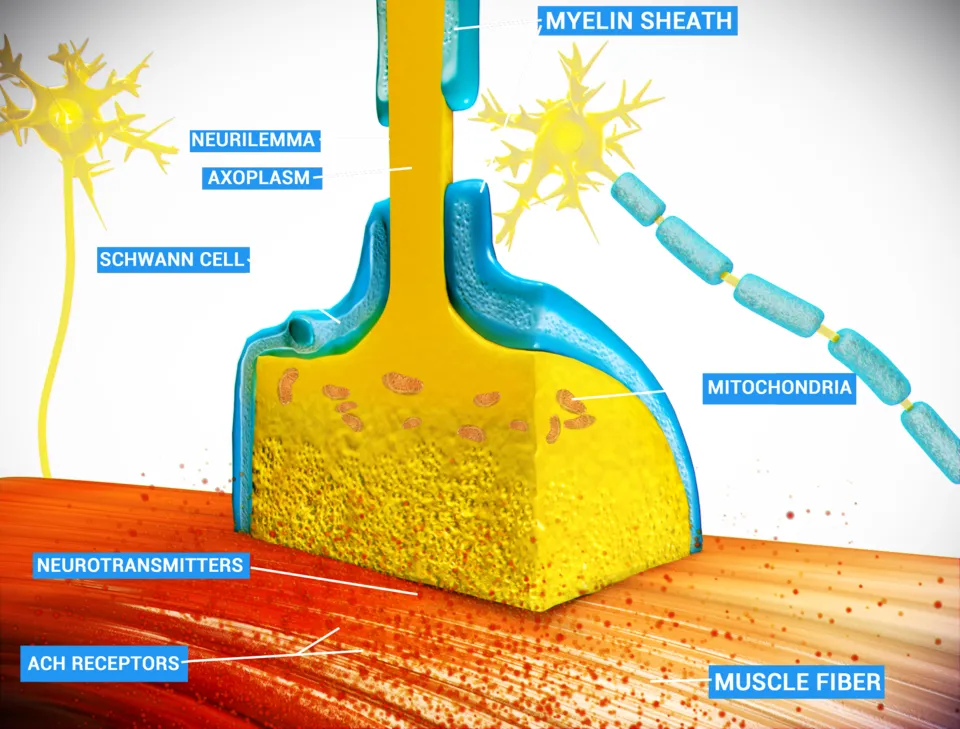
Neuromuscular diseases, from motor neurone disease and myasthenia to muscular and myotonic dystrophies, make anaesthesia hazardous in four ways: respiratory and bulbar weakness that causes aspiration and postoperative ventilatory failure; cardiomyopathy and conduction disease; abnormal responses to neuromuscular blocking drugs; and drug-triggered muscle crises. Suxamethonium is the key danger: it can cause fatal hyperkalaemia in denervation and dystrophinopathies, rhabdomyolysis in Duchenne dystrophy, and myotonic contracture in myotonic dystrophy, while patients with RYR1-related myopathies are susceptible to malignant hyperthermia and need a trigger-free technique. Myasthenia gravis is resistant to suxamethonium and very sensitive to non-depolarising drugs; Lambert–Eaton is sensitive to both. Good practice combines preoperative lung function and cardiac assessment, specialist optimisation, reduced titrated doses, quantitative neuromuscular monitoring, sugammadex reversal of rocuronium where appropriate, regional techniques where suitable, and planned postoperative respiratory support.
Patient case, mechanism, investigations, management, flashcards and exam-style questions.Open the lesson →
Key facts
- Avoid suxamethonium in denervation (motor neurone disease, Guillain–Barré, spinal cord injury after the first days, prolonged immobility) because upregulated extrajunctional receptors cause severe hyperkalaemia
- Duchenne and Becker dystrophy: suxamethonium can cause rhabdomyolysis and hyperkalaemic cardiac arrest; volatile agents can also trigger rhabdomyolysis, so TIVA is recommended
- Malignant hyperthermia susceptibility is strongly linked to RYR1-related myopathies (central core and multiminicore disease), King–Denborough syndrome and STAC3 myopathy
- Myasthenia gravis: resistant to suxamethonium (higher dose) and very sensitive to non-depolarising blockers (often 10–50% of normal dose); sugammadex reliably reverses rocuronium
- Lambert–Eaton myasthenic syndrome is sensitive to both depolarising and non-depolarising blockers; look for underlying small cell lung cancer
- Myotonic dystrophy type 1: suxamethonium, neostigmine, cold, shivering and diathermy can trigger myotonia; marked sensitivity to opioids and sedatives; cardiac conduction block
- Forced vital capacity below about 50% predicted or weak cough (peak cough flow below 270 L/min) predicts postoperative respiratory complications; plan NIV and cough assistance
- Drugs that worsen myasthenia include aminoglycosides, magnesium, fluoroquinolones, macrolides and beta-blockers
Differential diagnosis
| Condition | Clues | Key test |
|---|---|---|
| Residual neuromuscular block | Weakness after anaesthesia, TOF fade | Quantitative TOF ratio |
| Myasthenic crisis | Worsening weakness, bulbar and respiratory failure, often after infection, surgery or drugs | FVC, negative inspiratory force; response to treatment |
| Cholinergic crisis | Weakness with miosis, salivation, bradycardia, diarrhoea after excess anticholinesterase | Drug history; clinical muscarinic features |
| Malignant hyperthermia | Rising end-tidal CO2, tachycardia, rigidity, hyperthermia after triggers | Clinical, blood gas, CK, potassium |
| Anaesthesia-induced rhabdomyolysis | Hyperkalaemia, dark urine, raised CK in dystrophinopathy | Potassium, CK, myoglobinuria |
| Hypokalaemic periodic paralysis | Flaccid weakness with low potassium after carbohydrate load | Serum potassium, ECG |
| Critical illness polyneuromyopathy | Weakness after prolonged ICU stay and sepsis | Nerve conduction studies, EMG |
Exam pearls
Guideline
EMHG consensus on perioperative management of MH-susceptible patients (2021) and Association of Anaesthetists MH guideline (2020); DMD care considerations (2018); international consensus guidance for myasthenia gravis (2020 update); consensus care recommendations for myotonic dystrophy type 1 (2018); ESAIC neuromuscular blockade guideline (2023)
References
- Rüffert H, Bastian B, Bendixen D, et al.. Consensus guidelines on perioperative management of malignant hyperthermia suspected or susceptible patients from the European Malignant Hyperthermia Group. Br J Anaesth 2021.
- Hopkins PM, Girard T, Dalay S, et al.. Malignant hyperthermia 2020: Guideline from the Association of Anaesthetists. Anaesthesia 2021.
- Birnkrant DJ, Bushby K, Bann CM, et al.. Diagnosis and management of Duchenne muscular dystrophy, part 2: respiratory, cardiac, bone health, and orthopaedic management. Lancet Neurol 2018.
- Narayanaswami P, Sanders DB, Wolfe G, et al.. International Consensus Guidance for Management of Myasthenia Gravis: 2020 Update. Neurology 2021.
- Ashizawa T, Gagnon C, Groh WJ, et al.. Consensus-based care recommendations for adults with myotonic dystrophy type 1. Neurol Clin Pract 2018.
- Fuchs-Buder T, Romero CS, Lewald H, et al.. Peri-operative management of neuromuscular blockade: A guideline from the European Society of Anaesthesiology and Intensive Care. Eur J Anaesthesiol 2023.
Related topics
By Dr Khalid Seidi (B.Sc., M.D.) · MedEd World Clinical Knowledge library. Original teaching content checked against current guidelines (November 2026); confirm the latest local guidance before clinical use. Not a substitute for clinical judgement.