Clinical Knowledge › Anaesthesiology › Special patient groups
Anaesthesia in obesity and obstructive sleep apnoea
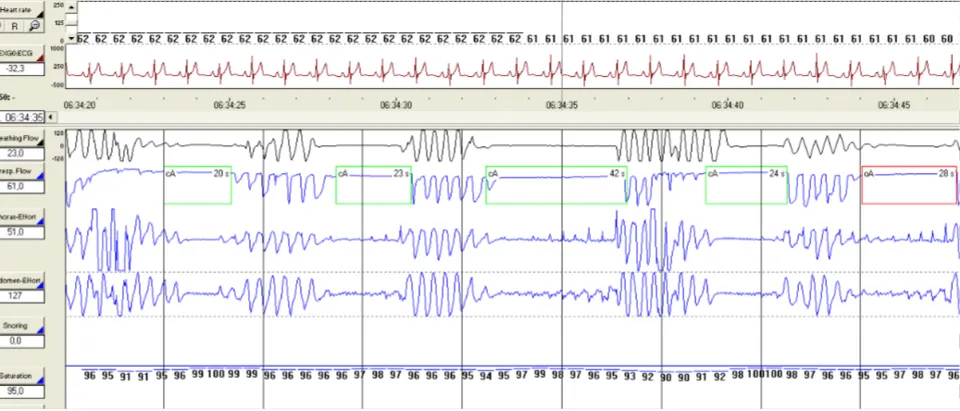
Obesity (BMI 30 kg/m² or more) and obstructive sleep apnoea (OSA) commonly occur together and change almost every step of anaesthesia. Reduced functional residual capacity and higher oxygen consumption cause very fast desaturation; mask ventilation and front-of-neck access are harder; and opioids and sedatives readily cause airway obstruction and hypoventilation after surgery. Screening with STOP-Bang (3 or more intermediate, 5 or more high risk) identifies undiagnosed OSA, and patients already on CPAP should bring and use it. Good practice is a ramped, head-up position, pre-oxygenation with PEEP or high-flow nasal oxygen, videolaryngoscopy and a rehearsed airway plan; dosing by lean or ideal body weight for most drugs; lung-protective ventilation using predicted body weight; full reversal confirmed by train-of-four ratio 0.9 or more; awake extubation sitting up; opioid-sparing analgesia; and monitored postoperative care. GLP-1 receptor agonists delay gastric emptying; current UK and US guidance favours continuing them with an individual aspiration-risk assessment.
Patient case, mechanism, investigations, management, flashcards and exam-style questions.Open the lesson →
Key facts
- Obesity reduces FRC and expiratory reserve volume, raises oxygen consumption and causes atelectasis, so safe apnoea time can fall to 2–3 minutes
- STOP-Bang: Snoring, Tiredness, Observed apnoea, high blood Pressure, BMI over 35, Age over 50, Neck over 40 cm, male Gender; 0–2 low, 3–4 intermediate, 5–8 high risk
- Ramping (external auditory meatus level with the sternal notch) and 25–30° head-up improve laryngoscopy and pre-oxygenation
- Dose propofol induction and opioids on lean body weight, suxamethonium on total body weight, rocuronium on ideal or lean body weight (teaching dose; check local protocol)
- Set tidal volume on predicted body weight (6–8 mL/kg) with PEEP; PROBESE showed routine high PEEP with recruitment did not reduce pulmonary complications
- Extubate fully awake, sitting up, after confirming TOF ratio 0.9 or more; restart CPAP in recovery for known OSA
- SASM 2016: suspected OSA alone need not delay surgery unless there is uncontrolled systemic disease such as hypoventilation, severe pulmonary hypertension or resting hypoxaemia
- UK 2025 consensus: continue GLP-1 receptor agonists before elective surgery, assess aspiration risk individually; omit SGLT2 inhibitors the day before and the day of surgery
Differential diagnosis
| Condition | Clues | Key test |
|---|---|---|
| Obesity hypoventilation syndrome | BMI 30 or more with awake PaCO2 above 6 kPa (45 mmHg), raised bicarbonate | Arterial blood gas, serum bicarbonate |
| Obstructive sleep apnoea | Snoring, witnessed apnoeas, daytime sleepiness | STOP-Bang; polysomnography or home sleep study |
| Pulmonary hypertension and right heart failure | Exertional breathlessness, raised JVP, oedema, loud P2 | Echocardiogram, BNP |
| Residual neuromuscular block in recovery | Weak, shallow breathing, obstruction after extubation | Quantitative TOF ratio |
| Opioid-induced ventilatory impairment | Sedation, slow breathing, small pupils | Sedation score, respiratory rate, capnography |
| Atelectasis | Postoperative hypoxaemia, reduced bases | Chest X-ray or lung ultrasound |
| Pulmonary embolism | Sudden hypoxaemia, tachycardia days after surgery | CT pulmonary angiography |
Exam pearls
Guideline
AAGBI/SOBA peri-operative management of the obese surgical patient (2015); SASM preoperative OSA screening (2016) and intraoperative OSA management (2018); ASA OSA practice guidelines (2014); multisociety GLP-1 receptor agonist guidance (2024) and UK multidisciplinary consensus on GLP-1 receptor agonists and SGLT2 inhibitors (2025)
References
- Members of the Working Party; Nightingale CE, Margarson MP, et al.. Peri-operative management of the obese surgical patient 2015: Association of Anaesthetists of Great Britain and Ireland Society for Obesity and Bariatric Anaesthesia. Anaesthesia 2015.
- Chung F, Memtsoudis SG, Ramachandran SK, et al.. Society of Anesthesia and Sleep Medicine Guidelines on Preoperative Screening and Assessment of Adult Patients With Obstructive Sleep Apnea. Anesth Analg 2016.
- Memtsoudis SG, Cozowicz C, Nagappa M, et al.. Society of Anesthesia and Sleep Medicine Guideline on Intraoperative Management of Adult Patients With Obstructive Sleep Apnea. Anesth Analg 2018.
- American Society of Anesthesiologists Task Force on Perioperative Management of Patients with Obstructive Sleep Apnea. Practice guidelines for the perioperative management of patients with obstructive sleep apnea: an updated report by the American Society of Anesthesiologists Task Force on Perioperative Management of patients with obstructive sleep apnea. Anesthesiology 2014.
- Chung F, Abdullah HR, Liao P. STOP-Bang Questionnaire: A Practical Approach to Screen for Obstructive Sleep Apnea. Chest 2016.
- Kindel TL, Wang AY, Wadhwa A, et al.. Multisociety Clinical Practice Guidance for the Safe Use of Glucagon-like Peptide-1 Receptor Agonists in the Perioperative Period. Clin Gastroenterol Hepatol 2025.
Related topics
By Dr Khalid Seidi (B.Sc., M.D.) · MedEd World Clinical Knowledge library. Original teaching content checked against current guidelines (November 2026); confirm the latest local guidance before clinical use. Not a substitute for clinical judgement.