Clinical Knowledge › Internal medicine › Infectious diseases › Skin, soft-tissue, bone and joint infections
Animal and human bites
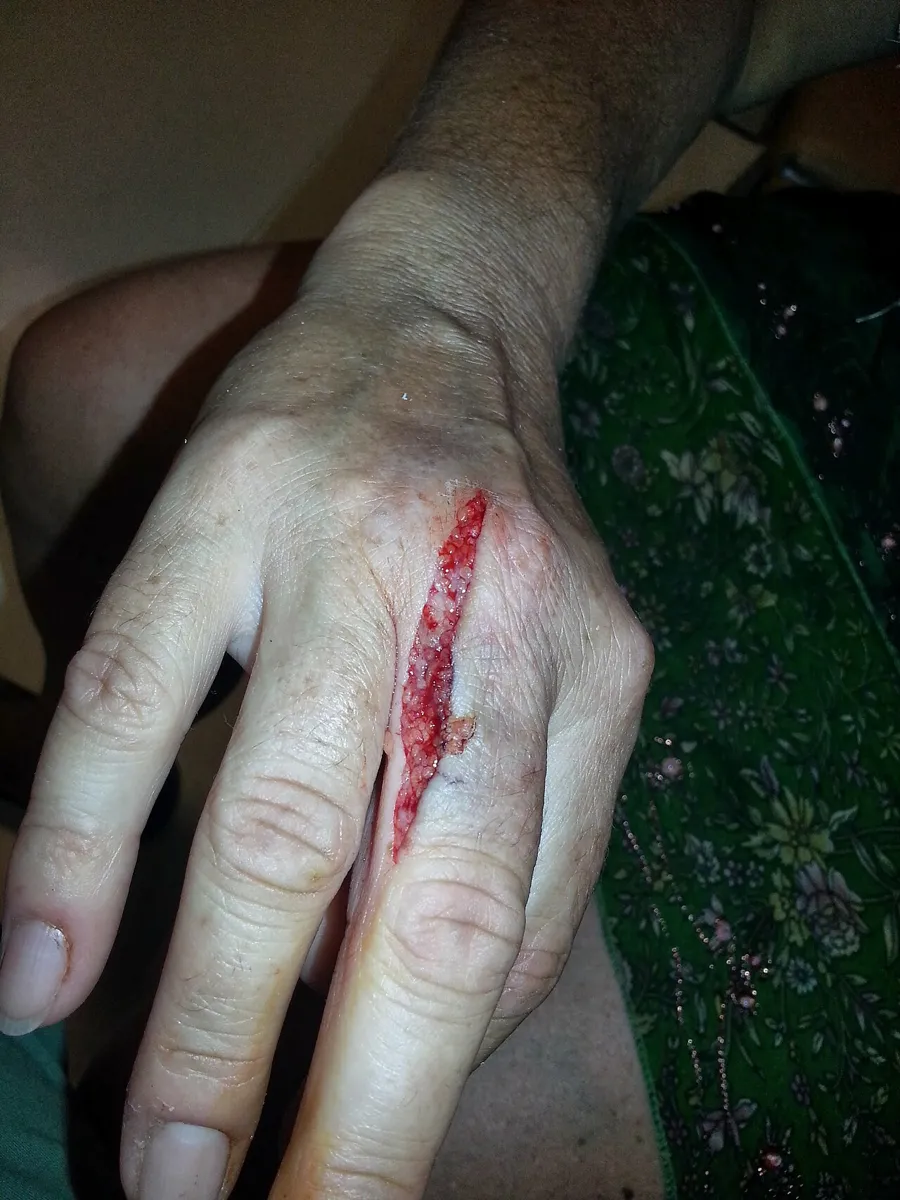
Bites from dogs, cats and humans are common injuries that combine tissue trauma with inoculation of oral flora. Dog bites are the most frequent and often crush tissue; cat bites are deep punctures that become infected in a large proportion; human bites, especially the clenched-fist 'fight bite' over the knuckles, readily infect joints and tendons. Infections are polymicrobial: Pasteurella multocida (rapid cellulitis within 24 hours after cat and dog bites), Capnocytophaga canimorsus (fulminant sepsis in asplenic or alcohol-dependent people), Eikenella corrodens and streptococci after human bites, plus Staphylococcus aureus and anaerobes. Management is documentation, irrigation and debridement, selective closure, X-ray for fractures or teeth, early surgical review of hand injuries, risk-based co-amoxiclav (3 days prophylaxis, 5 days treatment), and assessment for tetanus, rabies and, after human bites, blood-borne viruses. Flucloxacillin, cefalexin and macrolides alone miss Pasteurella and Eikenella.
Patient case, mechanism, investigations, management, flashcards and exam-style questions.Open the lesson →
Key facts
- Dog bites are commonest; cat bites infect most often (deep punctures); human bites carry high risk, especially clenched-fist injuries over the MCP joints
- Pasteurella multocida (cats, dogs) causes cellulitis within 12–24 hours; Capnocytophaga canimorsus (dogs) causes sepsis, DIC and purpura fulminans in asplenia, cirrhosis or alcohol excess
- Eikenella corrodens, viridans streptococci, S. aureus and anaerobes cause human bite infection
- Irrigate copiously with saline, debride devitalised tissue, remove foreign bodies (teeth) and X-ray if fracture or retained tooth is possible
- Co-amoxiclav is first choice: 3 days for prophylaxis and 5 days for established infection (NICE NG184); penicillin allergy in adults: doxycycline plus metronidazole
- Flucloxacillin, cefalexin, macrolides and clindamycin alone have poor activity against Pasteurella or Eikenella
- Every bite: check tetanus immunisation; animal bites abroad or bats anywhere: rabies risk assessment and post-exposure prophylaxis
- Human bites that break skin and draw blood: assess hepatitis B, hepatitis C and HIV risk and offer hepatitis B vaccination ± immunoglobulin
Differential diagnosis
| Condition | Clues | Key test |
|---|---|---|
| Simple traumatic laceration without contamination | No animal or human mouth contact | History |
| Cat scratch disease (Bartonella henselae) | Papule at scratch site, then regional lymphadenopathy 1–3 weeks later | Bartonella serology or PCR |
| Septic arthritis or flexor tenosynovitis after bite | Pain on joint movement, Kanavel signs, swelling over joint | Surgical exploration and joint aspiration |
| Necrotising soft-tissue infection after bite | Pain out of proportion, rapid spread, systemic toxicity | Urgent surgical exploration |
| Rabies (late presentation) | Paraesthesia at bite site, agitation, hydrophobia | Saliva PCR, skin biopsy; prevention by PEP |
| Rat-bite fever (Streptobacillus moniliformis) | Fever, rash on hands and feet, migratory polyarthritis after rat contact | Blood culture (special media), PCR |
| Herpes B virus (macaque bite or scratch) | Vesicles at wound, neuropathic symptoms, encephalitis | Specialist virology; prophylaxis with valaciclovir |
Exam pearls
Guideline
NICE NG184 Human and animal bites: antimicrobial prescribing (2020), IDSA practice guidelines for skin and soft tissue infections (2014), WHO rabies vaccines position paper (2018) and UKHSA guidance on tetanus-prone wounds (current edition)
References
- National Institute for Health and Care Excellence. Human and animal bites: antimicrobial prescribing (NG184). NICE 2020.
- Stevens DL, Bisno AL, Chambers HF, et al.. Practice guidelines for the diagnosis and management of skin and soft tissue infections: 2014 update by the Infectious Diseases Society of America. Clin Infect Dis 2014.
- World Health Organization. Rabies vaccines: WHO position paper – April 2018. Wkly Epidemiol Rec 2018.
- UK Health Security Agency. Guidance on the management of suspected tetanus cases and the assessment and management of tetanus-prone wounds. GOV.UK 2024.
- Talan DA, Citron DM, Abrahamian FM, Moran GJ, Goldstein EJ. Bacteriologic analysis of infected dog and cat bites. N Engl J Med 1999.
- Talan DA, Abrahamian FM, Moran GJ, et al.. Clinical presentation and bacteriologic analysis of infected human bites in patients presenting to emergency departments. Clin Infect Dis 2003.
Related topics
By Dr Khalid Seidi (B.Sc., M.D.) · MedEd World Clinical Knowledge library. Original teaching content checked against current guidelines (November 2026); confirm the latest local guidance before clinical use. Not a substitute for clinical judgement.