Clinical Knowledge › Internal medicine › Infectious diseases › Skin, soft-tissue, bone and joint infections
Cellulitis and erysipelas
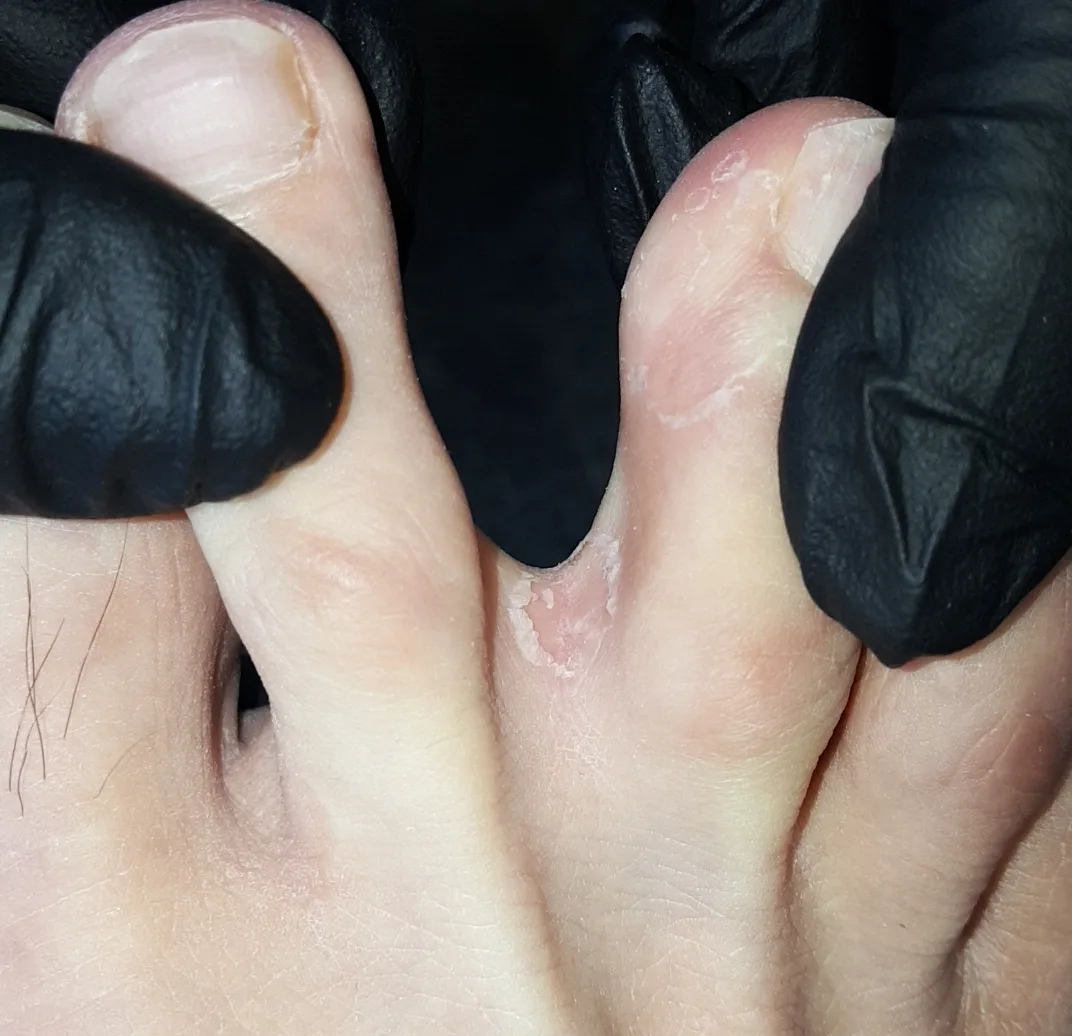
Cellulitis is an acute bacterial infection of the deep dermis and subcutaneous fat; erysipelas is a more superficial form involving the upper dermis and dermal lymphatics, with a raised, sharply demarcated edge. Both are caused mainly by beta-haemolytic streptococci and less often Staphylococcus aureus, entering through skin breaks such as toe-web tinea or ulcers. Lymphoedema, venous insufficiency, obesity and previous cellulitis predispose. The typical picture is a unilateral, warm, tender, spreading erythema of the lower leg, often with fever. Diagnosis is clinical, and up to a third of suspected cases are mimics such as venous eczema or deep vein thrombosis. Severity (for example Eron class) guides oral or IV treatment. In UK practice flucloxacillin for 5–7 days is first line, with clarithromycin or doxycycline in penicillin allergy; erysipelas responds to penicillin. Red flags for necrotising fasciitis and orbital cellulitis must be sought. Recurrence is common and is reduced by treating tinea, compression for oedema and prophylactic penicillin.
Patient case, mechanism, investigations, management, flashcards and exam-style questions.Open the lesson →
Key facts
- Erysipelas: upper dermis and lymphatics, raised sharp edge, bright red, often face or leg; cellulitis: deeper, poorly demarcated margin
- Main organisms: beta-haemolytic streptococci (groups A, C, G) and S. aureus; MRSA mainly with purulence, injection drug use or known colonisation
- Typically unilateral lower leg; bilateral "cellulitis" is usually venous stasis dermatitis or another mimic
- Diagnosis is clinical; blood cultures are positive in fewer than 5% and are taken only if systemically unwell
- NICE NG141 (2019): flucloxacillin 500 mg–1 g four times daily for 5–7 days; clarithromycin, erythromycin (pregnancy) or doxycycline if penicillin allergic
- Infection near the eyes or nose: co-amoxiclav (to cover oral and sinus flora); suspect orbital cellulitis if proptosis, painful eye movements or reduced vision
- Pain out of proportion, rapid spread, crepitus, bullae or systemic toxicity suggest necrotising fasciitis: surgical emergency
- Recurrent leg cellulitis: treat toe-web tinea, compression for oedema (halves recurrence) and consider penicillin V 250 mg twice daily prophylaxis
Differential diagnosis
| Condition | Clues | Key test |
|---|---|---|
| Venous stasis dermatitis | Bilateral, itchy, brown pigmentation, varicose veins, little pain or fever | Clinical; normal CRP |
| Deep vein thrombosis | Calf swelling, tenderness, risk factors; less erythema | Wells score, D-dimer, compression ultrasound |
| Lipodermatosclerosis | Woody, tender inverted-champagne-bottle leg, chronic | Clinical; history of months |
| Acute gout | Hot red joint (first MTP), very painful | Joint aspirate: negatively birefringent crystals |
| Contact dermatitis | Itch, vesicles, sharp borders matching the allergen | History; patch testing |
| Necrotising fasciitis | Pain out of proportion, rapid spread, systemic toxicity | Urgent surgical exploration |
| Erythema migrans | Expanding painless annular rash after a tick bite | Clinical; Lyme serology if needed |
Exam pearls
Guideline
NICE NG141 Cellulitis and erysipelas: antimicrobial prescribing (2019), IDSA practice guidelines for skin and soft tissue infections (2014), CREST guidelines on the management of cellulitis in adults (2005) and WSES/GAIS/WSIS/SIS-E/AAST global clinical pathways for skin and soft tissue infections (2022)
References
- National Institute for Health and Care Excellence. Cellulitis and erysipelas: antimicrobial prescribing (NG141). NICE 2019.
- Stevens DL, Bisno AL, Chambers HF, et al.. Practice guidelines for the diagnosis and management of skin and soft tissue infections: 2014 update by the Infectious Diseases Society of America. Clin Infect Dis 2014.
- Clinical Resource Efficiency Support Team (CREST). Guidelines on the management of cellulitis in adults. CREST, Belfast 2005.
- Thomas KS, Crook AM, Nunn AJ, et al.. Penicillin to prevent recurrent leg cellulitis. N Engl J Med 2013.
- Webb E, Neeman T, Bowden FJ, et al.. Compression therapy to prevent recurrent cellulitis of the leg. N Engl J Med 2020.
- Weng QY, Raff AB, Cohen JM, et al.. Costs and consequences associated with misdiagnosed lower extremity cellulitis. JAMA Dermatol 2017.
Related topics
By Dr Khalid Seidi (B.Sc., M.D.) · MedEd World Clinical Knowledge library. Original teaching content checked against current guidelines (November 2026); confirm the latest local guidance before clinical use. Not a substitute for clinical judgement.