Clinical Knowledge › Internal medicine › Infectious diseases › Skin, soft-tissue, bone and joint infections
Skin abscesses and MRSA skin infection
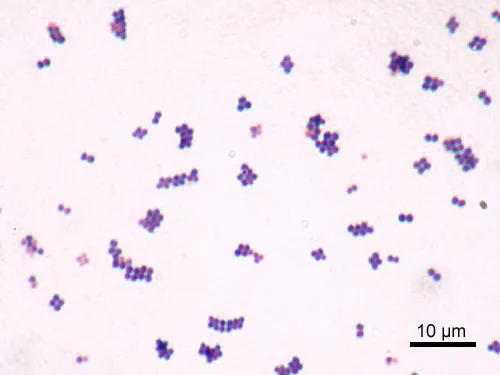
A skin abscess is a walled-off collection of pus in the dermis or subcutaneous tissue; a furuncle (boil) is an abscess centred on a hair follicle and a carbuncle is a group of connected furuncles. Staphylococcus aureus causes most, including meticillin-resistant strains (MRSA). Community-associated MRSA, often carrying Panton–Valentine leukocidin (PVL), causes recurrent boils and clusters in households, sports teams and prisons, and occasionally necrotising pneumonia. The abscess is fluctuant, tender and red, often with a central pustule; bedside ultrasound helps when fluctuance is uncertain. Incision and drainage is the key treatment. Antibiotics are added for systemic features, extensive cellulitis, immunosuppression, difficult sites or failed drainage (trials show modest benefit even after simple drainage), chosen by local MRSA rates: flucloxacillin where MRSA is rare, co-trimoxazole, doxycycline or clindamycin where it is common, IV vancomycin for severe disease. Recurrent or PVL infection needs culture, a search for causes and decolonisation.
Patient case, mechanism, investigations, management, flashcards and exam-style questions.Open the lesson →
Key facts
- S. aureus causes most skin abscesses, furuncles and carbuncles; community-associated MRSA (CA-MRSA) is common in North America and some other regions, rarer in the UK and northern Europe
- Incision and drainage (I&D) is the main treatment; send pus for culture and susceptibility, especially in severe, recurrent or treatment-failure cases
- Add antibiotics if there are systemic signs (fever, tachycardia, SIRS), extensive surrounding cellulitis, immunosuppression, extremes of age, face, hand or genital site, or failed drainage
- Oral anti-MRSA options: co-trimoxazole, doxycycline, clindamycin (check inducible resistance) and linezolid; IV: vancomycin, teicoplanin, daptomycin, linezolid, ceftaroline or long-acting lipoglycopeptides
- MRSA carries mecA, which encodes PBP2a with low affinity for almost all beta-lactams (ceftaroline and ceftobiprole are exceptions)
- PVL-producing S. aureus causes recurrent boils, clusters in close contacts and rarely necrotising haemorrhagic pneumonia after influenza
- For recurrent abscesses: drain, culture, look for hidradenitis, pilonidal disease, foreign body, diabetes or neutrophil defects, and offer decolonisation (nasal mupirocin and chlorhexidine washes for 5 days)
- Abscesses in people who inject drugs may hide necrotising infection, endocarditis, botulism, tetanus or anthrax: examine carefully and screen for blood-borne viruses
Differential diagnosis
| Condition | Clues | Key test |
|---|---|---|
| Non-purulent cellulitis | Spreading erythema without fluctuance or pus | Ultrasound shows cobblestoning but no collection |
| Necrotising fasciitis | Pain out of proportion, rapid spread, systemic toxicity, crepitus | Urgent surgical exploration; CT may show fascial gas |
| Hidradenitis suppurativa | Recurrent painful nodules, sinus tracts and scars in axillae, groin or under breasts | Clinical; sterile or mixed cultures |
| Infected epidermoid cyst | Pre-existing cyst with punctum; recurrent at same site | Clinical; excise once inflammation settles |
| Pilonidal abscess | Natal cleft midline pits | Clinical |
| Septic thrombophlebitis or pseudoaneurysm (people who inject drugs) | Pulsatile mass or cord at injection site | Duplex ultrasound before incision |
| Mycobacterial or fungal infection | Chronic nodules after trauma, tattoo, cosmetic procedure or travel | Biopsy, AFB and fungal culture |
| Pyoderma gangrenosum | Rapidly expanding ulcer with violaceous undermined edge; worsens after surgery (pathergy) | Clinical and biopsy; sterile cultures |
Exam pearls
Guideline
IDSA practice guidelines for skin and soft tissue infections (2014) and IDSA MRSA treatment guideline (2011), with WSES/SIS-E skin and soft-tissue infection consensus (2018) and UK guidance on PVL-associated S. aureus infections (HPA/PHE, 2nd edition 2008, with later primary-care guidance)
References
- Stevens DL, Bisno AL, Chambers HF, et al.. Practice guidelines for the diagnosis and management of skin and soft tissue infections: 2014 update by the Infectious Diseases Society of America. Clin Infect Dis 2014.
- Liu C, Bayer A, Cosgrove SE, et al.. Clinical practice guidelines by the Infectious Diseases Society of America for the treatment of methicillin-resistant Staphylococcus aureus infections in adults and children. Clin Infect Dis 2011.
- Health Protection Agency (now UK Health Security Agency). Guidance on the diagnosis and management of PVL-associated Staphylococcus aureus infections (PVL-SA) in England, 2nd edition. Health Protection Agency, London 2008.
- Talan DA, Mower WR, Krishnadasan A, et al.. Trimethoprim-sulfamethoxazole versus placebo for uncomplicated skin abscess. N Engl J Med 2016.
- Daum RS, Miller LG, Immergluck L, et al.. A placebo-controlled trial of antibiotics for smaller skin abscesses. N Engl J Med 2017.
- Tong SYC, Davis JS, Eichenberger E, Holland TL, Fowler VG Jr.. Staphylococcus aureus infections: epidemiology, pathophysiology, clinical manifestations, and management. Clin Microbiol Rev 2015.
Related topics
By Dr Khalid Seidi (B.Sc., M.D.) · MedEd World Clinical Knowledge library. Original teaching content checked against current guidelines (November 2026); confirm the latest local guidance before clinical use. Not a substitute for clinical judgement.