Clinical Knowledge › Internal medicine › Gastroenterology and hepatology › Liver failure, cirrhosis and liver tumours
Ascites and spontaneous bacterial peritonitis
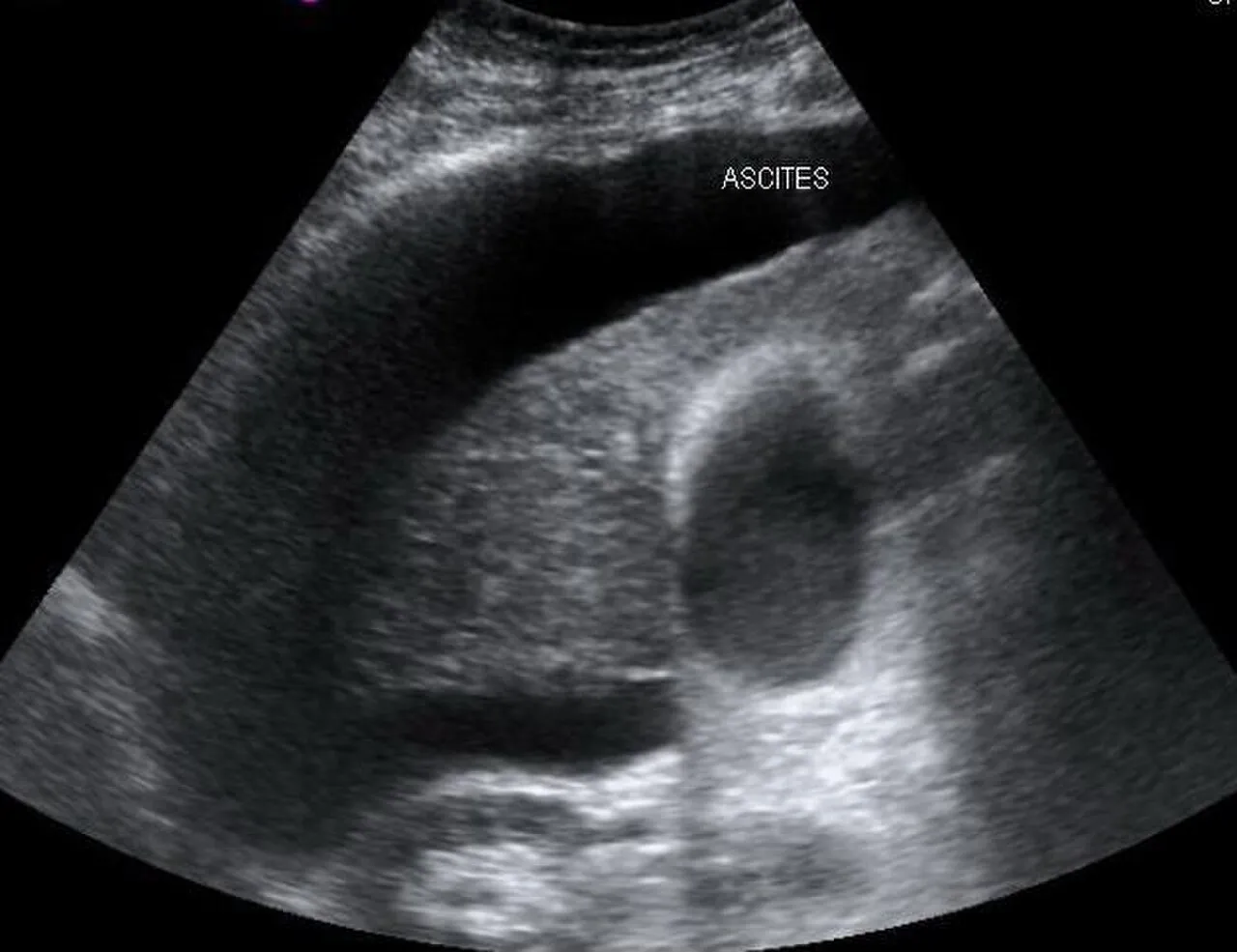
Ascites is the accumulation of fluid in the peritoneal cavity, and in about 80% of patients it is caused by cirrhosis with portal hypertension. It is the commonest first decompensating event and halves survival over the following years. Sinusoidal hypertension plus splanchnic vasodilatation reduce effective arterial volume, activating the renin-angiotensin-aldosterone and sympathetic systems and ADH, so the kidneys retain sodium and water. A diagnostic paracentesis is needed for every new ascites and every admission: a serum-ascites albumin gradient of 11 g/L or more points to portal hypertension, and a neutrophil count of 250 cells/mm³ or more diagnoses spontaneous bacterial peritonitis (SBP). Uncomplicated ascites is treated with moderate salt restriction and spironolactone with or without furosemide; tense or refractory ascites needs large-volume paracentesis with albumin, and selected patients benefit from TIPS or transplantation. SBP needs immediate antibiotics plus albumin to prevent hepatorenal syndrome, followed by long-term prophylaxis.
Patient case, mechanism, investigations, management, flashcards and exam-style questions.Open the lesson →
Key facts
- Cirrhosis causes about 80% of ascites; new ascites signals decompensation and should prompt transplant consideration
- Perform a diagnostic paracentesis in every patient with new ascites, every admission and any clinical deterioration
- SAAG 11 g/L (1.1 g/dL) or more indicates portal hypertension; ascitic protein below 15 g/L marks high SBP risk
- Ascitic neutrophil count 250 cells/mm³ or more diagnoses SBP, even before culture results
- First-line therapy: salt restriction to about 5 g/day plus spironolactone, adding furosemide for recurrent or severe ascites
- Give 8 g of albumin per litre removed when more than 5 L is drained
- Treat SBP with a third-generation cephalosporin plus albumin 1.5 g/kg on day 1 and 1 g/kg on day 3
- After an episode of SBP give long-term antibiotic prophylaxis and refer for transplant assessment
Differential diagnosis
| Condition | Clues | Key test |
|---|---|---|
| Peritoneal carcinomatosis | Weight loss, known cancer; ascites with low SAAG and high protein | Ascitic cytology, CT, CA-125 interpretation with care |
| Tuberculous peritonitis | Fever, night sweats, endemic area or HIV; lymphocytic exudate | Ascitic ADA, mycobacterial culture or PCR, laparoscopic peritoneal biopsy |
| Cardiac ascites (right heart failure, constriction) | Raised JVP, oedema; SAAG 11 g/L or more with protein 25 g/L or more | Echocardiogram, NT-proBNP |
| Budd-Chiari syndrome | Rapid painful ascites and hepatomegaly; high-protein portal hypertensive ascites | Doppler ultrasound or CT of hepatic veins |
| Nephrotic syndrome | Generalised oedema, heavy proteinuria, low albumin; low SAAG | Urine protein:creatinine ratio, renal biopsy |
| Pancreatic ascites | History of pancreatitis; very high ascitic amylase | Ascitic amylase, CT pancreas |
| Secondary bacterial peritonitis | Perforation or abscess; polymicrobial culture, very high neutrophils | Runyon criteria on ascitic fluid, urgent CT abdomen |
| Ovarian or mass lesion mimicking ascites | Dullness centrally rather than in the flanks; pelvic mass | Ultrasound or CT abdomen and pelvis |
Exam pearls
Guideline
EASL decompensated cirrhosis CPG (2018), AASLD ascites, SBP and HRS guidance (2021), BSG ascites guideline (2021), ICA-ADQI AKI in cirrhosis consensus (2024) and Baveno VIII (2026)
References
- European Association for the Study of the Liver. EASL Clinical Practice Guidelines for the management of patients with decompensated cirrhosis. J Hepatol 2018.
- Biggins SW, Angeli P, Garcia-Tsao G, et al.. Diagnosis, Evaluation, and Management of Ascites, Spontaneous Bacterial Peritonitis and Hepatorenal Syndrome: 2021 Practice Guidance by the American Association for the Study of Liver Diseases. Hepatology 2021.
- Aithal GP, Palaniyappan N, China L, et al.. Guidelines on the management of ascites in cirrhosis. Gut 2021.
- Nadim MK, Kellum JA, Forni L, et al.. Acute kidney injury in patients with cirrhosis: Acute Disease Quality Initiative (ADQI) and International Club of Ascites (ICA) joint multidisciplinary consensus meeting. J Hepatol 2024.
- Baveno VIII Faculty. Baveno VIII – Advancing consensus in portal hypertension. J Hepatol 2026.
- Sort P, Navasa M, Arroyo V, et al.. Effect of intravenous albumin on renal impairment and mortality in patients with cirrhosis and spontaneous bacterial peritonitis. N Engl J Med 1999.
Related topics
By Dr Khalid Seidi (B.Sc., M.D.) · MedEd World Clinical Knowledge library. Original teaching content checked against current guidelines (November 2026); confirm the latest local guidance before clinical use. Not a substitute for clinical judgement.