Clinical Knowledge › Internal medicine › Infectious diseases › Central nervous system infections
Bacterial meningitis
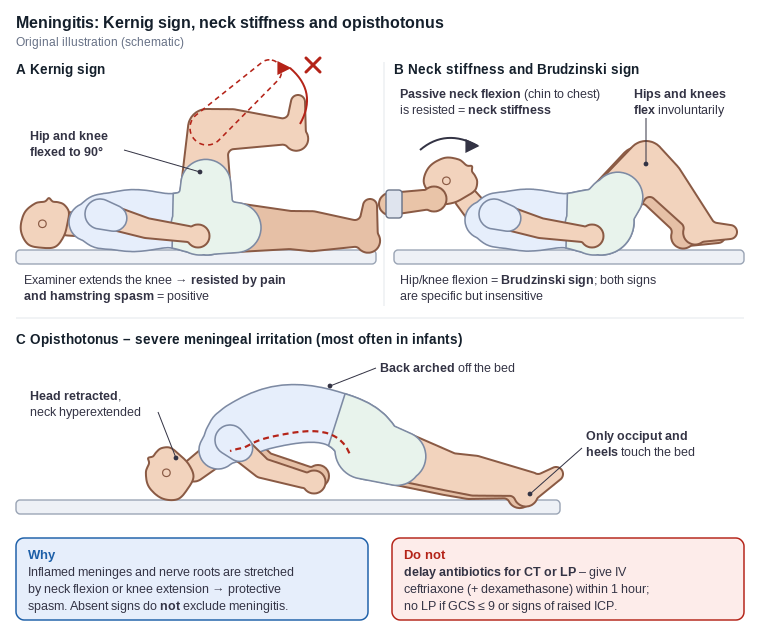
Bacterial meningitis is an emergency in which bacteria infect the leptomeninges and subarachnoid space, causing inflammation, cerebral oedema and raised intracranial pressure. Streptococcus pneumoniae and Neisseria meningitidis cause most community-acquired cases in children and adults; group B streptococcus, Escherichia coli and Listeria monocytogenes predominate in neonates, and Listeria matters in people over 60, pregnancy and immunosuppression. Headache, fever, neck stiffness and altered consciousness are typical, but the full triad is present in fewer than half; a non-blanching rash suggests meningococcal disease. Blood cultures and lumbar puncture (unless contraindicated) should be done quickly, but antibiotics must not be delayed: give high-dose ceftriaxone within 1 hour, add amoxicillin for Listeria risk, and give dexamethasone with or before the first dose. CSF shows neutrophils, high protein and low glucose. Mortality is about 5–10% for meningococcal and up to 20% for pneumococcal disease, and survivors may have hearing loss or neurological deficits.
Patient case, mechanism, investigations, management, flashcards and exam-style questions.Open the lesson →
Key facts
- Neonates: group B streptococcus, E. coli, Listeria; children and adults: pneumococcus and meningococcus; Hib in unvaccinated children
- Add Listeria cover (amoxicillin or ampicillin) for age over 60, pregnancy, immunosuppression, diabetes or alcohol misuse
- Classic triad of fever, neck stiffness and altered mental status occurs in fewer than half; nearly all adults have at least two of headache, fever, neck stiffness and altered consciousness
- Start antibiotics within 1 hour of arrival; never delay them for CT or lumbar puncture
- Bacterial CSF: high opening pressure, neutrophil pleocytosis, protein above 1 g/L, CSF:blood glucose ratio below 0.4
- Dexamethasone (adults 10 mg IV 6-hourly for 4 days) given with or before the first antibiotic dose reduces death and hearing loss in pneumococcal meningitis
- Pneumococcal meningitis carries the highest mortality and hearing loss; offer a hearing assessment before discharge or within 4 weeks
- Meningococcal disease is notifiable: close contacts receive single-dose ciprofloxacin (or rifampicin or ceftriaxone) as soon as possible
Differential diagnosis
| Condition | Clues | Key test |
|---|---|---|
| Viral meningitis | Milder illness, normal consciousness, lymphocytic CSF with normal glucose | CSF cell count, glucose ratio and viral PCR |
| HSV encephalitis | Confusion, behaviour change, seizures, focal signs | MRI temporal lobes and CSF HSV PCR |
| Subarachnoid haemorrhage | Thunderclap onset headache, no fever initially | CT head; CSF xanthochromia |
| Tuberculous meningitis | Subacute weeks of symptoms, cranial nerve palsies, hyponatraemia | CSF lymphocytes, very high protein, low glucose; TB PCR and culture |
| Cryptococcal meningitis | HIV with low CD4, subacute headache, very high opening pressure | CSF and serum cryptococcal antigen |
| Brain abscess | Fever, headache and focal deficit with an infective source | Contrast MRI or CT before any LP |
| Cerebral malaria | Fever and coma after travel to an endemic area | Thick and thin blood films or rapid antigen test |
Exam pearls
Guideline
NICE NG240 Meningitis (bacterial) and meningococcal disease (March 2024), WHO Guidelines on meningitis diagnosis, treatment and care (2025) and ESCMID guideline on acute bacterial meningitis (2016)
References
- National Institute for Health and Care Excellence. Meningitis (bacterial) and meningococcal disease: recognition, diagnosis and management (NG240). NICE 2024.
- World Health Organization. WHO guidelines on meningitis diagnosis, treatment and care. World Health Organization 2025.
- van de Beek D, Cabellos C, Dzupova O, et al.. ESCMID guideline: diagnosis and treatment of acute bacterial meningitis. Clin Microbiol Infect 2016.
- McGill F, Heyderman RS, Michael BD, et al.. The UK joint specialist societies guideline on the diagnosis and management of acute meningitis and meningococcal sepsis in immunocompetent adults. J Infect 2016.
- de Gans J, van de Beek D. Dexamethasone in adults with bacterial meningitis. N Engl J Med 2002.
- van de Beek D, Brouwer MC, Koedel U, Wall EC. Community-acquired bacterial meningitis. Lancet 2021.
Related topics
By Dr Khalid Seidi (B.Sc., M.D.) · MedEd World Clinical Knowledge library. Original teaching content checked against current guidelines (November 2026); confirm the latest local guidance before clinical use. Not a substitute for clinical judgement.