Clinical Knowledge › Internal medicine › Infectious diseases › Central nervous system infections
Tetanus
Tetanus is an acute, often fatal neurological illness caused by tetanospasmin, a neurotoxin made by Clostridium tetani after its spores germinate in an anaerobic wound. The toxin travels retrogradely along motor axons to the spinal cord and brainstem, where it cleaves synaptobrevin and blocks release of GABA and glycine from inhibitory interneurons. The result is muscle rigidity and painful spasms with preserved consciousness: trismus (lockjaw), risus sardonicus, neck and back rigidity, opisthotonus, dysphagia and laryngospasm, followed in severe cases by autonomic instability. Diagnosis is clinical. Treatment is intensive: a quiet environment, wound debridement, human tetanus immunoglobulin (or equine antitoxin), metronidazole, benzodiazepines and magnesium sulphate for spasms, early airway protection with tracheostomy and ventilation, and control of autonomic storms. Because disease does not confer immunity, every survivor needs a full vaccine course. Tetanus still kills mothers and newborns where immunisation and clean delivery are lacking.
Patient case, mechanism, investigations, management, flashcards and exam-style questions.Open the lesson →
Key facts
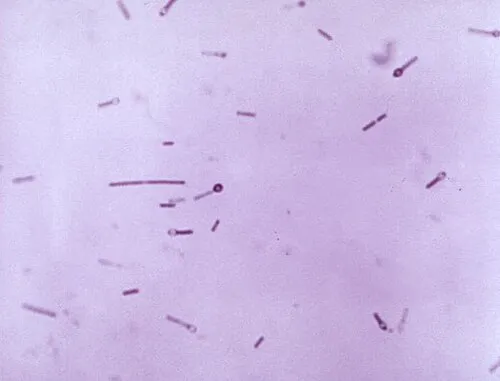
- C. tetani is an obligate anaerobic Gram-positive rod with a terminal 'drumstick' spore found in soil and animal faeces
- Tetanospasmin cleaves synaptobrevin (VAMP) in inhibitory interneurons, blocking GABA and glycine release (disinhibition)
- Incubation is usually 3–21 days; a short incubation and a period of onset (trismus to first spasm) under 48 hours predict severe disease
- Trismus is the first sign in most patients; consciousness is preserved and spasms are triggered by noise, touch and light
- Diagnosis is clinical; wound culture is positive in only about a third and a negative culture does not exclude tetanus
- Treat with human tetanus immunoglobulin (or equine antitoxin), wound debridement, metronidazole, benzodiazepines and magnesium sulphate
- Autonomic dysfunction (labile blood pressure, tachycardia, sweating, arrhythmias) is the main cause of death in ventilated patients
- Recovery from tetanus does not give immunity: give a full course of tetanus toxoid-containing vaccine
Differential diagnosis
| Condition | Clues | Key test |
|---|---|---|
| Strychnine poisoning | Spasms with full relaxation between them; no trismus at rest | Toxicology screen (blood, urine) |
| Drug-induced acute dystonia | Recent metoclopramide, haloperidol or prochlorperazine; oculogyric crisis, torticollis | Rapid response to procyclidine or benzatropine |
| Hypocalcaemic tetany | Carpopedal spasm, perioral paraesthesia, Chvostek and Trousseau signs | Low ionised calcium or magnesium |
| Local cause of trismus (dental, peritonsillar or retropharyngeal abscess) | Fever, sore throat, unilateral swelling, no generalised spasms | Examination, CT of neck |
| Meningitis or encephalitis | Fever, neck stiffness, altered consciousness | Lumbar puncture, CSF analysis |
| Rabies | Hydrophobia, agitation, animal bite, altered mental state | Saliva RT-PCR, nuchal skin biopsy |
| Stiff person syndrome | Chronic progressive axial rigidity with spasms, no wound | Anti-GAD antibodies, EMG |
| Neuroleptic malignant syndrome | Antipsychotic exposure, fever, lead-pipe rigidity, confusion | Very high CK, drug history |
Exam pearls
Guideline
WHO tetanus vaccines position paper (2017), UKHSA guidance on the management of suspected tetanus and tetanus-prone wounds (2024) and the Green Book chapter 30
References
- Yen LM, Thwaites CL. Tetanus. Lancet 2019.
- Van Hao N, Loan HT, Yen LM, et al.. Human versus equine intramuscular antitoxin, with or without human intrathecal antitoxin, for the treatment of adults with tetanus: a 2 × 2 factorial randomised controlled trial. Lancet Glob Health 2022.
- World Health Organization. Tetanus vaccines: WHO position paper – February 2017. Wkly Epidemiol Rec 2017.
- UK Health Security Agency. Guidance on the management of suspected tetanus cases and the assessment and management of tetanus-prone wounds. GOV.UK 2024.
- Thwaites CL, Yen LM, Loan HT, et al.. Magnesium sulphate for treatment of severe tetanus: a randomised controlled trial. Lancet 2006.
- UK Health Security Agency. Immunisation against infectious disease (the Green Book), chapter 30: Tetanus (online chapter, updated periodically). GOV.UK 2025.
Related topics
By Dr Khalid Seidi (B.Sc., M.D.) · MedEd World Clinical Knowledge library. Original teaching content checked against current guidelines (November 2026); confirm the latest local guidance before clinical use. Not a substitute for clinical judgement.