Clinical Knowledge › Internal medicine › Cardiology and angiology › Diseases of the veins and lymphatics
Deep vein thrombosis
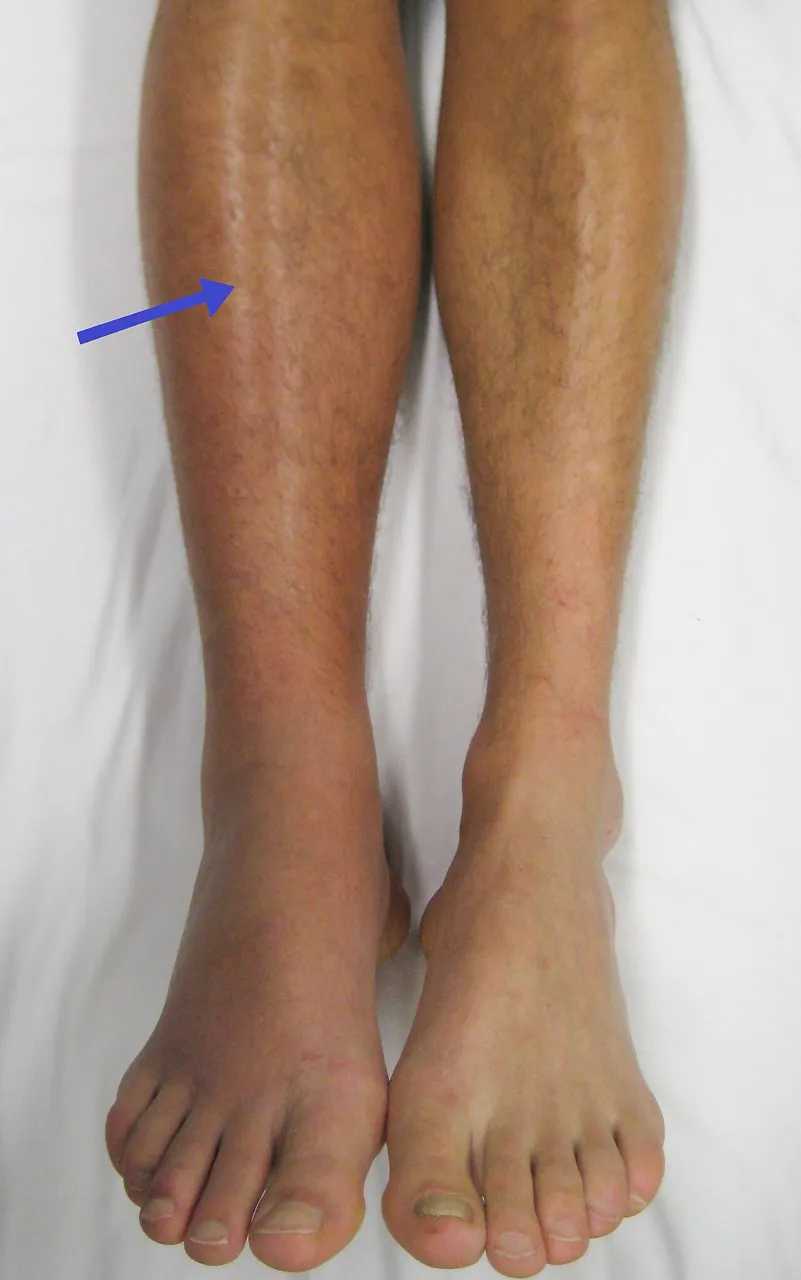
Deep vein thrombosis (DVT) is thrombus in the deep veins, most often of the leg and pelvis; with pulmonary embolism it forms venous thromboembolism (VTE). Risk factors follow Virchow's triad: stasis (immobility, surgery, travel), hypercoagulability (cancer, pregnancy, oestrogens, thrombophilia) and vein wall injury. Signs (unilateral pain, swelling, warmth, tenderness) are unreliable, so diagnosis follows a pathway: the two-level Wells score, D-dimer when DVT is unlikely, and compression ultrasound of the proximal veins. Proximal DVT (popliteal and above) carries the greatest risk of embolism. A direct oral anticoagulant is first-line for most patients, with low-molecular-weight heparin in pregnancy and warfarin in antiphospholipid syndrome. Treatment lasts at least 3 months; extended therapy is considered after unprovoked DVT or with persistent risk factors if bleeding risk is acceptable. Long-term complications include recurrence, pulmonary embolism and post-thrombotic syndrome.
Patient case, mechanism, investigations, management, flashcards and exam-style questions.Open the lesson →
Key facts
- Virchow's triad: stasis, hypercoagulability and endothelial injury
- Use the two-level Wells score: 2 or more means DVT likely
- DVT unlikely: D-dimer first; a negative result excludes DVT. DVT likely: proximal compression ultrasound within 4 hours
- If ultrasound is delayed, give interim anticoagulation
- DOACs (apixaban, rivaroxaban, edoxaban, dabigatran) are first-line; LMWH in pregnancy; warfarin in antiphospholipid syndrome
- Treat for at least 3 months; consider extended therapy after unprovoked DVT if bleeding risk is low
- Compression stockings do not prevent post-thrombotic syndrome but may relieve symptoms
- IVC filters only when anticoagulation is contraindicated in acute proximal DVT
Differential diagnosis
| Condition | Clues | Key test |
|---|---|---|
| Ruptured Baker cyst | Sudden calf pain and swelling in a patient with knee arthritis; crescent sign of bruising at the ankle | Ultrasound of the popliteal fossa |
| Cellulitis | Spreading erythema with fever and a clear skin entry point | Clinical; ultrasound if DVT cannot be excluded |
| Calf muscle tear or haematoma | Sudden pain during exercise, bruising | Ultrasound |
| Superficial vein thrombosis | Tender, red, cord-like superficial vein | Duplex to check extent and deep vein involvement |
| Chronic venous insufficiency | Bilateral or long-standing swelling with skin changes | Venous duplex for reflux |
| Lymphoedema | Painless, non-pitting swelling involving the foot, Stemmer sign | Clinical; lymphoscintigraphy if needed |
| Heart failure, nephrotic syndrome, drug-induced oedema | Bilateral pitting oedema with systemic features or calcium channel blockers | BNP, urine protein, albumin, drug review |
Exam pearls
Guideline
ESVS 2021 clinical practice guidelines on venous thrombosis, CHEST antithrombotic therapy for VTE (2021), ASH 2018 diagnosis and 2020 treatment guidelines for VTE, NICE NG158 (2020, updated 2023) and 2019 ESC PE guideline
References
- Kakkos SK, Gohel M, Baekgaard N, et al.. European Society for Vascular Surgery (ESVS) 2021 Clinical Practice Guidelines on the Management of Venous Thrombosis. Eur J Vasc Endovasc Surg 2021.
- Stevens SM, Woller SC, Kreuziger LB, et al.. Antithrombotic Therapy for VTE Disease: Second Update of the CHEST Guideline and Expert Panel Report. Chest 2021.
- Ortel TL, Neumann I, Ageno W, et al.. American Society of Hematology 2020 guidelines for management of venous thromboembolism: treatment of deep vein thrombosis and pulmonary embolism. Blood Adv 2020.
- National Institute for Health and Care Excellence (NICE). Venous thromboembolic diseases: diagnosis, management and thrombophilia testing (NICE guideline NG158). 2020.
- Creager MA, Barnes GD, Giri J, et al.. 2026 AHA/ACC/ACCP/ACEP/CHEST/SCAI/SHM/SIR/SVM/SVN Guideline for the Evaluation and Management of Acute Pulmonary Embolism in Adults. Circulation 2026.
- Lim W, Le Gal G, Bates SM, et al.. American Society of Hematology 2018 guidelines for management of venous thromboembolism: diagnosis of venous thromboembolism. Blood Adv 2018.
Related topics
By Dr Khalid Seidi (B.Sc., M.D.) · MedEd World Clinical Knowledge library. Original teaching content checked against current guidelines (November 2026); confirm the latest local guidance before clinical use. Not a substitute for clinical judgement.