Clinical Knowledge › Internal medicine › Cardiology and angiology › Diseases of the veins and lymphatics
Post-thrombotic syndrome
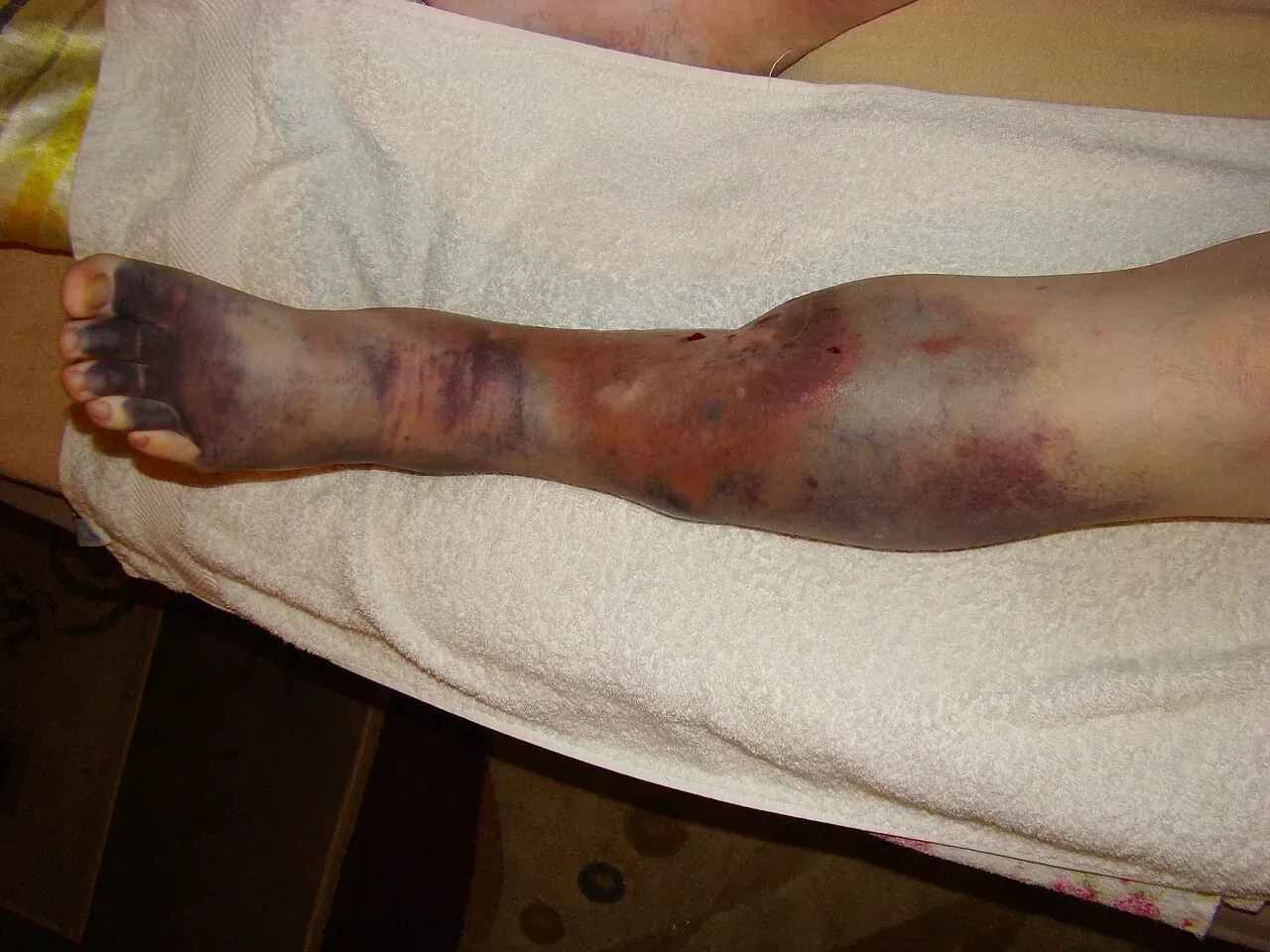
Post-thrombotic syndrome (PTS) is chronic venous insufficiency that follows deep vein thrombosis (DVT). It develops in about 20–50% of patients after proximal leg DVT, usually within 2 years, and is severe, with venous ulceration in some, in about 5–10%. Persistent venous obstruction from incompletely recanalised thrombus and valve damage with reflux together raise ambulatory venous pressure, which drives oedema, skin inflammation, lipodermatosclerosis and ulcers. Heaviness, swelling and itching worsen on standing and ease with elevation. Diagnosis is clinical, at least 3 months after DVT once recurrence is excluded, graded with the Villalta scale (5 or more = PTS; 15 or more or ulcer = severe). Prevention rests on adequate anticoagulation; routine stockings (SOX) and routine thrombolysis (ATTRACT) did not prevent PTS. Treatment is compression, exercise, weight control and skin care, with iliac-vein stenting for selected patients (C-TRACT, 2026).
Patient case, mechanism, investigations, management, flashcards and exam-style questions.Open the lesson →
Key facts
- PTS follows 20–50% of proximal DVTs, mostly within 2 years; 5–10% develop severe disease including venous ulcers
- Mechanism: venous hypertension from residual obstruction plus valvular reflux, leading to microvascular leak, inflammation and skin damage
- Strongest risk factors: iliofemoral DVT, recurrent ipsilateral DVT, persistent symptoms at 1 month, obesity, older age, pre-existing venous disease and poor-quality anticoagulation
- Diagnose clinically no earlier than 3 months after DVT; first exclude recurrent DVT with duplex ultrasound
- Villalta scale: 5 symptoms and 6 signs scored 0–3; 5–9 mild, 10–14 moderate, 15 or more or any ulcer severe
- SOX (2014): routine graduated compression stockings did not prevent PTS; ATTRACT (2017): routine pharmacomechanical thrombolysis did not reduce PTS and increased bleeding
- Mainstays of treatment: 20–40 mmHg compression for symptoms, supervised exercise, weight loss, leg elevation and skin and ulcer care
- C-TRACT (2026): iliac-vein stenting in moderate–severe PTS with iliac obstruction lowered VCSS and improved quality of life at 6 months, with more bleeding
Differential diagnosis
| Condition | Clues | Key test |
|---|---|---|
| Recurrent ipsilateral DVT | Acute worsening of pain and swelling over days; new non-compressible segment | Compression duplex compared with previous scan; D-dimer |
| Primary chronic venous insufficiency | No prior DVT; varicose veins with superficial reflux, deep veins patent | Venous duplex for reflux and obstruction |
| Lymphoedema | Non-pitting late, dorsum of foot involved, positive Stemmer sign, no pigmentation | Clinical; lymphoscintigraphy if unclear |
| Cellulitis | Acute unilateral warmth, spreading erythema, fever, raised CRP | Clinical; CRP, white cell count |
| Lipoedema | Bilateral symmetrical fat with sparing of feet, women, painful bruising | Clinical |
| Heart failure or drug-induced oedema | Bilateral oedema, raised JVP or calcium channel blocker use | NT-proBNP, echocardiography, drug review |
| Ruptured Baker cyst | Acute calf pain after knee swelling; crescent bruise at ankle | Ultrasound of popliteal fossa |
Exam pearls
Guideline
ESVS 2021 Clinical Practice Guidelines on venous thrombosis and ESVS 2022 chronic venous disease guidelines, with the AHA scientific statements on PTS (2014) and the open vein hypothesis (2025) and CHEST VTE guideline (2021 update)
References
- Kakkos SK, Gohel M, Baekgaard N, et al.. European Society for Vascular Surgery (ESVS) 2021 Clinical Practice Guidelines on the Management of Venous Thrombosis. Eur J Vasc Endovasc Surg 2021.
- De Maeseneer MG, Kakkos SK, Aherne T, et al.. European Society for Vascular Surgery (ESVS) 2022 Clinical Practice Guidelines on the Management of Chronic Venous Disease of the Lower Limbs. Eur J Vasc Endovasc Surg 2022.
- Kahn SR, Comerota AJ, Cushman M, et al.. The postthrombotic syndrome: evidence-based prevention, diagnosis, and treatment strategies: a scientific statement from the American Heart Association. Circulation 2014.
- Li W, Vedantham S, Jaffer FA, et al.. Revisiting the Open Vein Hypothesis to Reduce the Postthrombotic Syndrome: Implications for Multidisciplinary Care and Research: A Scientific Statement From the American Heart Association. Circulation 2025.
- Kahn SR, Partsch H, Vedantham S, Prandoni P, Kearon C. Definition of post-thrombotic syndrome of the leg for use in clinical investigations: a recommendation for standardization. J Thromb Haemost 2009.
- Kahn SR, Shapiro S, Wells PS, et al.. Compression stockings to prevent post-thrombotic syndrome: a randomised placebo-controlled trial. Lancet 2014.
Related topics
By Dr Khalid Seidi (B.Sc., M.D.) · MedEd World Clinical Knowledge library. Original teaching content checked against current guidelines (November 2026); confirm the latest local guidance before clinical use. Not a substitute for clinical judgement.