Clinical Knowledge › Internal medicine › Gastroenterology and hepatology › Diseases of the pancreas
Exocrine pancreatic insufficiency
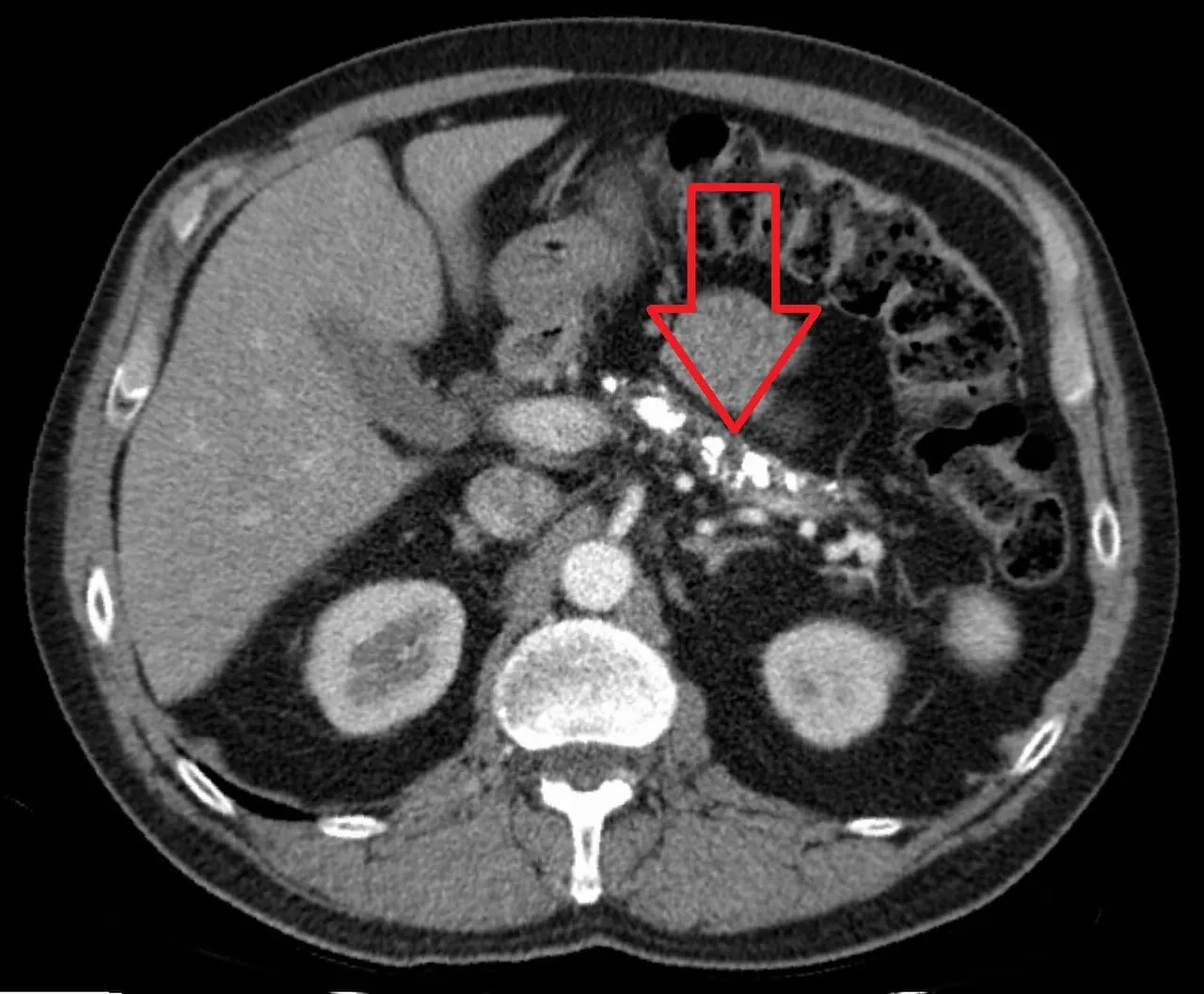
Exocrine pancreatic insufficiency (EPI) is a reduction in pancreatic enzyme delivery to the duodenum that is too great to allow normal digestion. Symptoms usually appear only when lipase output falls below about 10% of normal, so fat maldigestion dominates: steatorrhoea, bloating, weight loss and deficiency of vitamins A, D, E and K. Chronic pancreatitis is the commonest cause in adults and cystic fibrosis in children, but EPI also follows pancreatic resection, pancreatic cancer, severe necrotising pancreatitis and gastric surgery, and it is common in diabetes. Faecal elastase-1 on a formed stool is the preferred first test; a level below 100 µg/g strongly supports the diagnosis, whereas watery stool gives false-low results. New EPI in an adult always needs a search for the cause, including pancreatic cancer. Treatment is pancreatic enzyme replacement therapy taken with every meal and snack, starting at about 40,000–50,000 lipase units per main meal, with a normal-fat diet, vitamin replacement and bone health assessment. Poor response usually reflects too low a dose or wrong timing.
Patient case, mechanism, investigations, management, flashcards and exam-style questions.Open the lesson →
Key facts
- EPI causes maldigestion mainly of fat; symptoms appear only after about 90% of exocrine function is lost
- Commonest causes: chronic pancreatitis in adults, cystic fibrosis in children, and pancreatic surgery or cancer
- Lipase is the most vulnerable enzyme: it is acid-labile, broken down by proteases and has little extrapancreatic back-up
- Faecal elastase-1 below 200 µg/g is abnormal and below 100 µg/g indicates severe insufficiency; watery stool gives false-low values
- Faecal elastase is not affected by porcine enzyme therapy, so treatment need not be stopped before testing
- Pancreatic enzyme replacement: about 40,000–50,000 lipase units with each main meal and half with snacks, taken with food
- Do not restrict dietary fat; replace fat-soluble vitamins and assess bone density
- New EPI with weight loss in an older adult needs pancreatic imaging to exclude cancer
Differential diagnosis
| Condition | Clues | Key test |
|---|---|---|
| Coeliac disease | Iron or folate deficiency, dermatitis herpetiformis, normal pancreas | IgA tissue transglutaminase with total IgA; duodenal biopsy |
| Small intestinal bacterial overgrowth | Bloating after surgery or with dysmotility; B12 low but folate high | Glucose or lactulose hydrogen breath test |
| Bile acid diarrhoea | Watery, not fatty, diarrhoea after cholecystectomy or ileal disease | SeHCAT retention or serum C4; trial of bile acid sequestrant |
| Irritable bowel syndrome | Long history, pain relieved by defecation, no weight loss or nutritional deficit | Rome criteria with normal baseline tests including faecal elastase |
| Giardiasis | Travel or water exposure, foul-smelling greasy stool, bloating | Stool antigen or PCR |
| Pancreatic cancer | New EPI with weight loss, jaundice or new diabetes after 50 | Pancreatic-protocol CT and EUS |
| Short bowel syndrome | Previous extensive resection, high output, dehydration | Surgical history and bowel length on imaging |
Exam pearls
Guideline
AGA Clinical Practice Update on exocrine pancreatic insufficiency (2023), UEG/HaPanEU guidelines on chronic pancreatitis (2017) and UK consensus on the management of pancreatic exocrine insufficiency (2021)
References
- Whitcomb DC, Buchner AM, Forsmark CE.. AGA clinical practice update on the epidemiology, evaluation, and management of exocrine pancreatic insufficiency: expert review. Gastroenterology 2023.
- Löhr JM, Dominguez-Munoz E, Rosendahl J, et al.. United European Gastroenterology evidence-based guidelines for the diagnosis and therapy of chronic pancreatitis (HaPanEU). United European Gastroenterol J 2017.
- Phillips ME, Hopper AD, Leeds JS, et al.. Consensus for the management of pancreatic exocrine insufficiency: UK practical guidelines. BMJ Open Gastroenterol 2021.
- Beyer G, Habtezion A, Werner J, Lerch MM, Mayerle J.. Chronic pancreatitis. Lancet 2020.
- Arvanitakis M, Ockenga J, Bezmarevic M, et al.. ESPEN guideline on clinical nutrition in acute and chronic pancreatitis. Clin Nutr 2020.
- Feldman M, Friedman LS, Brandt LJ, eds.. Sleisenger and Fordtran's Gastrointestinal and Liver Disease, 11th edition. Elsevier 2021.
Related topics
By Dr Khalid Seidi (B.Sc., M.D.) · MedEd World Clinical Knowledge library. Original teaching content checked against current guidelines (November 2026); confirm the latest local guidance before clinical use. Not a substitute for clinical judgement.