Clinical Knowledge › Internal medicine › Gastroenterology and hepatology › Diseases of the pancreas
Pancreatic neuroendocrine tumours
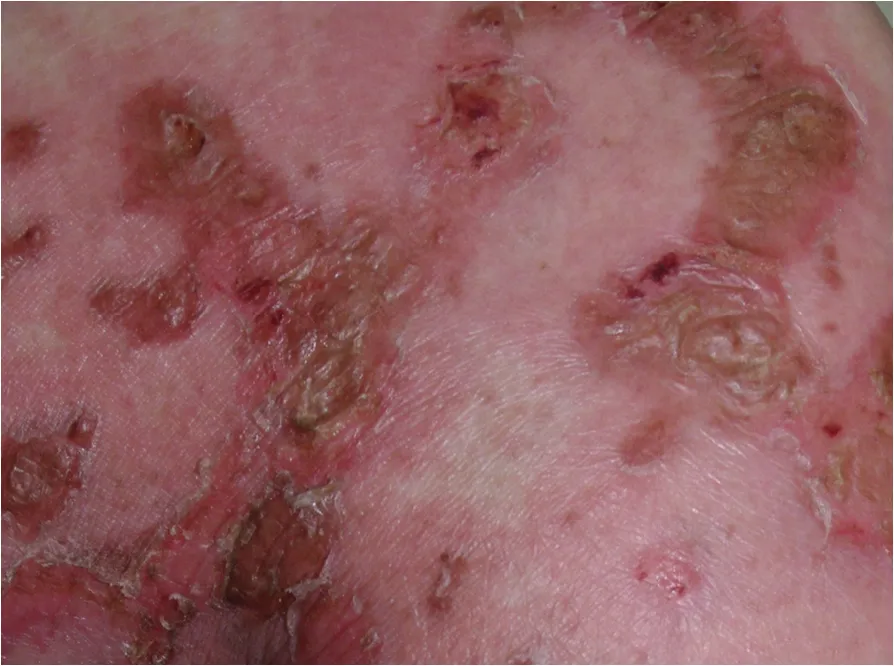
Pancreatic neuroendocrine tumours (PanNETs) arise from islet-like neuroendocrine cells and are increasingly found by chance on imaging. Most are non-functioning and present late with a mass or liver metastases. Functioning tumours cause hormone syndromes: insulinoma (fasting hypoglycaemia with Whipple triad, usually small and benign), gastrinoma (Zollinger–Ellison syndrome), glucagonoma (necrolytic migratory erythema, diabetes, weight loss), VIPoma (watery diarrhoea, hypokalaemia, achlorhydria) and somatostatinoma. About one in ten is linked to inherited syndromes, especially MEN1. The WHO grade uses Ki-67 and mitoses (G1 under 3%, G2 3–20%, G3 over 20%) and separates well-differentiated tumours from aggressive neuroendocrine carcinoma. Diagnosis combines hormone tests, multiphasic CT or MRI, EUS-guided biopsy and somatostatin receptor PET. Localised tumours are resected, while small non-functioning G1 tumours can be watched. Metastatic disease is treated with somatostatin analogues, everolimus, sunitinib, cabozantinib, capecitabine–temozolomide or 177Lu-DOTATATE.
Patient case, mechanism, investigations, management, flashcards and exam-style questions.Open the lesson →
Key facts
- Most PanNETs are non-functioning; insulinoma is the commonest functioning type
- Insulinoma: Whipple triad, inappropriately high insulin, C-peptide and proinsulin during hypoglycaemia; over 90% are benign and solitary
- Gastrinoma causes Zollinger–Ellison syndrome; most lie in the gastrinoma triangle, often in the duodenum
- MEN1 (menin) links PanNETs with primary hyperparathyroidism and pituitary adenomas
- WHO grade: G1 Ki-67 under 3%, G2 3–20%, G3 over 20%; poorly differentiated neuroendocrine carcinoma behaves very differently
- Somatostatin receptor PET-CT (68Ga-DOTATATE) stages disease and selects patients for radioligand therapy
- Non-functioning G1 tumours of 2 cm or less without symptoms can be watched; larger or functioning tumours are resected
- Metastatic disease: somatostatin analogues, everolimus, sunitinib, cabozantinib, CAPTEM chemotherapy and 177Lu-DOTATATE
Differential diagnosis
| Condition | Clues | Key test |
|---|---|---|
| Pancreatic ductal adenocarcinoma | Hypo-enhancing mass, duct cut-off, jaundice, rapid weight loss | Pancreatic-protocol CT; EUS biopsy with immunostains |
| Exogenous insulin use (factitious hypoglycaemia) | High insulin but low C-peptide | Insulin, C-peptide and proinsulin during hypoglycaemia |
| Sulfonylurea ingestion | High insulin and C-peptide like insulinoma | Sulfonylurea screen in serum or urine |
| Hypergastrinaemia from PPI use or atrophic gastritis | High gastrin with normal or high gastric pH | Gastric pH, stopping PPI under supervision, secretin test |
| Solid pseudopapillary neoplasm | Young woman, large solid-cystic mass | EUS-FNA with beta-catenin staining |
| Intrapancreatic accessory spleen | Small hypervascular tail lesion matching spleen on all phases | Heat-damaged red cell scintigraphy or MRI; may be SSTR-positive |
| Pancreatic metastasis from renal cell carcinoma | Hypervascular lesion, history of nephrectomy | History, CT and biopsy |
Exam pearls
Guideline
ENETS guidance papers for non-functioning and functioning pancreatic neuroendocrine tumours (2023), ESMO Clinical Practice Guideline for gastroenteropancreatic neuroendocrine neoplasms (2020) and NCCN Guidelines: Neuroendocrine and Adrenal Tumors (2026 versions)
References
- Kos-Kudła B, Castaño JP, Denecke T, et al.. European Neuroendocrine Tumour Society (ENETS) 2023 guidance paper for nonfunctioning pancreatic neuroendocrine tumours. J Neuroendocrinol 2023.
- Hofland J, Falconi M, Christ E, et al.. European Neuroendocrine Tumor Society 2023 guidance paper for functioning pancreatic neuroendocrine tumour syndromes. J Neuroendocrinol 2023.
- Pavel M, Öberg K, Falconi M, et al.. Gastroenteropancreatic neuroendocrine neoplasms: ESMO Clinical Practice Guidelines for diagnosis, treatment and follow-up. Ann Oncol 2020.
- Singh S, Halperin D, Myrehaug S, et al.. [177Lu]Lu-DOTA-TATE plus long-acting octreotide versus high-dose long-acting octreotide for the treatment of newly diagnosed, advanced grade 2-3, well-differentiated, gastroenteropancreatic neuroendocrine tumours (NETTER-2): an open-label, randomised, phase 3 study. Lancet 2024.
- Chan JA, Geyer S, Zemla T, et al.. Phase 3 trial of cabozantinib to treat advanced neuroendocrine tumors (CABINET). N Engl J Med 2025.
- Raymond E, Dahan L, Raoul JL, et al.. Sunitinib malate for the treatment of pancreatic neuroendocrine tumors. N Engl J Med 2011.
Related topics
By Dr Khalid Seidi (B.Sc., M.D.) · MedEd World Clinical Knowledge library. Original teaching content checked against current guidelines (November 2026); confirm the latest local guidance before clinical use. Not a substitute for clinical judgement.