Clinical Knowledge › Internal medicine › Basics of internal medicine › Care of older adults
Frailty
Frailty is a clinical state of increased vulnerability, caused by age-associated decline in physiological reserve across many systems, in which a minor stressor causes a disproportionate and sometimes irreversible loss of function. It is distinct from ageing, multimorbidity and disability. Around one in ten people over 65 living in the community are frail, rising to a quarter to a half of those over 85. Two models dominate: the Fried phenotype (weight loss, exhaustion, weakness, slow walking speed and low activity) and the deficit-accumulation frailty index, from which the electronic frailty index and the Clinical Frailty Scale derive. Frailty presents to doctors through the frailty syndromes: falls, immobility, delirium, incontinence and susceptibility to medication side effects. It predicts falls, disability, hospital admission, complications after surgery, care-home admission and death. Frailty is dynamic and partly reversible: resistance and balance exercise, adequate protein, deprescribing and comprehensive geriatric assessment are the core interventions, and frailty should inform, never alone decide, treatment escalation.
Patient case, mechanism, investigations, management, flashcards and exam-style questions.Open the lesson →
Key facts
- Frailty = reduced physiological reserve across multiple systems causing vulnerability to stressors; not the same as ageing, comorbidity or disability
- Prevalence about 10% in community-dwelling people over 65, rising steeply after 85
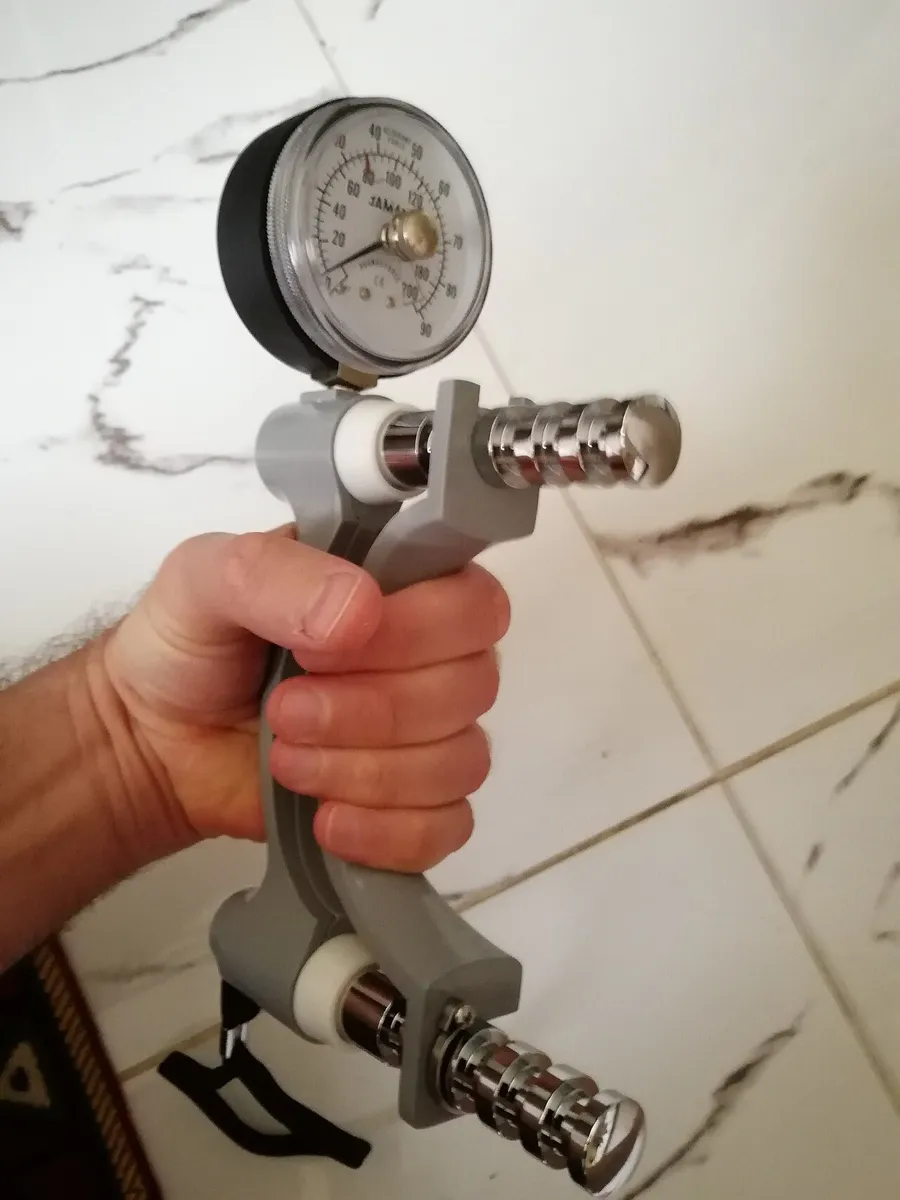
- Fried phenotype: ≥3 of unintentional weight loss, exhaustion, weak grip, slow gait, low physical activity (1–2 = pre-frail)
- Clinical Frailty Scale (CFS) 1–9: 5 mildly frail, 6 moderately frail, 7 severely frail, 8 very severely frail, 9 terminally ill
- Frailty syndromes: falls, immobility, delirium, incontinence and susceptibility to medication side effects
- Gait speed under 0.8 m/s and Timed Up and Go above about 12–15 s identify people at risk
- Progressive resistance and balance exercise is the intervention with the strongest evidence; add protein and energy if undernourished
- Frailty is dynamic: people can move between states, so identify early and reassess
Differential diagnosis
| Condition | Clues | Key test |
|---|---|---|
| Sarcopenia | Low muscle strength and mass; may occur without multisystem frailty | Grip strength, chair-stand test, DXA or BIA muscle mass |
| Hypothyroidism | Fatigue, weight gain, cold intolerance, bradycardia | TSH and free T4 |
| Depression | Low mood, anhedonia, poor appetite, withdrawal | GDS-15 or PHQ-9 |
| Malignancy | Weight loss, night sweats, anaemia, focal symptoms | Targeted investigation guided by symptoms and goals |
| Heart failure | Breathlessness, oedema, fatigue | NT-proBNP, echocardiogram |
| Anaemia | Fatigue, breathlessness, pallor | FBC, ferritin, B12, folate |
| Parkinson disease | Slow gait, rigidity, tremor, falls | Clinical examination; DaT scan if uncertain |
| Polypharmacy and adverse drug effects | Fatigue, falls, confusion after medicine changes | Structured medicines review |
Exam pearls
Guideline
ICFSR International Clinical Practice Guidelines for physical frailty (2019); Clinical Frailty Scale version 2.0 (2020); Frailty consensus: a call to action (2013); NICE NG56 Multimorbidity (2016); British Geriatrics Society frailty guidance
References
- Fried LP, Tangen CM, Walston J, et al.. Frailty in older adults: evidence for a phenotype. J Gerontol A Biol Sci Med Sci 2001.
- Rockwood K, Song X, MacKnight C, et al.. A global clinical measure of fitness and frailty in elderly people. CMAJ 2005.
- Clegg A, Young J, Iliffe S, Rikkert MO, Rockwood K.. Frailty in elderly people. Lancet 2013.
- Clegg A, Bates C, Young J, et al.. Development and validation of an electronic frailty index using routine primary care electronic health record data. Age Ageing 2016.
- Dent E, Morley JE, Cruz-Jentoft AJ, et al.. Physical frailty: ICFSR international clinical practice guidelines for identification and management. J Nutr Health Aging 2019.
- National Institute for Health and Care Excellence (NICE). Multimorbidity: clinical assessment and management (NG56). NICE guideline 2016.
Related topics
By Dr Khalid Seidi (B.Sc., M.D.) · MedEd World Clinical Knowledge library. Original teaching content checked against current guidelines (November 2026); confirm the latest local guidance before clinical use. Not a substitute for clinical judgement.