Clinical Knowledge › Neurology › Clinical problems
Gait disturbance: approach to the patient
Walking depends on intact motor pathways, sensation (proprioception, vision, vestibular input), cerebellar coordination, basal ganglia, frontal lobe planning and musculoskeletal function. Gait disorders are common in older adults and are a major cause of falls. Watching the patient walk is often the most informative part of the neurological examination: recognisable patterns include hemiplegic (circumduction), spastic paraparetic (scissoring), parkinsonian (shuffling, reduced arm swing, festination, freezing), cerebellar ataxic (wide-based, unable to tandem walk), sensory ataxic (stamping, Romberg positive), steppage (foot drop), waddling (proximal myopathy), apraxic or 'magnetic' (frontal disease, normal pressure hydrocephalus) and functional gaits. Many older people have multifactorial gait impairment combining neuropathy, arthritis, visual loss, small vessel disease and medications. Identifying the pattern guides investigation – MRI brain or spine, nerve conduction studies, B12 and other bloods – and treatment, including falls prevention and physiotherapy.
Patient case, mechanism, investigations, management, flashcards and exam-style questions.Open the lesson →
Key facts
- Observe gait, arm swing, base, stride length, turning, tandem walk and Romberg in every neurological examination
- Parkinsonian gait: short shuffling steps, reduced arm swing, stooped posture, festination, freezing, en-bloc turning
- Cerebellar ataxia: wide-based, staggering, unable to tandem walk; unsteady with eyes open
- Sensory ataxia: stamping high steps, worse in the dark, positive Romberg
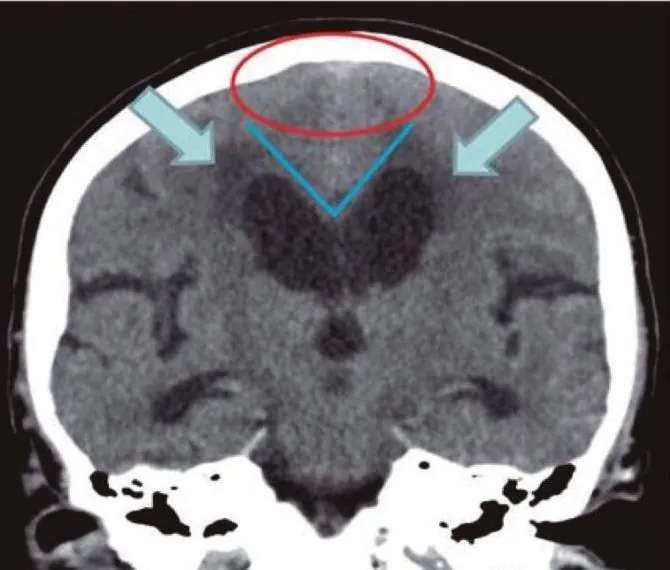
- Normal pressure hydrocephalus triad: magnetic gait, urinary incontinence, cognitive impairment; ventriculomegaly on imaging
- Steppage gait = foot drop (common peroneal nerve, L5 root, polyneuropathy)
- Waddling gait with Trendelenburg sign = proximal myopathy or bilateral hip disease
- Falls assessment: Timed Up and Go >12 s suggests increased falls risk
Differential diagnosis
| Condition | Clues | Key test |
|---|---|---|
| Parkinson disease | Asymmetric rest tremor, bradykinesia, shuffling gait with reduced arm swing | Clinical (MDS criteria); DaT-SPECT if uncertain |
| Normal pressure hydrocephalus | Magnetic gait, incontinence, cognitive decline | MRI (ventriculomegaly, DESH), CSF tap test |
| Cerebellar ataxia | Wide-based gait, dysarthria, nystagmus, limb ataxia | MRI brain, alcohol history, genetic tests |
| Sensory ataxia (B12, neuropathy) | Romberg positive, lost vibration and proprioception | B12, NCS, MRI spine |
| Cervical myelopathy | Spastic gait, clumsy hands, brisk reflexes | MRI cervical spine |
| Vascular (small vessel) gait disorder | Lower-body parkinsonism, broad-based shuffling, vascular risk factors | MRI brain (white matter disease) |
| Proximal myopathy | Waddling gait, difficulty rising from chair | CK, TSH, EMG |
| Functional gait disorder | Inconsistent, effortful, improves with distraction | Clinical positive signs |
Exam pearls
Guideline
MDS clinical diagnostic criteria for Parkinson disease (2015), NICE NG71 Parkinson disease (2017), World Guidelines for Falls Prevention and Management for Older Adults (2022) and NICE NG97 dementia (2018)
References
- Postuma RB, Berg D, Stern M, et al.. MDS clinical diagnostic criteria for Parkinson's disease. Mov Disord 2015.
- National Institute for Health and Care Excellence (NICE). Parkinson's disease in adults (NG71). NICE guideline 2017.
- Montero-Odasso M, van der Velde N, Martin FC, et al.. World guidelines for falls prevention and management for older adults: a global initiative. Age Ageing 2022.
- National Institute for Health and Care Excellence (NICE). Dementia: assessment, management and support for people living with dementia and their carers (NG97). NICE guideline 2018.
- Medical Research Council. Aids to the Examination of the Peripheral Nervous System (Memorandum No. 45). Her Majesty's Stationery Office, London 1976.
- Papadakis MA, Rabow MW, McQuaid KR, eds.. CURRENT Medical Diagnosis & Treatment 2026. McGraw Hill 2026.
Related topics
By Dr Khalid Seidi (B.Sc., M.D.) · MedEd World Clinical Knowledge library. Original teaching content checked against current guidelines (November 2026); confirm the latest local guidance before clinical use. Not a substitute for clinical judgement.