Clinical Knowledge › Internal medicine › Haematology and oncology › Relevant pharmacology
Granulocyte colony-stimulating factor (G-CSF)
Granulocyte colony-stimulating factor (G-CSF) is a cytokine that drives neutrophil production and release from the marrow. Recombinant G-CSFs include short-acting filgrastim and its biosimilars, given daily, and long-acting pegylated forms such as pegfilgrastim, given once per chemotherapy cycle; newer agents include eflapegrastim and efbemalenograstim alfa. They bind the G-CSF receptor (CSF3R) and signal through JAK2–STAT3. Their main use is primary prophylaxis of febrile neutropenia when a chemotherapy regimen carries a risk of about 20% or more, or a lower risk in patients with risk factors, and secondary prophylaxis after a previous neutropenic complication. G-CSF is also used to mobilise stem cells for collection, to speed recovery after stem-cell transplantation and in severe chronic neutropenia. It is not used routinely for afebrile neutropenia or alongside antibiotics for uncomplicated febrile neutropenia. Bone pain is the commonest adverse effect; rare serious effects include splenic rupture, sickle cell crisis, capillary leak syndrome, glomerulonephritis and aortitis.
Patient case, mechanism, investigations, management, flashcards and exam-style questions.Open the lesson →
Key facts
- G-CSF binds CSF3R on myeloid precursors, signalling via JAK2–STAT3 to increase neutrophil production, shorten maturation and release neutrophils from the marrow
- Primary prophylaxis is indicated when febrile neutropenia risk is about 20% or more (ASCO 2026), or 10–20% with patient risk factors such as age 65 or more
- Filgrastim 5 micrograms/kg/day SC from 24–72 hours after chemotherapy until neutrophil recovery (teaching dose)
- Pegfilgrastim 6 mg SC once per cycle, at least 24 hours after chemotherapy and not within about 14 days before the next cycle (teaching dose)
- Not recommended routinely for afebrile neutropenia, as an add-on to antibiotics in uncomplicated febrile neutropenia, or with concurrent chemoradiation
- Bone pain occurs in about a quarter of patients; treat with paracetamol or NSAIDs
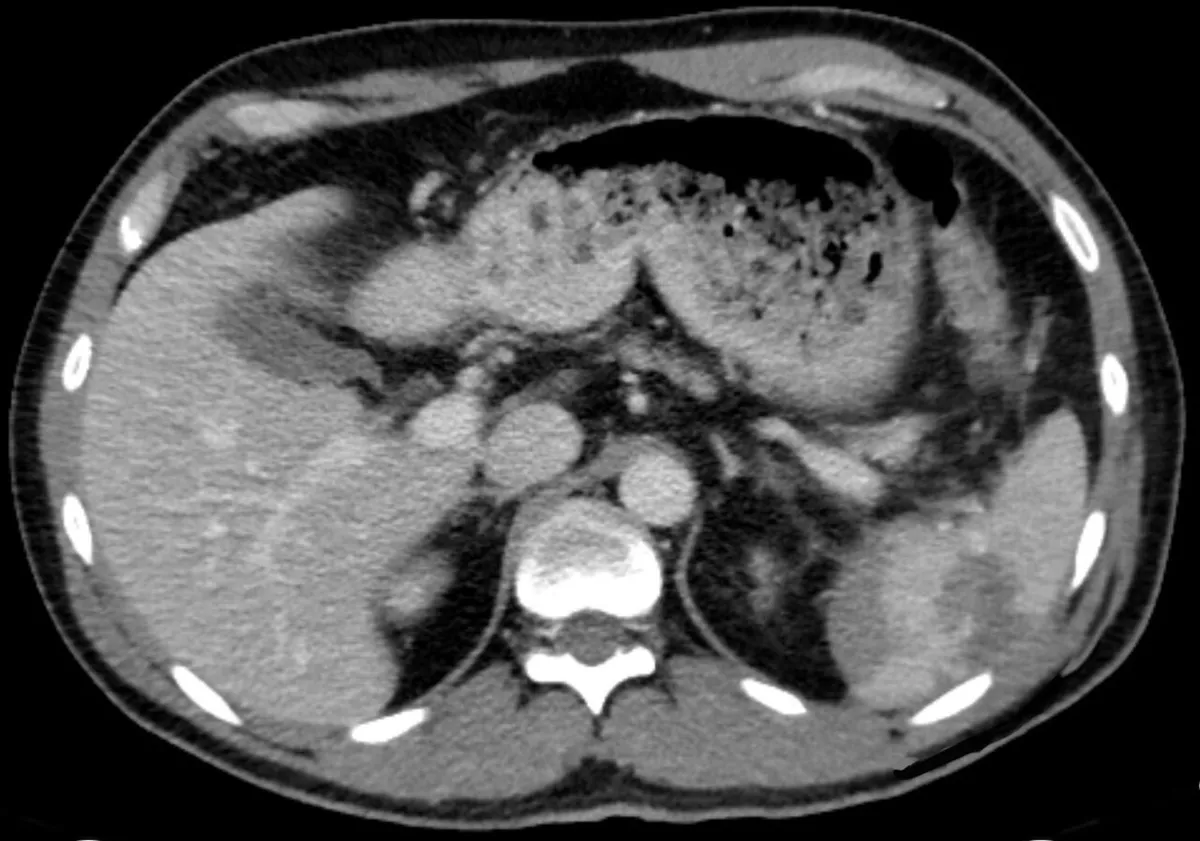
- Splenic rupture (left upper quadrant or shoulder-tip pain) and sickle cell crisis are rare but potentially fatal
- Stem-cell mobilisation uses about 10 micrograms/kg/day for 4–5 days, alone or with plerixafor or motixafortide
Differential diagnosis
| Condition | Clues | Key test |
|---|---|---|
| Filgrastim (short-acting) and biosimilars | Daily SC injections; flexible duration; mobilisation | FBC to neutrophil recovery |
| Pegfilgrastim, lipegfilgrastim (long-acting) | Single dose per cycle of 14 days or longer | Not with weekly regimens |
| Eflapegrastim, efbemalenograstim alfa | Newer long-acting agents | Similar indications; check local approval |
| GM-CSF (sargramostim) | Broader myeloid and macrophage stimulation | More fever and fluid retention |
| Plerixafor, motixafortide (CXCR4 antagonists) | Added to G-CSF for stem-cell mobilisation | CD34+ count in blood |
| Prophylactic antibiotics (fluoroquinolone) | Alternative when CSFs are unavailable or unaffordable | Local resistance patterns |
| Chemotherapy dose reduction or delay | Alternative to secondary prophylaxis in palliative treatment | Treatment intent |
Exam pearls
Guideline
ASCO WBC growth factors guideline update (2026), EORTC guideline on G-CSF to reduce chemotherapy-induced febrile neutropenia (2010, published 2011), ESMO febrile neutropenia guideline (2016) and NCCN Hematopoietic Growth Factors guideline (current version)
References
- Gyawali B, Bohlke K, Dickter JK, et al.. WBC growth factors: ASCO guideline update. J Clin Oncol 2026.
- Aapro MS, Bohlius J, Cameron DA, et al.. 2010 update of EORTC guidelines for the use of granulocyte-colony stimulating factor to reduce the incidence of chemotherapy-induced febrile neutropenia in adult patients with lymphoproliferative disorders and solid tumours. Eur J Cancer 2011.
- Klastersky J, de Naurois J, Rolston K, et al.. Management of febrile neutropaenia: ESMO Clinical Practice Guidelines. Ann Oncol 2016.
- Smith TJ, Bohlke K, Lyman GH, et al.. Recommendations for the use of WBC growth factors: American Society of Clinical Oncology clinical practice guideline update. J Clin Oncol 2015.
- National Comprehensive Cancer Network. NCCN Clinical Practice Guidelines in Oncology: Hematopoietic Growth Factors. NCCN 2026.
- Hoffbrand AV, Higgs DR, Keeling DM, Mehta AB, eds.. Postgraduate Haematology. 2016.
Related topics
By Dr Khalid Seidi (B.Sc., M.D.) · MedEd World Clinical Knowledge library. Original teaching content checked against current guidelines (November 2026); confirm the latest local guidance before clinical use. Not a substitute for clinical judgement.