Clinical Knowledge › Internal medicine › Haematology and oncology › Lymphoid neoplasms
Haemophagocytic lymphohistiocytosis (HLH)
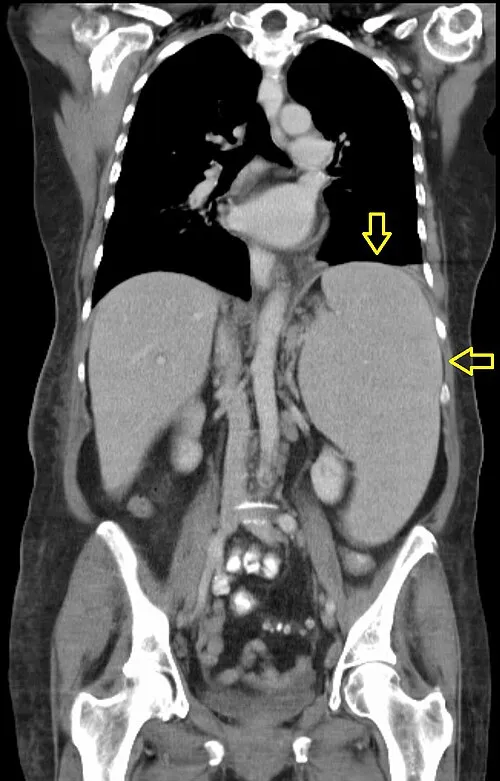
Haemophagocytic lymphohistiocytosis (HLH) is a life-threatening hyperinflammatory syndrome in which cytotoxic T cells and NK cells fail to kill infected or abnormal target cells, so T cells and macrophages remain activated and release interferon-γ and other cytokines. Primary (familial) HLH is caused by inherited defects of perforin-mediated cytotoxicity and usually presents in infancy. Secondary HLH, the usual adult form, is triggered by infection (especially Epstein–Barr virus), malignancy (particularly T- and NK-cell lymphomas), autoimmune disease (macrophage activation syndrome) or immunotherapy. Patients have persistent high fever, splenomegaly, cytopenias, very high ferritin, raised triglycerides, low fibrinogen, liver dysfunction and sometimes encephalopathy. Diagnosis uses the HLH-2004 criteria (five of eight) or, in adults, the HScore, together with an urgent search for the trigger. Treatment must not wait: dexamethasone ± etoposide, targeted agents such as anakinra or emapalumab, treatment of the trigger and allogeneic transplant for familial or refractory disease.
Patient case, mechanism, investigations, management, flashcards and exam-style questions.Open the lesson →
Key facts
- HLH is uncontrolled activation of cytotoxic T cells, NK cells and macrophages driven largely by interferon-γ; untreated it causes multi-organ failure
- Primary HLH: biallelic defects in perforin (PRF1), UNC13D, STX11 or STXBP2, or immunodeficiencies such as Chediak–Higashi, Griscelli type 2 and X-linked lymphoproliferative disease
- Secondary HLH triggers: infections (EBV most often), malignancy (T/NK lymphomas), autoimmune disease (macrophage activation syndrome) and CAR-T or checkpoint immunotherapy
- HLH-2004: molecular diagnosis or 5 of 8 criteria – fever, splenomegaly, ≥2 cytopenias, high triglycerides and/or low fibrinogen, haemophagocytosis, low NK activity, ferritin ≥500 µg/L, soluble CD25 ≥2400 U/mL
- Ferritin above 10 000 µg/L strongly suggests HLH in children; in adults it is less specific (liver failure, sepsis, haematological cancer)
- HScore above 169 gives a high probability of reactive HLH in adults (sensitivity about 93%, specificity about 86%)
- Haemophagocytosis in the marrow is neither necessary nor sufficient for the diagnosis
- Emapalumab (anti-interferon-γ) is licensed in the USA for refractory primary HLH (2018) and is also used, and approved in some regions, for refractory macrophage activation syndrome in Still disease
Differential diagnosis
| Condition | Clues | Key test |
|---|---|---|
| Sepsis with DIC | Fever, cytopenias and coagulopathy, usually with a clear focus and falling ferritin with treatment | Blood cultures; ferritin, triglycerides and sCD25 much lower than in HLH |
| Lymphoma or acute leukaemia without HLH | B symptoms, nodes, blasts on film | Blood film, PET-CT, node and marrow biopsy (may coexist with HLH) |
| Adult-onset Still disease without MAS | Quotidian fever, salmon rash, arthritis, neutrophilia (not cytopenias) | Rising platelets and fibrinogen; MAS when they fall |
| Thrombotic microangiopathy (TTP) | Thrombocytopenia, haemolysis, neurological signs | Schistocytes, ADAMTS13 activity <10% |
| Acute liver failure | Encephalopathy, jaundice, coagulopathy, very high ferritin | Paracetamol level, viral and autoimmune screen; no splenomegaly or cytopenias of HLH pattern |
| DRESS (drug reaction with eosinophilia and systemic symptoms) | Fever, rash, hepatitis 2–8 weeks after a new drug | Eosinophilia, atypical lymphocytes; HLH can complicate it |
| Severe malaria, leishmaniasis or disseminated TB | Fever, splenomegaly, pancytopenia in endemic settings | Blood films, leishmania serology/PCR, marrow culture (may trigger HLH) |
Exam pearls
Guideline
Histiocyte Society HLH-2004 diagnostic and therapeutic guidelines (2007), Histiocyte Society recommendations for the management of HLH in adults (2019), and US emapalumab approval for primary HLH (2018)
References
- Henter JI, Horne A, Aricó M, et al.. HLH-2004: Diagnostic and therapeutic guidelines for hemophagocytic lymphohistiocytosis. Pediatr Blood Cancer 2007.
- La Rosée P, Horne A, Hines M, et al.. Recommendations for the management of hemophagocytic lymphohistiocytosis in adults. Blood 2019.
- Fardet L, Galicier L, Lambotte O, et al.. Development and validation of the HScore, a score for the diagnosis of reactive hemophagocytic syndrome. Arthritis Rheumatol 2014.
- Locatelli F, Jordan MB, Allen C, et al.. Emapalumab in children with primary hemophagocytic lymphohistiocytosis. N Engl J Med 2020.
- Ramos-Casals M, Brito-Zerón P, López-Guillermo A, Khamashta MA, Bosch X. Adult haemophagocytic syndrome. Lancet 2014.
- Hoffbrand AV, Steensma DP. Hoffbrand's Essential Haematology. 2019.
Related topics
By Dr Khalid Seidi (B.Sc., M.D.) · MedEd World Clinical Knowledge library. Original teaching content checked against current guidelines (November 2026); confirm the latest local guidance before clinical use. Not a substitute for clinical judgement.