Clinical Knowledge › Internal medicine › Haematology and oncology › Lymphoid neoplasms
Marginal zone (MALT) lymphoma
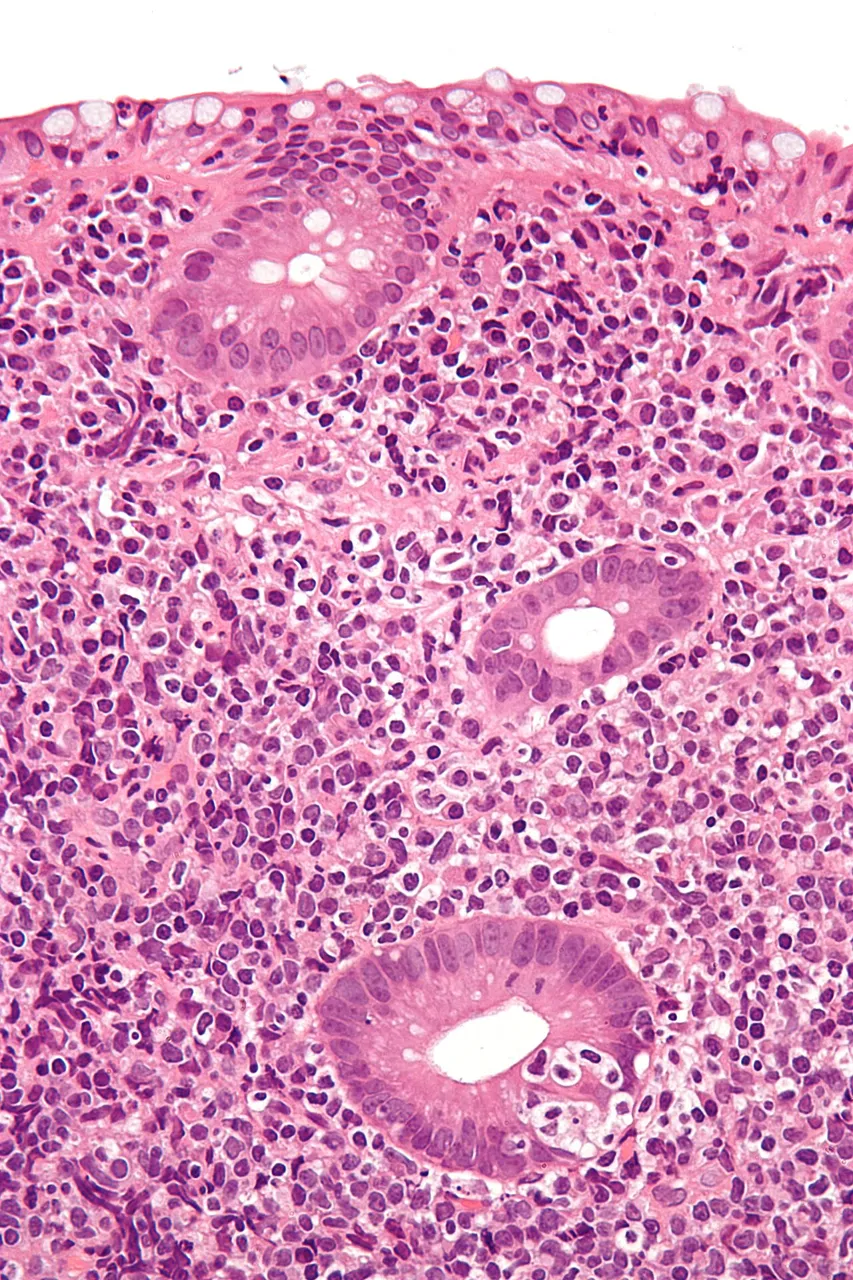
Marginal zone lymphomas (MZL) are indolent lymphomas of marginal zone memory B cells, accounting for about 7–10% of lymphomas: extranodal MZL of mucosa-associated lymphoid tissue (MALT lymphoma, about two-thirds), splenic MZL and nodal MZL. MALT lymphoma develops in tissues where chronic antigen stimulation has created lymphoid tissue: stomach (Helicobacter pylori), salivary glands (Sjögren syndrome), thyroid (Hashimoto thyroiditis), ocular adnexa (Chlamydia psittaci in some regions), lung, skin (Borrelia) and small intestine (Campylobacter). Splenic and nodal MZL are associated with hepatitis C. The cells are CD20+ and negative for CD5, CD10, CD23 and cyclin D1, so diagnosis relies on histology and exclusion. Treatment is tailored to site and stage: antimicrobial or antiviral therapy for antigen-driven disease, radiotherapy for localised disease, rituximab alone for splenic MZL, rituximab with chemotherapy for advanced disease, and BTK inhibitors at relapse. Survival is long, but transformation to large B-cell lymphoma occurs in about 5–10%.
Patient case, mechanism, investigations, management, flashcards and exam-style questions.Open the lesson →
Key facts
- Three entities: extranodal MZL of MALT (about 65–70%), splenic MZL (about 20%) and nodal MZL (about 10%)
- Chronic antigen drives MALT lymphoma: H. pylori (stomach), Sjögren (parotid), Hashimoto (thyroid), C. psittaci (ocular adnexa), Borrelia (skin), Campylobacter (IPSID)
- Hepatitis C is linked to splenic and nodal MZL; antiviral therapy can induce lymphoma regression
- Immunophenotype: CD19+, CD20+, CD5−, CD10−, CD23−, cyclin D1−, CD103−; lymphoepithelial lesions in MALT
- t(11;18) BIRC3::MALT1 (gastric and lung MALT) predicts failure of H. pylori eradication; t(14;18) IGH::MALT1 occurs at ocular, salivary and liver sites
- Splenic MZL: massive splenomegaly, lymphocytosis with villous lymphocytes, cytopenias, small IgM paraprotein, autoimmune haemolysis
- Localised extranodal disease: involved-site radiotherapy 24 Gy; splenic MZL: rituximab monotherapy (or splenectomy); advanced: rituximab ± chemotherapy
- Relapse: BTK inhibitors (zanubrutinib), lenalidomide–rituximab; watch for transformation to DLBCL
Differential diagnosis
| Condition | Clues | Key test |
|---|---|---|
| Chronic lymphocytic leukaemia | Lymphocytosis with smear cells | CD5+, CD23+, dim CD20 |
| Mantle cell lymphoma | Splenomegaly, GI polyps | CD5+, cyclin D1+, t(11;14) |
| Follicular lymphoma | Generalised nodes | CD10+, BCL2+ follicles, t(14;18) IGH::BCL2 |
| Hairy cell leukaemia | Splenomegaly with pancytopenia and monocytopenia | CD103+, CD11c+, CD25+, annexin A1+, BRAF V600E |
| Lymphoplasmacytic lymphoma (Waldenström) | IgM paraprotein, hyperviscosity | MYD88 L265P in over 90%; marrow lymphoplasmacytic infiltrate |
| Benign lymphoepithelial sialadenitis (Sjögren) | Parotid swelling | No monoclonal B cells or destructive infiltrate on biopsy |
| IgG4-related disease | Salivary, orbital or thyroid swelling | Raised IgG4, storiform fibrosis, IgG4+ plasma cells |
Exam pearls
Guideline
ESMO Clinical Practice Guidelines for marginal zone lymphomas (2020, EHA-endorsed), NCCN Guidelines for B-cell lymphomas (2026 version), WHO 5th edition and ICC (2022) lymphoid classifications, Lugano staging (2014)
References
- Zucca E, Arcaini L, Buske C, et al.. Marginal zone lymphomas: ESMO Clinical Practice Guidelines for diagnosis, treatment and follow-up. Ann Oncol 2020.
- Alaggio R, Amador C, Anagnostopoulos I, et al.. The 5th edition of the World Health Organization Classification of Haematolymphoid Tumours: Lymphoid Neoplasms. Leukemia 2022.
- Campo E, Jaffe ES, Cook JR, et al.. The International Consensus Classification of Mature Lymphoid Neoplasms: a report from the Clinical Advisory Committee. Blood 2022.
- National Comprehensive Cancer Network. NCCN Clinical Practice Guidelines in Oncology: B-Cell Lymphomas. NCCN 2026.
- Zucca E, Conconi A, Martinelli G, et al.. Final results of the IELSG-19 randomized trial of mucosa-associated lymphoid tissue lymphoma: improved event-free and progression-free survival with rituximab plus chlorambucil versus either chlorambucil or rituximab monotherapy. J Clin Oncol 2017.
- Thieblemont C, Cascione L, Conconi A, et al.. A MALT lymphoma prognostic index. Blood 2017.
Related topics
By Dr Khalid Seidi (B.Sc., M.D.) · MedEd World Clinical Knowledge library. Original teaching content checked against current guidelines (November 2026); confirm the latest local guidance before clinical use. Not a substitute for clinical judgement.