Clinical Knowledge › Ear, nose and throat › Head and neck cancer
Head and neck squamous cell carcinoma: overview and risk factors
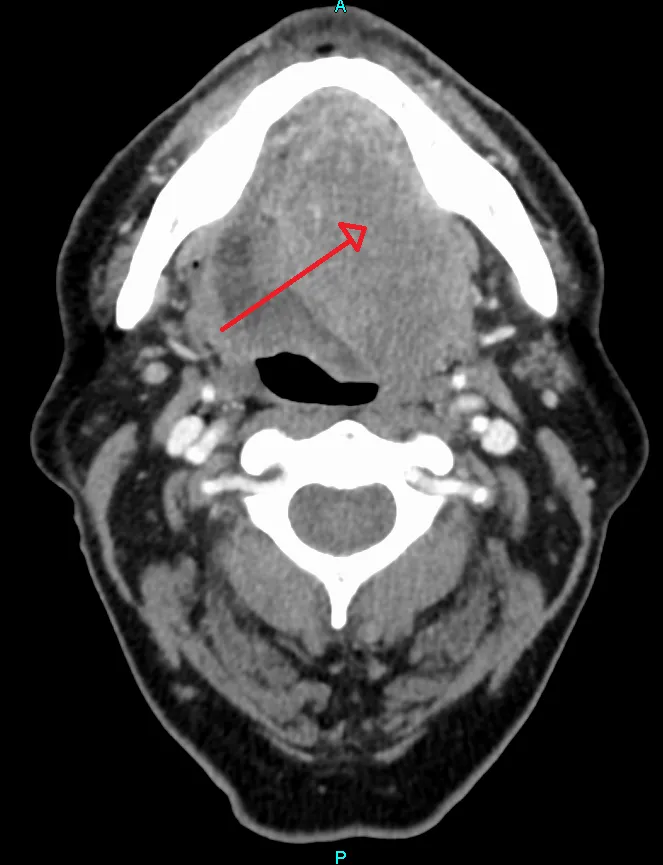
Head and neck squamous cell carcinoma (HNSCC) arises from the mucosa of the oral cavity, pharynx and larynx. It is about the seventh most common cancer worldwide, with oral cancer especially common in South Asia because of betel quid and smokeless tobacco. Tobacco and alcohol act synergistically and cause most cases outside the oropharynx; high-risk human papillomavirus (mainly HPV16) now causes most oropharyngeal cancers in high-income countries, and Epstein–Barr virus underlies endemic nasopharyngeal carcinoma. Tobacco-related tumours arise through field cancerisation, with TP53 mutation and a risk of second primaries. Red flags are a persistent ulcer, red or white patch, hoarseness, dysphagia, referred otalgia or a neck lump lasting more than 3 weeks. Diagnosis needs examination with flexible nasendoscopy, biopsy, cross-sectional imaging and multidisciplinary staging (TNM). Early disease is treated with a single modality (surgery or radiotherapy); advanced disease needs combined surgery, radiotherapy and cisplatin, and immunotherapy now has a role.
Patient case, mechanism, investigations, management, flashcards and exam-style questions.Open the lesson →
Key facts
- About 90% of head and neck cancers are squamous cell carcinomas of the mucosa of the oral cavity, pharynx and larynx
- Tobacco and alcohol multiply risk: heavy use of both raises risk far more than either alone
- HPV16 causes most oropharyngeal (tonsil and tongue base) cancers in high-income countries; p16 immunohistochemistry is the surrogate marker
- EBV drives non-keratinising nasopharyngeal carcinoma, endemic in southern China and Southeast Asia
- Field cancerisation explains second primary tumours (about 3–4% per year), often in the lung, oesophagus or elsewhere in the upper aerodigestive tract
- Any adult with a neck lump, hoarseness, oral ulcer or red/white patch lasting more than 3 weeks needs urgent suspected-cancer referral
- Early-stage (I–II) disease: single-modality surgery or radiotherapy; advanced (III–IV): multimodality with concurrent cisplatin
- Most deaths come from locoregional recurrence; distant metastases go most often to the lungs
Differential diagnosis
| Condition | Clues | Key test |
|---|---|---|
| Reactive cervical lymphadenopathy | Recent upper respiratory infection, tender, shrinking within 2–3 weeks | Review at 2–3 weeks; ultrasound if persistent |
| Lymphoma | Rubbery nodes in several regions, B symptoms, Waldeyer ring involvement | Core or excision biopsy with flow cytometry |
| Tuberculous lymphadenitis | Matted level V nodes, fistula, endemic area or HIV | FNA with mycobacterial culture and PCR |
| Benign oral ulcer (traumatic or aphthous) | Clear cause, painful, heals within 3 weeks once cause removed | Review at 2–3 weeks; biopsy if persistent |
| Laryngopharyngeal reflux or benign vocal fold lesion | Fluctuating hoarseness, non-smoker, normal mobility | Flexible nasendoscopy (laryngoscopy) |
| Branchial cyst | Young adult, smooth fluctuant level II mass | Ultrasound and FNA; in adults over 40 suspect cystic HPV-related node |
| Salivary gland tumour | Parotid or submandibular mass, facial nerve signs if malignant | Ultrasound-guided FNA or core biopsy |
| Thyroid cancer | Mass moving with swallowing, central compartment nodes | Thyroid ultrasound and FNA (Bethesda) |
Exam pearls
Guideline
EHNS-ESMO-ESTRO Clinical Practice Guidelines for SCC of the oral cavity, larynx, oropharynx and hypopharynx (2020), NICE NG36 upper aerodigestive tract cancer (2016, updated 2018), NICE NG12 suspected cancer, AJCC 8th/UICC 9th TNM and NCCN Head and Neck Cancers (2026)
References
- Chow LQM. Head and neck cancer. N Engl J Med 2020.
- Johnson DE, Burtness B, Leemans CR, et al.. Head and neck squamous cell carcinoma. Nat Rev Dis Primers 2020.
- Machiels JP, René Leemans C, Golusinski W, et al.. Squamous cell carcinoma of the oral cavity, larynx, oropharynx and hypopharynx: EHNS-ESMO-ESTRO Clinical Practice Guidelines for diagnosis, treatment and follow-up. Ann Oncol 2020.
- National Institute for Health and Care Excellence. Cancer of the upper aerodigestive tract: assessment and management in people aged 16 and over (NG36). NICE, London 2016.
- National Institute for Health and Care Excellence. Suspected cancer: recognition and referral (NG12). NICE, London 2015.
- Hashibe M, Brennan P, Chuang SC, et al.. Interaction between tobacco and alcohol use and the risk of head and neck cancer: pooled analysis in the International Head and Neck Cancer Epidemiology Consortium. Cancer Epidemiol Biomarkers Prev 2009.
Related topics
By Dr Khalid Seidi (B.Sc., M.D.) · MedEd World Clinical Knowledge library. Original teaching content checked against current guidelines (November 2026); confirm the latest local guidance before clinical use. Not a substitute for clinical judgement.