Clinical Knowledge › Ear, nose and throat › Head and neck cancer
Oropharyngeal cancer and HPV
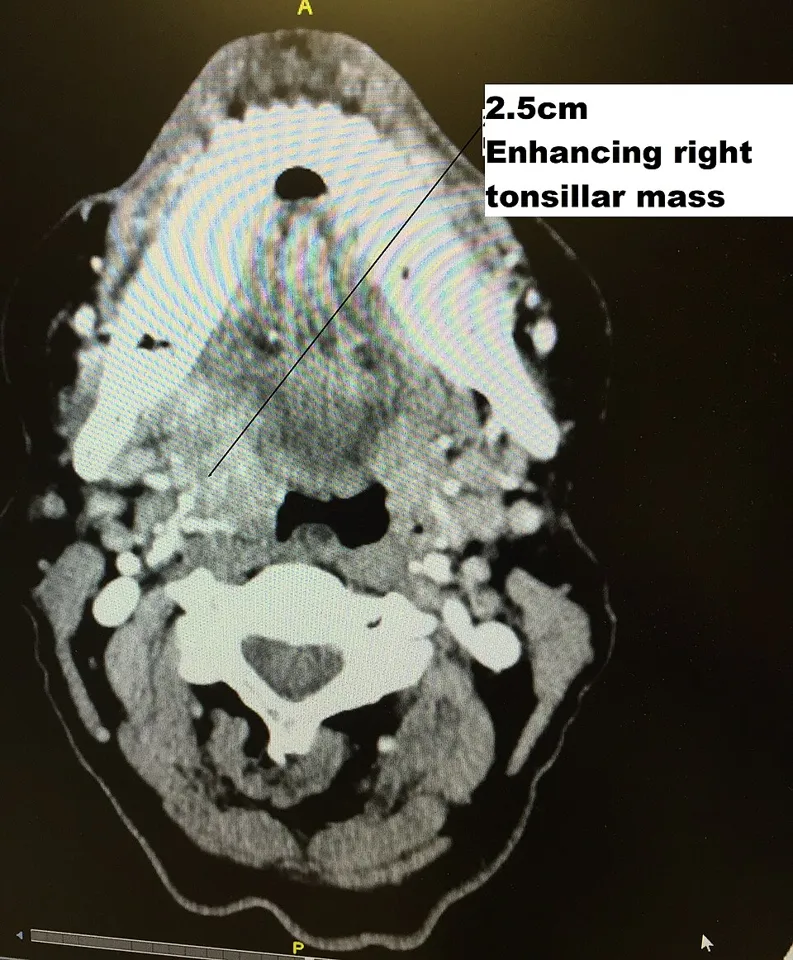
Oropharyngeal cancer arises in the palatine tonsils, tongue base, soft palate and posterior pharyngeal wall. Most are squamous cell carcinomas, and in Europe, North America and Australia most are now caused by high-risk human papillomavirus, chiefly HPV16, acquired through oral sexual contact. HPV-positive cancers occur in younger patients who often do not smoke, start in the tonsillar crypts, and typically present as a painless, often cystic, neck lump with a small primary; HPV-negative tumours behave like other tobacco-related cancers. p16 immunohistochemistry, ideally confirmed by HPV DNA or RNA testing, separates the two diseases. HPV-positive disease has a much better prognosis and its own TNM staging in AJCC 8th edition. Early tumours are treated with transoral surgery or radiotherapy; advanced disease is treated with radiotherapy and concurrent cisplatin. Trials that replaced cisplatin with cetuximab or lowered radiotherapy dose gave worse tumour control, so de-escalation remains experimental. HPV vaccination of adolescents is the main prevention strategy.
Patient case, mechanism, investigations, management, flashcards and exam-style questions.Open the lesson →
Key facts
- Oropharynx = palatine tonsils, tongue base, soft palate, uvula and posterior pharyngeal wall
- HPV16 causes about 85–90% of HPV-positive oropharyngeal cancers; overall, HPV causes most oropharyngeal cancers in high-income countries
- Risk rises with number of oral sex partners and oral HPV16 infection, independent of tobacco and alcohol
- Classic presentation: painless, often cystic, level II neck lump in a 40–60-year-old non-smoker
- p16 immunohistochemistry is the surrogate marker (strong, diffuse nuclear and cytoplasmic staining in most cells)
- AJCC 8th edition stages HPV-associated oropharyngeal cancer separately and more favourably
- HPV-positive patients have about a 60% lower risk of death than HPV-negative patients; smoking erodes this advantage
- Concurrent cisplatin with radiotherapy remains standard; cetuximab substitution was inferior (RTOG 1016, De-ESCALaTE)
Differential diagnosis
| Condition | Clues | Key test |
|---|---|---|
| Branchial cyst | Smooth cystic level II mass, usually under 30 years | Ultrasound with FNA and p16; over 40 treat as possible metastasis |
| Tonsillar lymphoma | Unilateral smooth tonsil enlargement, B symptoms, other nodes | Tonsillectomy or biopsy with flow cytometry |
| Peritonsillar abscess (quinsy) | Acute pain, fever, trismus, uvula deviation | Needle aspiration; settles with treatment |
| Tonsillar asymmetry (benign) | Long-standing, soft, no ulceration, no node | Observation or tonsillectomy if suspicious |
| Infectious mononucleosis | Young, bilateral tonsillitis, posterior nodes, splenomegaly | Monospot or EBV serology |
| Tuberculous lymphadenitis | Matted nodes, endemic area | FNA with mycobacterial testing |
| Parapharyngeal space tumour | Medial displacement of the tonsil with intact mucosa | MRI; avoid transoral biopsy |
Exam pearls
Guideline
UK National Multidisciplinary Guidelines for oropharyngeal cancer (2016), EHNS-ESMO-ESTRO head and neck SCC guideline (2020), NICE NG36 (2016, updated 2018), AJCC 8th edition HPV-associated oropharyngeal staging and NCCN Head and Neck Cancers (2026)
References
- Mehanna H, Evans M, Beasley M, et al.. Oropharyngeal cancer: United Kingdom National Multidisciplinary Guidelines. J Laryngol Otol 2016.
- Ang KK, Harris J, Wheeler R, et al.. Human papillomavirus and survival of patients with oropharyngeal cancer. N Engl J Med 2010.
- D'Souza G, Kreimer AR, Viscidi R, et al.. Case-control study of human papillomavirus and oropharyngeal cancer. N Engl J Med 2007.
- Chaturvedi AK, Engels EA, Pfeiffer RM, et al.. Human papillomavirus and rising oropharyngeal cancer incidence in the United States. J Clin Oncol 2011.
- Gillison ML, Trotti AM, Harris J, et al.. Radiotherapy plus cetuximab or cisplatin in human papillomavirus-positive oropharyngeal cancer (NRG Oncology RTOG 1016): a randomised, multicentre, non-inferiority trial. Lancet 2019.
- Mehanna H, Robinson M, Hartley A, et al.. Radiotherapy plus cisplatin or cetuximab in low-risk human papillomavirus-positive oropharyngeal cancer (De-ESCALaTE HPV): an open-label randomised controlled phase 3 trial. Lancet 2019.
Related topics
By Dr Khalid Seidi (B.Sc., M.D.) · MedEd World Clinical Knowledge library. Original teaching content checked against current guidelines (November 2026); confirm the latest local guidance before clinical use. Not a substitute for clinical judgement.