Clinical Knowledge › Ear, nose and throat › Head and neck cancer
Nasopharyngeal carcinoma
Nasopharyngeal carcinoma (NPC) arises from the epithelium of the nasopharynx, usually in the fossa of Rosenmüller. It is uncommon in most of the world but endemic in southern China, Hong Kong and Southeast Asia. In endemic regions almost all tumours are non-keratinising carcinomas driven by Epstein–Barr virus, with salted fish in childhood and genetic susceptibility as co-factors. The commonest presentation is a painless upper or posterior neck node; others are unilateral glue ear in an adult, blood-stained nasal discharge, nasal obstruction and cranial nerve palsies, especially V and VI. Diagnosis is by endoscopic biopsy, with MRI for staging and plasma EBV DNA as a tumour marker. Staging follows the 9th version of the AJCC/UICC TNM (2025). Because the nasopharynx is hard to reach surgically and the tumour is radiosensitive, intensity-modulated radiotherapy is the main treatment, combined with concurrent cisplatin and induction gemcitabine–cisplatin for locoregionally advanced disease. Metastatic disease is treated with gemcitabine–cisplatin plus a PD-1 inhibitor.
Patient case, mechanism, investigations, management, flashcards and exam-style questions.Open the lesson →
Key facts
- Endemic in southern China and Southeast Asia (incidence up to 20–30 per 100 000 men in parts of Guangdong); rare in Europe and North America
- Most tumours are non-keratinising carcinomas associated with EBV; EBER in situ hybridisation is positive in tumour cells
- Painless neck node (often level II, V or retropharyngeal) is the commonest presenting feature, frequently bilateral
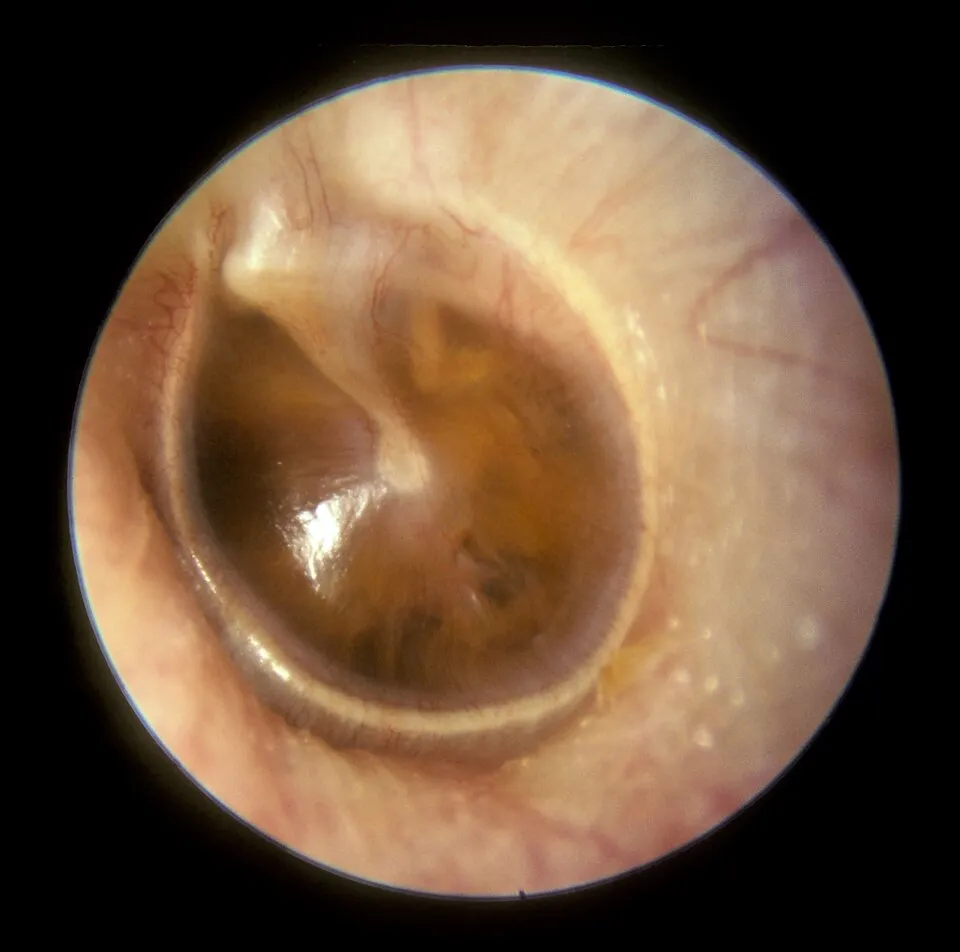
- Unilateral otitis media with effusion in an adult = examine the postnasal space to exclude NPC
- Cranial nerve palsies (V and VI most often) indicate skull base or cavernous sinus invasion
- MRI of the nasopharynx and neck is the staging investigation of choice; plasma EBV DNA tracks tumour burden
- Radiotherapy (IMRT) is the main treatment; surgery is reserved for biopsy, residual or recurrent disease
- Locoregionally advanced disease: induction gemcitabine–cisplatin then concurrent cisplatin chemoradiotherapy
Differential diagnosis
| Condition | Clues | Key test |
|---|---|---|
| Adenoid hypertrophy | Children; symmetrical lymphoid tissue, regresses by adolescence | Nasendoscopy; biopsy if asymmetric in an adult |
| Juvenile nasopharyngeal angiofibroma | Adolescent boy with recurrent heavy epistaxis | Contrast CT or MRI; do not biopsy in clinic |
| Lymphoma of Waldeyer ring | Bulky lymphoid mass, B symptoms, other nodes | Biopsy with flow cytometry and immunohistochemistry |
| Eustachian tube dysfunction after viral infection | Recent cold, bilateral or resolving effusion | Nasendoscopy; review in 6–12 weeks |
| Tornwaldt (Thornwaldt) cyst | Midline nasopharyngeal cyst, usually incidental | MRI shows midline T2-bright cyst |
| Tuberculosis | Nasopharyngeal ulcer with cervical nodes in endemic area | Biopsy with mycobacterial testing |
| Sinonasal malignancy | Unilateral nasal mass, epistaxis, facial swelling | Nasendoscopy, CT/MRI, biopsy |
Exam pearls
Guideline
ESMO-EURACAN Clinical Practice Guidelines for nasopharyngeal carcinoma (2021), UK National Multidisciplinary Guidelines (2016), AJCC/UICC 9th version NPC staging (2025) and NCCN Head and Neck Cancers (2026)
References
- Chen YP, Chan ATC, Le QT, et al.. Nasopharyngeal carcinoma. Lancet 2019.
- Bossi P, Chan AT, Licitra L, et al.. Nasopharyngeal carcinoma: ESMO-EURACAN Clinical Practice Guidelines for diagnosis, treatment and follow-up. Ann Oncol 2021.
- Simo R, Robinson M, Lei M, Sibtain A, Hickey S. Nasopharyngeal carcinoma: United Kingdom National Multidisciplinary Guidelines. J Laryngol Otol 2016.
- Pan JJ, Mai HQ, Ng WT, et al.. Ninth version of the AJCC and UICC nasopharyngeal cancer TNM staging classification. JAMA Oncol 2024.
- Zhang Y, Chen L, Hu GQ, et al.. Gemcitabine and cisplatin induction chemotherapy in nasopharyngeal carcinoma. N Engl J Med 2019.
- Chan KCA, Woo JKS, King A, et al.. Analysis of plasma Epstein-Barr virus DNA to screen for nasopharyngeal cancer. N Engl J Med 2017.
Related topics
By Dr Khalid Seidi (B.Sc., M.D.) · MedEd World Clinical Knowledge library. Original teaching content checked against current guidelines (November 2026); confirm the latest local guidance before clinical use. Not a substitute for clinical judgement.