Clinical Knowledge › Internal medicine › Haematology and oncology › Oncological emergencies
Hyperviscosity syndrome
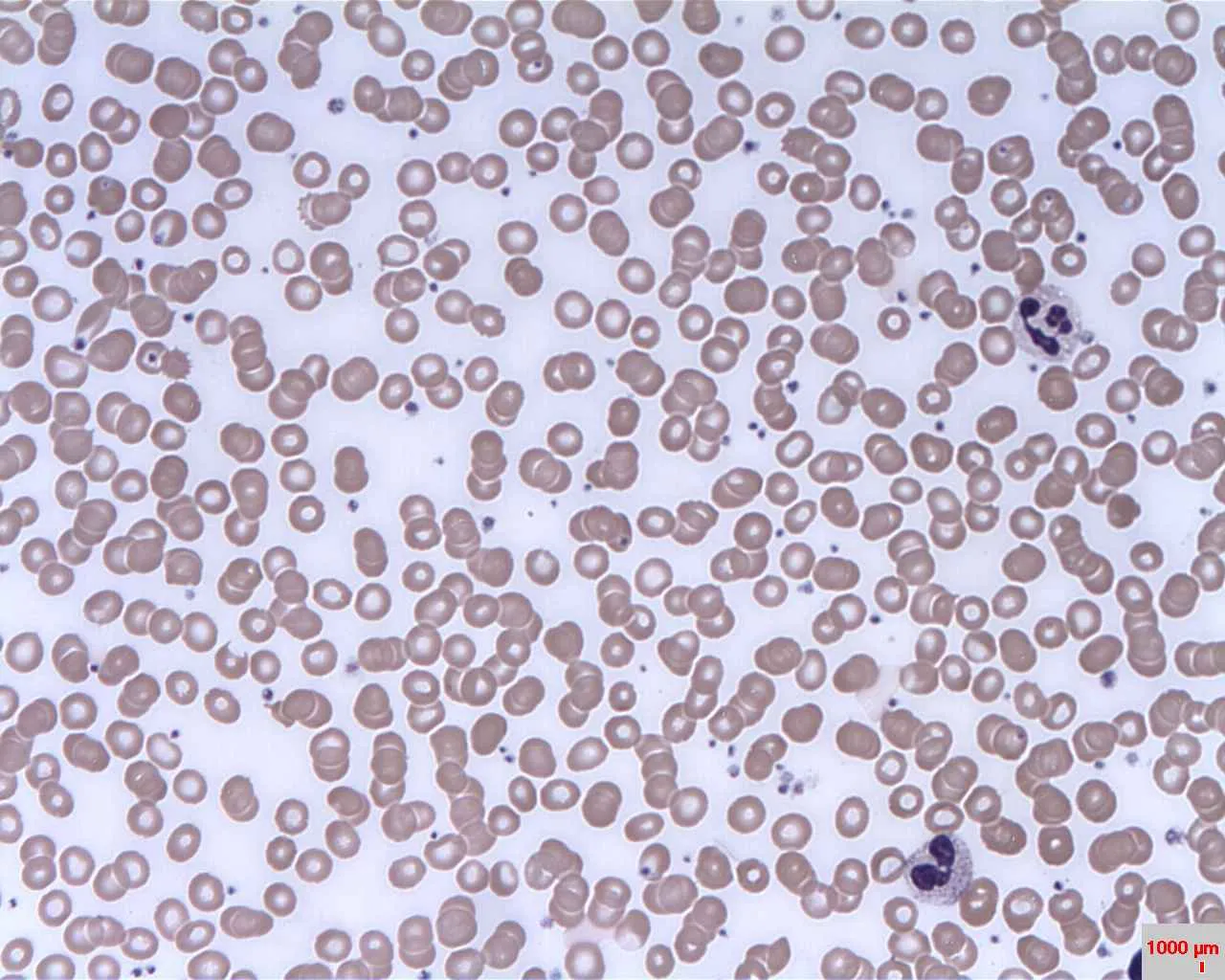
Hyperviscosity syndrome is an oncological emergency in which thickened blood slows flow through small vessels, causing mucosal bleeding, visual disturbance and neurological symptoms. Most cases are due to a paraprotein: IgM in Waldenström macroglobulinaemia (a large, mainly intravascular pentamer), and less often IgA or IgG3 in myeloma, which polymerise or aggregate; cryoglobulins and, rarely, polyclonal hypergammaglobulinaemia also cause it. Classic features are epistaxis and gum bleeding, blurred vision with dilated, tortuous 'sausage-link' retinal veins and haemorrhages, headache, dizziness, confusion and, in severe cases, coma. Diagnosis is clinical, supported by raised serum or plasma viscosity, a high paraprotein level, rouleaux and fundoscopy. Treatment must not wait for viscosity results: urgent plasma exchange rapidly lowers viscosity and relieves symptoms, while definitive therapy of the underlying disorder prevents recurrence. Avoid red cell transfusion and diuretics before viscosity is reduced.
Patient case, mechanism, investigations, management, flashcards and exam-style questions.Open the lesson →
Key facts
- Classic triad: mucosal bleeding, visual disturbance (retinopathy) and neurological symptoms
- Waldenström macroglobulinaemia is the commonest cause: IgM is a large pentamer, about 80% intravascular, so small rises in concentration cause large rises in viscosity
- In myeloma, IgA (polymerises) and IgG3 (aggregates) subclasses are most likely to cause hyperviscosity
- Normal serum viscosity is about 1.4–1.8 centipoise; symptoms usually appear above about 4–5 cP, but the threshold varies between patients
- Fundoscopy shows dilated, tortuous 'sausage-link' retinal veins, retinal haemorrhages and papilloedema; central retinal vein occlusion may occur
- Plasma exchange is the emergency treatment (ASFA category I for symptomatic hyperviscosity); one exchange can lower IgM by about a third or more
- Avoid red cell transfusion and diuretics until viscosity is reduced, because both raise whole-blood viscosity
- Rituximab can cause an IgM flare; in Waldenström with high IgM, plasma exchange first or omit rituximab from initial cycles
Differential diagnosis
| Condition | Clues | Key test |
|---|---|---|
| Leukostasis | Acute leukaemia with very high white cell count, hypoxia and confusion | FBC and blood film (blasts above 100 ×10⁹/L) |
| Polycythaemia (primary or secondary) | Plethora, headache, high haematocrit | Haemoglobin and haematocrit, JAK2 testing |
| Cryoglobulinaemia | Purpura, Raynaud phenomenon, cold-induced symptoms, glomerulonephritis | Cryoglobulins (sample kept at 37 °C), low C4 |
| Stroke or transient ischaemic attack | Focal deficit, vascular risk factors | CT/MRI brain; normal viscosity |
| Thrombocytopenic or coagulopathic bleeding | Mucosal bleeding with low platelets or prolonged clotting | FBC, PT, APTT, fibrinogen |
| Central retinal vein occlusion from other causes | Painless visual loss, hypertension, glaucoma | Fundoscopy, BP; normal paraprotein and viscosity |
| Hypercalcaemia of myeloma | Confusion and drowsiness | Adjusted calcium (often coexists) |
Exam pearls
Guideline
ASFA 2023 Guidelines on the use of therapeutic apheresis (Ninth Special Issue), BSH 2022 guideline on diagnosis and management of Waldenström macroglobulinaemia and IWWM consensus recommendations
References
- Connelly-Smith L, Alquist CR, Aqui NA, et al.. Guidelines on the use of therapeutic apheresis in clinical practice: evidence-based approach from the Writing Committee of the American Society for Apheresis: the ninth special issue. J Clin Apher 2023.
- Pratt G, El-Sharkawi D, Kothari J, et al.. Diagnosis and management of Waldenström macroglobulinaemia: a British Society for Haematology guideline. Br J Haematol 2022.
- Bey T, Qdaisat A. Hyperviscosity syndrome: an oncologic emergency. Emerg Med Clin North Am 2025.
- Dumas G, Merceron S, Zafrani L, et al.. Hyperviscosity syndrome. Rev Med Interne 2015.
- Zarkovic M, Kwaan HC. Correction of hyperviscosity by apheresis. Semin Thromb Hemost 2003.
- Hoffbrand AV, Steensma DP. Hoffbrand's Essential Haematology. 2019.
Related topics
By Dr Khalid Seidi (B.Sc., M.D.) · MedEd World Clinical Knowledge library. Original teaching content checked against current guidelines (November 2026); confirm the latest local guidance before clinical use. Not a substitute for clinical judgement.