Clinical Knowledge › Internal medicine › Haematology and oncology › Oncological emergencies
Leukostasis
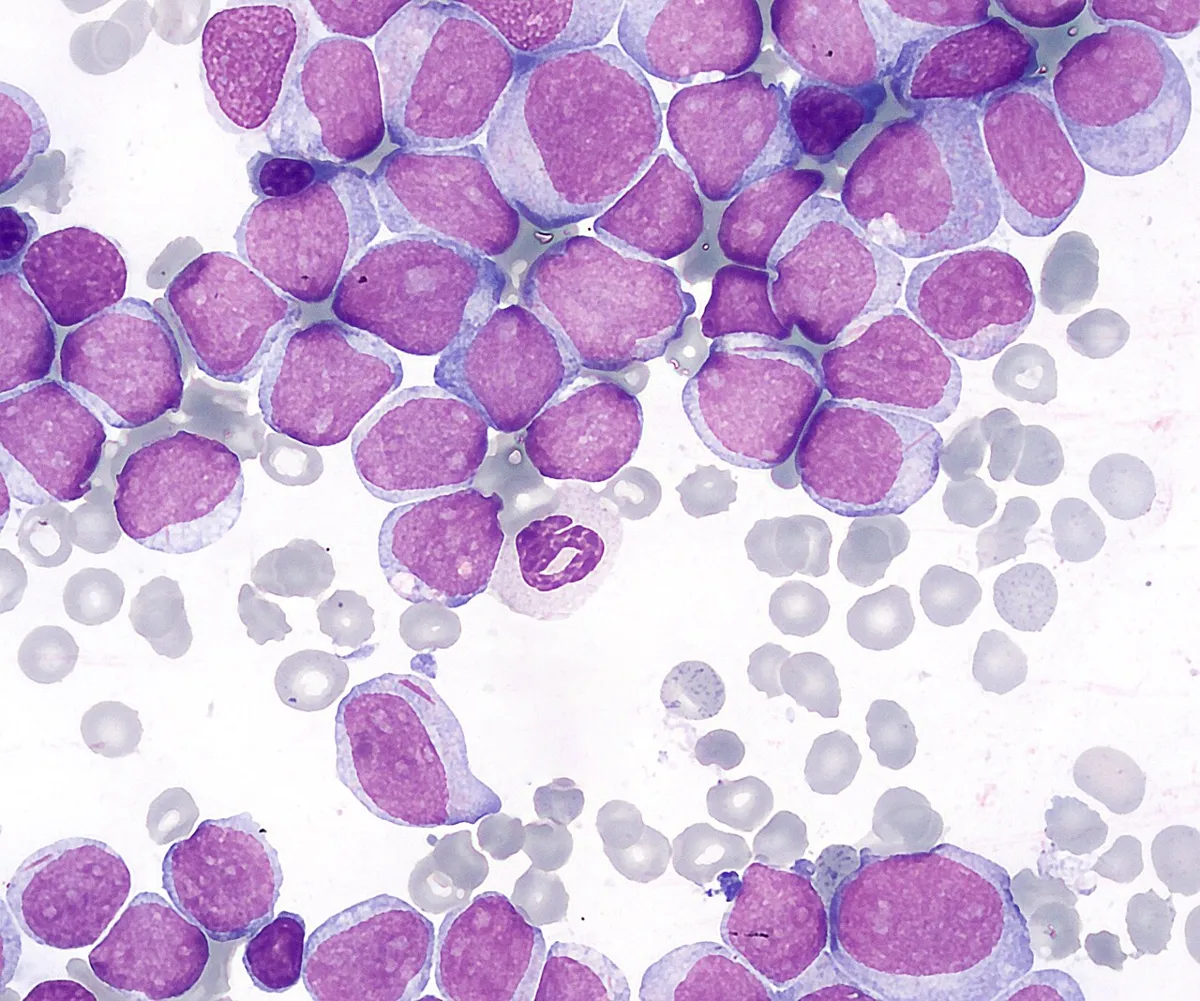
Leukostasis is a haematological emergency in which very high numbers of circulating leukaemic blasts plug the microcirculation, causing tissue hypoxia, mainly in the lungs and brain. It occurs with hyperleukocytosis, usually defined as a white cell or blast count above 100 ×10⁹/L, but can develop at lower counts in acute myeloid leukaemia, especially monocytic subtypes, because myeloblasts are large, rigid and adhesive. Patients present with breathlessness, hypoxaemia and diffuse lung infiltrates, headache, confusion, visual disturbance or intracranial haemorrhage, and sometimes priapism. Disseminated intravascular coagulation and tumour lysis often coexist, and early mortality is high. Treatment is urgent cytoreduction, ideally starting definitive induction chemotherapy, with hydroxycarbamide as a bridge; leukapheresis may be considered but is avoided in acute promyelocytic leukaemia. Supportive care includes tumour lysis prophylaxis, platelet support and correction of coagulopathy, while delaying red cell transfusion and avoiding diuretics.
Patient case, mechanism, investigations, management, flashcards and exam-style questions.Open the lesson →
Key facts
- Hyperleukocytosis = WBC (blast count) above 100 ×10⁹/L; leukostasis = symptomatic hyperleukocytosis with tissue hypoxia
- Hyperleukocytosis occurs in about 5–20% of newly diagnosed AML; leukostasis is commonest in AML (especially monocytic subtypes) and much rarer in ALL and CML
- Lungs and brain are most affected: hypoxaemia with diffuse infiltrates; headache, confusion, visual change and intracranial haemorrhage
- Spurious results: falsely low PaO2 (leucocyte larceny) and falsely high potassium (pseudohyperkalaemia) in samples with very high WBC
- Coexisting DIC and tumour lysis syndrome are common and contribute to early death
- Start definitive induction chemotherapy as soon as possible; hydroxycarbamide (e.g. 50–100 mg/kg/day orally, teaching dose; check local formulary) lowers the count while awaiting diagnosis
- Leukapheresis rapidly reduces counts but has no proven survival benefit and is contraindicated in acute promyelocytic leukaemia
- Avoid red cell transfusion (raises viscosity) and diuretics; transfuse platelets and correct coagulopathy to prevent intracranial haemorrhage
Differential diagnosis
| Condition | Clues | Key test |
|---|---|---|
| Pneumonia in neutropenic or leukaemic patient | Fever, focal consolidation, sputum | Chest imaging, cultures; may coexist with leukostasis |
| Pulmonary haemorrhage | Haemoptysis, falling Hb, thrombocytopenia | CT chest, bronchoscopy |
| Differentiation syndrome (APL on ATRA/arsenic) | Fever, infiltrates, effusions, weight gain after starting therapy | Timing with ATRA or arsenic trioxide; rising WBC |
| Intracranial haemorrhage from DIC or thrombocytopenia | Headache, focal deficit, coma | Urgent CT head; platelets and coagulation screen |
| Serum hyperviscosity (paraprotein) | Bleeding, visual and neurological symptoms with normal WBC | Protein electrophoresis; serum viscosity |
| Leukaemoid reaction | Very high neutrophil count with mature cells in sepsis or malignancy | Blood film (left shift, no blasts); treat cause |
| Tumour lysis syndrome | AKI, arrhythmias, seizures | Potassium, phosphate, urate, calcium, creatinine |
Exam pearls
Guideline
ELN 2022 recommendations for diagnosis and management of AML in adults, ESMO 2020 AML Clinical Practice Guideline, ASFA 2023 therapeutic apheresis guidelines (Ninth Special Issue) and ELN 2019 APL recommendations
References
- Döhner H, Wei AH, Appelbaum FR, et al.. Diagnosis and management of AML in adults: 2022 recommendations from an international expert panel on behalf of the ELN. Blood 2022.
- Heuser M, Ofran Y, Boissel N, et al.. Acute myeloid leukaemia in adult patients: ESMO Clinical Practice Guidelines for diagnosis, treatment and follow-up. Ann Oncol 2020.
- Macaron W, Sargsyan Z, Short NJ. Hyperleukocytosis and leukostasis in acute and chronic leukemias. Leuk Lymphoma 2022.
- Bewersdorf JP, Zeidan AM. Hyperleukocytosis and leukostasis in acute myeloid leukemia: can a better understanding of the underlying molecular pathophysiology lead to novel treatments?. Cells 2020.
- Connelly-Smith L, Alquist CR, Aqui NA, et al.. Guidelines on the use of therapeutic apheresis in clinical practice: evidence-based approach from the Writing Committee of the American Society for Apheresis: the ninth special issue. J Clin Apher 2023.
- Sanz MA, Fenaux P, Tallman MS, et al.. Management of acute promyelocytic leukemia: updated recommendations from an expert panel of the European LeukemiaNet. Blood 2019.
Related topics
By Dr Khalid Seidi (B.Sc., M.D.) · MedEd World Clinical Knowledge library. Original teaching content checked against current guidelines (November 2026); confirm the latest local guidance before clinical use. Not a substitute for clinical judgement.